 14 citations
,
January 2020 in “Korean Journal of Family Medicine”
14 citations
,
January 2020 in “Korean Journal of Family Medicine” This case study reported a rare occurrence of lepromatous leprosy with Lucio phenomenon in a 50-year-old Indonesian living in Malaysia, highlighting the necessity for primary care practitioners, even in non-endemic areas, to recognize this serious leprosy reaction to prevent complications and transmission.
3 citations
,
August 2024 in “Molecular Biology Reports” This study found that the lncRNA018392, responsive to melatonin, accelerates cell proliferation in cashmere goats by recruiting the transcription factor SPI1 to upregulate the nearby gene CSF1R, which may explain the molecular mechanisms of cashmere growth.
 10 citations
,
June 2020 in “Journal of Cosmetic Dermatology”
10 citations
,
June 2020 in “Journal of Cosmetic Dermatology” This study found a high prevalence of genital Lichen sclerosus and autoimmune comorbidities in patients with frontal fibrosing alopecia, suggesting a possible shared autoimmune process.
 16 citations
,
January 2017 in “Anais brasileiros de dermatologia/Anais Brasileiros de Dermatologia”
16 citations
,
January 2017 in “Anais brasileiros de dermatologia/Anais Brasileiros de Dermatologia” This case study discusses a postmenopausal woman's frontal fibrosing alopecia and lichen planus pigmentosus, controlled with corticosteroids and finasteride, highlighting diagnostic and therapeutic challenges in scarring alopecia.
 18 citations
,
November 2012 in “Australasian Journal of Dermatology”
18 citations
,
November 2012 in “Australasian Journal of Dermatology” This case report describes a 66-year-old man with frontal fibrosing alopecia, a rare lichen planopilaris variant, presenting with scarring alopecia at the hairline and extensive body hair loss.
January 2026 in “Dermatologic Therapy” This review discusses folliculotropic mycosis fungoides, highlighting its diagnostic criteria and therapeutic strategies based on disease staging, but does not report new clinical findings.
 August 2015 in “Dermatología Argentina”
 This study reviewed 18 postmenopausal women with frontal fibrosing alopecia, noting frontotemporal hairline recession and eyebrow loss, often treated with steroids, triamcinolone, and other medications.
137 citations
,
December 2006 in “Arthritis Research & Therapy” This study found that mycophenolate mofetil was associated with higher response rates and lower rates of serious side effects, including a lower mortality rate, compared to cyclophosphamide in lupus nephritis treatment.
 1 citations
,
June 2017 in “Veterinary dermatology”
1 citations
,
June 2017 in “Veterinary dermatology” This case report describes a presumptive case of ichthyosis fetalis in a cross-bred lamb and highlights the need for this rare condition in sheep to be considered by veterinarians in the differential diagnosis of dermatopathies.
 36 citations
,
December 2017 in “Journal of the American Academy of Dermatology”
36 citations
,
December 2017 in “Journal of the American Academy of Dermatology” This study observed that 70.7% of patients with frontal fibrosing alopecia stabilized with treatment, and patients using 0.3% tacrolimus were more likely to stabilize in 3 months compared to other treatments.
 September 2013 in “Hair transplant forum international”
 This abstract describes frontal fibrosing alopecia, a type of cicatricial alopecia identified in post-menopausal women, and reports no new clinical findings.
 March 2026 in “SKIN The Journal of Cutaneous Medicine”
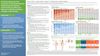
 This study demonstrated that litifilimab significantly reduced disease activity in cutaneous lupus erythematosus by Week 16, with improvements most notable in sunlight-exposed skin areas.
July 2024 in “Journal of Controlled Release” In this study, researchers developed topical tofacitinib-loaded cationic lipid nanoparticles, which improved absorption and targeted hair follicles in an ex vivo pig ear model, showing promise in treating alopecia areata by reducing symptoms through the JAK/STAT pathway.
This study found that Fructus Ligustri Lucidi water extract significantly increased proliferation in human hair dermal papilla cells, potentially promoting hair growth by activating ERK and Akt pathways.
54 citations
,
November 2007 in “Actas Dermo-Sifiliográficas” Early diagnosis of frontal fibrosing alopecia is crucial to prevent permanent hair loss.
9 citations
,
July 2019 in “Dermatologic therapy” In this case report, a patient with frontal fibrosing alopecia and lichen planus responded well to treatment with alitretinoin, suggesting a potential therapeutic role for alitretinoin in similar cases.
36 citations
,
July 1996 in “The journal of investigative dermatology/Journal of investigative dermatology” This research reports a new autosomal recessive mutation in mice, 'lanceolate hair', causing generalized alopecia and hair shaft abnormalities, which may serve as a model for Netherton's syndrome in humans.
 2 citations
,
January 2012 in “Springer eBooks”
2 citations
,
January 2012 in “Springer eBooks” This article reviews the advancements in hair restoration techniques and emphasizes the importance of experience, artistry, and dedication to achieving superior, undetectable results, but it does not report new clinical findings.
1 citations
,
March 2021 in “Journal of Investigative Dermatology” Sirolimus can reduce tumor cell size in TSC-related skin tumors, but continuous treatment is needed to maintain benefits.
 89 citations
,
February 2002 in “Australasian journal of dermatology”
89 citations
,
February 2002 in “Australasian journal of dermatology” This case report describes the first known instance of fibrosing alopecia associated with cutaneous lichen planus, suggesting fibrosing alopecia may be a variant of lichen planopilaris.
 24 citations
,
April 2017 in “Aesthetic plastic surgery”
24 citations
,
April 2017 in “Aesthetic plastic surgery” In this study, micro-autologous fat transplantation (MAFT) for frontal augmentation using the MAFT-GUN showed high patient satisfaction and no complications among 178 patients, suggesting it may be a reliable method for forehead contouring.
 11 citations
,
May 2023 in “Journal of Cutaneous Medicine and Surgery”
11 citations
,
May 2023 in “Journal of Cutaneous Medicine and Surgery” This study found that combining plasma rich in growth factors with conventional treatment significantly improved hair regrowth and reduced symptoms in patients with frontal fibrosing alopecia compared to conventional treatment alone.
1 citations
,
August 2019 in “Chinese Medical Journal” This case report describes a 43-year-old man who developed lupus miliaris disseminatus faciei after discontinuation of cyclosporine A post-stem cell transplantation, successfully treated with oral isotretinoin and topical tacrolimus.
 August 2021 in “Acta Haematologica Polonica”
 This paper discusses the diagnostic challenges and treatment options for folliculotropic mycosis fungoides, emphasizing the differing prognoses between its indolent and aggressive subtypes and reporting no new clinical results.
5 citations
,
October 2020 in “Veterinary record case reports” In this case report, a 15-year-old golden retriever with calcinosis cutis showed accelerated improvement in FLE-treated skin infections compared to untreated areas, highlighting FLE's potential as a treatment adjunct.
17 citations
,
June 2016 in “Archives de Pédiatrie” This case report describes three pediatric cases of frontal fibrosing alopecia, a condition typically seen in postmenopausal women, including a unique instance involving female twins.
2 citations
,
January 2012 in “PubMed” This study found that mycophenolate mofetil is effective for both induction and maintenance therapy in children with severe lupus nephritis, significantly improving proteinuria and antibody levels, without renal flares during maintenance.
 November 2023 in “International Journal of Pharmaceutics”
 This study reported that a novel ionic liquid delivery system combining ferulic acid and finasteride enhanced the solubility, skin permeation, and effectiveness in promoting hair regrowth in androgenetic alopecia mice, suggesting an improved topical treatment approach.
March 2014 in “Oxford University Press eBooks” This narrative review explores the failure of fludalanine as an orally active antibiotic and highlights valuable insights into problem-solving strategies in drug discovery, without reporting new clinical results.
 49 citations
,
January 2003 in “Clinical and Experimental Dermatology”
49 citations
,
January 2003 in “Clinical and Experimental Dermatology” This report from the UK reviews the literature on post-menopausal frontal fibrosing alopecia and highlights its under-recognition and distinctive characteristics compared to lichen planopilaris, but does not provide new results.