 1 citations
,
March 2012 in “Journal of Dermatological Science”
1 citations
,
March 2012 in “Journal of Dermatological Science” This study found that various steroids affected the mRNA expression of enzymes involved in lipid metabolism in hamster flank organs, with different impacts depending on the steroid and combination used.
 9 citations
,
November 2012 in “Biomolecules & therapeutics”
9 citations
,
November 2012 in “Biomolecules & therapeutics” This study found that diphlorethohydroxycarmalol significantly increased prostaglandin $E_2$ synthesis in HaCaT human keratinocytes by upregulating COX-1 and COX-2 expression, suggesting potential benefits from elevated $PGE_2$ production.
 February 2024 in “Buletin Veteriner Udayana”
 In this study, a dog diagnosed with both ehrlichiosis and demodicosis showed significant clinical improvement after receiving a treatment regimen of doxycycline, ivermectin, diphenhydramine, vitamin B complex, and sulfur soap baths, noticeable by the 14th and 28th days of therapy.
25 citations
,
September 1977 in “Journal of Toxicology and Environmental Health” This study in female beagle dogs found that long-term exposure to oral contraceptive steroids resulted in significant reproductive and mammary gland changes, with the relevance to human tumor risk remaining uncertain.
 January 2026 in “Buletin Veteriner Udayana”
 This study documented a case of Dipylidium caninum infection in a 4-month-old female dog, effectively treated with a deworming medication, resulting in significant improvement and no worms detected after five days. Routine deworming and maintaining hygienic conditions are recommended to prevent reinfection and transmission.
 81 citations
,
July 2008 in “The Journal of Clinical Endocrinology and Metabolism”
81 citations
,
July 2008 in “The Journal of Clinical Endocrinology and Metabolism” This study found that cortisone reductase deficiency is caused by inactivating mutations in the H6PD gene, affecting cortisol metabolism by preventing 11β-HSD1 enzyme function.
This study synthesized new heterocyclic steroid derivatives and reported their promising antiproliferative activity against breast and prostate cancer cell lines, highlighting selectivity and impact on signaling pathways even in cells resistant to certain treatments.
 January 2025 in “Brazilian Journal of Veterinary Medicine/Revista Brasileira de Medicina Veterinária”
 This source describes the first successful use of a deslorelin acetate implant to treat alopecia X in a neutered female dog, achieving profuse hair regrowth in 9 months, suggesting an uncomplicated and cost-effective alternative after melatonin failure.

This study reported that dandelion herb-derived carbon dots significantly enhanced wound healing in mice with Staphylococcus aureus infections, outperforming a commercial wound healing spray through their antibacterial and dual ROS-modulating capabilities.
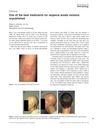 1 citations
,
June 2018 in “International Journal of Dermatology”
1 citations
,
June 2018 in “International Journal of Dermatology” DNCB is highly effective for treating alopecia areata with minimal long-term side effects.
 8 citations
,
January 2021 in “Pharmaceutics”
8 citations
,
January 2021 in “Pharmaceutics” This study found that using nanoporous silica entrapped lipid-drug complexes enhanced the solubility and bioavailability of dutasteride in beagle dogs.
1 citations
,
June 2019 in “Journal of Cutaneous Immunology and Allergy” This report describes two cases where topical squaric acid dibutylester application in alopecia totalis patients led to severe pustular lesions, necessitating systemic prednisolone treatment.
15 citations
,
March 2008 in “The Journal of Dermatology” In this case report, a patient with a history of discoid lupus erythematosus experienced an exacerbation of the condition after topical immunotherapy for alopecia areata, suggesting contact dermatitis as a potential trigger.
 8 citations
,
May 1996 in “Endocrinology”
8 citations
,
May 1996 in “Endocrinology” This study found that the androgen precursors DHEA and androstenedione stimulated androgen-sensitive parameters in the sebaceous glands of the skin in castrated male hamsters.
2 citations
,
January 1975 in “Archives of Dermatological Research” Certain enzymes react strongly with some hormones in rat skin during hair growth, mainly in sebaceous glands and hair sheaths.
7 citations
,
September 2014 in “Mass spectrometry letters” This study reported that a liquid-liquid extraction method using methyl tert-butyl ether and methylene chloride was most effective for extracting dutasteride and its internal standard from rat plasma.
 May 2022 in “Benha Journal of Applied Sciences”
 This study found that programmed death-ligand 1 (PD-L1) levels correlated with the severity of alopecia areata, suggesting its potential as an indicator and possible target for new treatments.
1 citations
,
December 2011 in “Arzneimittelforschung” This study found that the compound 9,11-dehydrocortexolone 17alpha-butyrate (CB-03-04) showed strong local antiandrogenic activity in animal models, suggesting potential for treating prostate conditions.
 70 citations
,
April 2014 in “Annales d'endocrinologie”
70 citations
,
April 2014 in “Annales d'endocrinologie” This review discusses the pathways of androgen biosynthesis and reports no new findings, highlighting the need to understand the interplay between the classic and backdoor pathways.
 July 2018 in “International journal of research - granthaalayah”
 In this clinical trial, the authors observed that Dravanti beeja lepa may be safe and effective for promoting hair regrowth in patients with Indralupta (Alopecia Areata).
January 2026 in “Chemical Communications” This study found that calanthoside, a compound isolated from Calanthe species, promotes the proliferation of human hair follicle dermal papilla cells more effectively than minoxidil.
![The Synthesis of (−)-4-Methyl-8-Chloro-Trans-1,2,3,4,4a,5,6,10b-Octahydrobenzo-[f]-Quinolin-3-One-[3-14C] (LY300502-14C) via a Circuitous Route](/images/assets/73bab8dc-bdf0-45e3-8ef7-73d0d4b93cb1/small/21074.jpg) 3 citations
,
October 1994 in “Journal of Labelled Compounds and Radiopharmaceuticals”
3 citations
,
October 1994 in “Journal of Labelled Compounds and Radiopharmaceuticals” This synthesis report details the successful development of a C-14 labeled isotopomer of LY300502, a 5α-reductase inhibitor, through a multi-step radiochemical process.
September 2024 in “Colloids and Surfaces B Biointerfaces” This study found that cedrol nanoemulsions significantly promote hair follicle regeneration and reduce DHT levels in an androgenic alopecia mouse model, suggesting potential efficacy in AGA treatment.
11 citations
,
September 2010 in “PubMed” In this study, the researchers compared the pharmacokinetics and tissue distribution of dihydroartemisinin in nanostructured lipid carriers versus in solution, finding longer mean residence times and variable organ accumulation with the nanostructured lipid carriers.
 4 citations
,
May 2019 in “Asian Journal of Pharmaceutical Sciences”
4 citations
,
May 2019 in “Asian Journal of Pharmaceutical Sciences” This study found that a dutasteride tablet formulation using cyclodextrin complex, solubilizing polymer, and surfactant achieved similar bioavailability in beagle dogs to that of a commercial capsule.
 149 citations
,
June 2002 in “Veterinary record/The veterinary record”
149 citations
,
June 2002 in “Veterinary record/The veterinary record” This study found that trilostane was effective in resolving symptoms such as polyuria and polydipsia in many dogs with pituitary-dependent hyperadrenocorticism, with significant hormone level reductions observed.
6 citations
,
July 2024 in “Heliyon” This study examined the evolutionary and functional homology of steroid 5α-reductase and DET2 proteins, identifying protists as a common ancestor, and discovered a new subclass DET2-like in plants, potentially involved in polyprenol reduction.
 21 citations
,
December 2016 in “European journal of pharmaceutics and biopharmaceutics”
21 citations
,
December 2016 in “European journal of pharmaceutics and biopharmaceutics” This study found that nano-sized lipid particles improved the skin accumulation and retention of dexamethasone compared to a base cream, suggesting potential benefits for inflammatory skin disease treatment.
August 2025 in “Rare Metals” In this study, carbon dots derived from metformin and dopamine (MD‐CDs) effectively promoted healing in bacterial-infected wounds by inhibiting infection, expediting inflammation-to-healing transition, enhancing cell proliferation and migration, and fostering collagen deposition and hair follicle regeneration.
16 citations
,
March 2023 in “Gels” This study found that paeonol-loaded liposomal gels demonstrated antioxidant effects and relieved inflammation in AD-like mice, suggesting potential benefits for treating atopic dermatitis.