 1 citations
,
October 2012 in “The Journal of Dermatology”
1 citations
,
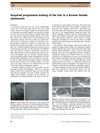
October 2012 in “The Journal of Dermatology” This letter to the editor describes a case of acquired progressive kinking of the hair in a Korean female adolescent, but no new research findings are reported.
 2 citations
,
June 2024 in “Frontiers in Plant Science”
2 citations
,
June 2024 in “Frontiers in Plant Science” This study found that RALF peptides, through liquid-liquid phase separation, form condensates with pectin and other proteins, playing a pivotal role in plant development and stress response regulation.
September 2025 in “OPAL (Open@LaTrobe) (La Trobe University)” This study developed a biobased copolymer called SELP::KP, showing improved hair strength, elasticity, and conditioning properties while being a safer alternative to conventional chemical treatments, based on application to human hair in a laboratory setting.
5 citations
,
November 2005 This review discusses the applications of confocal laser scanning microscopy in visualizing fluorescent compounds within the skin, noting its potential for tracking drug carriers and enhancing penetration studies, but reports no new results.
5 citations
,
December 2023 in “Current Biology” A feedback loop between LRH and RSL4 controls root hair growth in Arabidopsis.
 3 citations
,
January 2023 in “American journal of physiology. Cell physiology”
3 citations
,
January 2023 in “American journal of physiology. Cell physiology” This editorial reviews the roles and therapeutic potential of inward rectifying K+ channels in various physiological processes, highlighting their importance in health and disease but provides no new experimental results.
7 citations
,
April 2021 in “Journal of Lower Genital Tract Disease” This study concluded that erosive lichen sclerosus is a distinct subtype marked by red patches on hairless skin, while ulcerated lichen sclerosus typically results from trauma in uncontrolled dermatosis.
20 citations
,
November 2014 in “JAMA dermatology” This study found that three treatments with the 810-nm diode laser improved skin texture and roughness/bumpiness in keratosis pilaris patients, although it did not reduce redness.
December 2025 in “Zenodo (CERN European Organization for Nuclear Research)” This product description promotes Kerablak Calcium Pantothenate Tablets for improving hair strength and reducing hair fall, but it provides no new clinical study findings.
 1 citations
,
January 2017 in “Social Science Research Network”
1 citations
,
January 2017 in “Social Science Research Network” This paper suggests that to better protect traditional and indigenous knowledge, TKDL should expand its database or establish a separate confidential resource for indigenous, tribal, and nomadic communities.
 8 citations
,
November 2022 in “Cureus”
8 citations
,
November 2022 in “Cureus” In this study, patients with mild to moderate scalp seborrheic dermatitis experienced greater improvements in severity scores and quality of life with Lulican™ shampoo compared to Ketoconazole over four weeks, with similar safety profiles but better tolerability and cosmetic acceptability for LulicanTM.
45 citations
,
March 2001 in “Journal of Investigative Dermatology” This study identified a new cytokeratin, mK6irs, specifically expressed in the inner root sheath of mouse hair follicles, distinguishing it as a member of the type II cytokeratin family.
6 citations
,
January 2022 in “Gene” This study identified 53 keratins in the yak genome, predicting diverse phosphorylation sites and subcellular localizations, and highlighted strong gene expression correlations during the yak hair follicle development cycle.
 December 2025 in “International Journal of Research in Dermatology”
 This study observed that keratosis pilaris is the most prevalent follicular keratotic disease, especially in adolescent and young adult females, and emphasized the key role of dermoscopy and histopathology in distinguishing it from other similar disorders and aiding in diagnosis.
 32 citations
,
April 2014 in “The journal of investigative dermatology/Journal of investigative dermatology”
32 citations
,
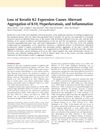
April 2014 in “The journal of investigative dermatology/Journal of investigative dermatology” This study demonstrates that keratin K2 is crucial for proper keratinocyte structure and function in specific mouse skin areas, and its deficiency leads to cellular aggregates and skin abnormalities.
 2 citations
,
January 2018 in “International Journal of ChemTech Research”
2 citations
,
January 2018 in “International Journal of ChemTech Research” This study used phytochemical screening and FTIR spectroscopy with PCA to reveal slight chemical differences between two varieties of Eclipta alba, providing a method for their effective discrimination.
16 citations
,
July 2021 in “American Journal of Medical Genetics Part A” This study identified novel LSS mutations implicated in hypotrichosis simplex with or without neurodevelopmental abnormalities, highlighting the need for careful evaluation of synonymous mutations' potential pathogenic effects.
19 citations
,
October 2017 in “Dermatologic Surgery” In this study, 755-nm alexandrite laser treatment significantly reduced acne keloidalis nuchae lesions in male patients, improving quality of life and showing low recurrence rates, with temporary hair loss as a reversible complication.
 April 2016 in “Journal of Investigative Dermatology”
 This study found that secreted factors from skin-derived precursors, especially those pre-treated with jasmine extract, enhanced keratinocyte growth and influenced reconstructed human epidermis thickness in lab experiments.
February 1985 in “PubMed” This study found that the novel bacteriophage Halo KS-7 shows strong antibacterial activity against carbapenem-resistant Klebsiella pneumoniae and significantly promotes wound healing in mice, making it a promising biocontrol agent for managing multidrug-resistant infections.
March 2024 in “International journal of molecular sciences” In this study, researchers identified three pathogenic de novo genetic variants contributing to epidermolysis bullosa simplex in young children, highlighting the complexity of genetic influences and underscoring the need for early genetic screening for accurate diagnosis and effective management.

In this case report, combination therapy with topical tretinoin, topical and intralesional steroids, and systemic doxycycline showed improvement in AKN lesions for a 19-year-old man, with notable reductions in lesion size and number observed by the second week.

This review discusses Limbal Mesenchymal Stem Cell Secretome therapy for ocular chemical injuries, noting its potential in reducing inflammation and corneal opacity, but reports no new clinical results.
January 2011 in “Xibei nongye xuebao” This study found that the K14 promoter exhibited higher activity in skin cell lines compared to other cell lines, while both K14 and K5 promoters were active in all tested cell lines.
This study identified significant differences in KIR gene profiles between SLE patients and controls, suggesting that specific KIR genes could serve as biomarkers for disease severity in Indian SLE patients.
11 citations
,
January 2015 in “JOURNAL OF HEALTH SCIENCE” This case report details a 12-year-old boy with Lichen Spinulosus and plantar keratoderma, who responded well to topical treatments including lactic acid, urea, and betamethasone valerate.
20 citations
,
December 2006 in “Archives of dermatology” 40 citations
,
December 2010 in “Human Genetics” 1 citations
,
January 2015 in “Hair transplant forum international” This review discusses low level laser therapy for hair loss but reports no new research findings; it serves as an introduction to understanding existing knowledge before upcoming evaluations of recent studies.