 12 citations
,
September 2018 in “Naturwissenschaften”
12 citations
,
September 2018 in “Naturwissenschaften” This study found that melatonin at 0.2 g/L for 72 hours most effectively enhances cashmere growth in Liaoning cashmere goats by upregulating the lncRNA MTC, which activates NF-kB signaling.
 10 citations
,
March 2022 in “Communications biology”
10 citations
,
March 2022 in “Communications biology” In this study, researchers found that non-invasive analysis of skin surface lipid RNAs revealed alterations in gene expression patterns associated with atopic dermatitis, suggesting its potential for understanding skin disease pathophysiology.
 8 citations
,
December 2021 in “International Journal of Family Studies, Food Science and Nutrition Health”
8 citations
,
December 2021 in “International Journal of Family Studies, Food Science and Nutrition Health” This review discusses the potential health benefits and applications of extra virgin olive oil as a nutritional therapeutic immune-enhancer, but reports no new clinical findings.
 6 citations
,
December 2021 in “PLoS Genetics”
6 citations
,
December 2021 in “PLoS Genetics” This study found that PRC2 plays a non-instructive role in adult hair follicle stem cells, with its loss not affecting quiescence or cell identity, despite upregulation of genes linked to activation.
 4 citations
,
January 2019 in “International journal of molecular sciences”
4 citations
,
January 2019 in “International journal of molecular sciences” This study suggests that β-catenin plays an important role in wool follicle development in transgenic sheep by enhancing the expression of keratin protein genes.
 4 citations
,
September 2016 in “Molecular Medicine Reports”
4 citations
,
September 2016 in “Molecular Medicine Reports” This study identified genes potentially involved in hair and cashmere growth in the Laiwu black goat, highlighting specific gene expression differences between hair-growing and hairless skin.
 2 citations
,
April 2021 in “bioRxiv (Cold Spring Harbor Laboratory)”
2 citations
,
April 2021 in “bioRxiv (Cold Spring Harbor Laboratory)” This study found that skin surface lipids contain measurable mRNAs, providing a non-invasive way to study skin diseases, with specific gene expression changes observed in atopic dermatitis patients.
 1 citations
,
January 2011 in “Springer eBooks”
1 citations
,
January 2011 in “Springer eBooks” Histone demethylases play a key role in the development of many diseases and may be targets for treatment.
 1 citations
,
March 2023 in “bioRxiv (Cold Spring Harbor Laboratory)”
1 citations
,
March 2023 in “bioRxiv (Cold Spring Harbor Laboratory)” This study found that Dermal Fibroblast Progenitors have repressed chromatin profiles which hinder their ability to reform skin in allograft assays despite their differentiation potential.
 May 2026 in “Frontiers in Pharmacology”
 In this study, DOP treatment improved hair regrowth in androgenetic alopecia by altering local steroid metabolism and follicular morphology.
 January 2026 in “Frontiers in Pharmacology”
 This review highlights the potential of wedelolactone from the plant Wedelia Chinensis, summarizing its reported pharmacological effects, including anti-inflammatory, antiviral, antibacterial, antitumor, anti-osteoporosis activities, and organ protection based on existing in vitro and in vivo research findings.
 December 2024 in “JURNAL ANALIS LABORATORIUM MEDIK”
 This study observed that wound healing occurred faster in healthy mice compared to diabetic mice, and diabetic wounds displayed persistent inflammatory cell presence when examined microscopically, highlighting delayed healing dynamics in diabetic conditions.
 January 2024 in “Frontiers in immunology”
 This review highlights the crucial role of histone modification in the pathogenesis and treatment of chronic inflammatory skin diseases, and explores therapeutic strategies targeting these epigenetic changes to improve management of conditions such as psoriasis and atopic dermatitis.
 December 2023 in “Communications biology”
 This study found that inhibiting the HEDGEHOG-GLI1 pathway could reduce keloid size and gene expression, suggesting it as a potential therapeutic target for keloid pathogenesis.
 September 2023 in “medRxiv (Cold Spring Harbor Laboratory)”
 This study found that many conditions in patients with COVID-19 were significantly increased compared to controls, with specific phenotypes identified across different demographic and diagnostic attributes.
 April 2018 in “bioRxiv (Cold Spring Harbor Laboratory)”
 This study identified a specific genetic variant in the CCHCR1 gene that may contribute to alopecia areata through impaired keratinization, suggesting an alternative mechanism beyond autoimmune causes.
 January 2012 in “Else Kröner-Fresenius Symposia”
 This symposium reported that DNA damage accumulation in aging stem cells affects genome integrity, highlighting novel mechanisms like Bmi1's role in DNA repair and the involvement of BATF in lymphoid differentiation.
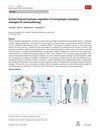
This review highlights that surface mechanical regulation can program macrophage behavior through specific mechanical cues on material surfaces, potentially advancing immunotherapies and regenerative medicine by enabling precise control over macrophage functions.
 April 2026 in “bioRxiv (Cold Spring Harbor Laboratory)”
 In this study, periodic exposure to red light in aged mice led to increased histone acetylation and activated mitochondrial fatty acid oxidation, which collectively mitigated cellular aging by modulating metabolism, inflammation, and gene expression.
 December 2025 in “Frontiers in Veterinary Science”
 This study found that PT-LCG extends hair follicle activity and promotes continuous cashmere growth by enhancing lipid synthesis, remodeling the extracellular matrix, and modulating inflammatory signaling, offering insights into improving cashmere yield and quality through molecular breeding.
 August 2019 in “Journal of archaeological science: Reports/Journal of archaeological science: reports”
 This study demonstrated that cortisol, estradiol, and testosterone are preserved in archaeological human hair, allowing for the analysis of ancient stress and reproductive hormone patterns.
 January 2018 in “Stem cell biology and regenerative medicine”
 This review discusses the interplay between signaling/transcription factor-mediated and epigenetic mechanisms in skin development and regeneration, highlighting the need for further exploration of epigenome reorganization in these processes.
32 citations
,
January 2020 in “Journal of Molecular Histology” This research identified K31 as a new marker for distinguishing clear secretory cells in human eccrine sweat glands, aiding in differentiating between distinct cell types within these glands.
35 citations
,
October 2002 in “Biochemical and Biophysical Research Communications” This study reports that K7 expression patterns observed in mice are similar to those in humans, revealing previously unreported expression in the gastrointestinal tract, tongue, and various "hard" epithelial tissues.
 February 2020 in “Definitions”
 This article discusses the human KRT72 wild-type allele's role in hair formation and reports no new research findings.
38 citations
,
October 2001 in “British Journal of Dermatology” This study identified a new keratin, K6irs, as a potential histological marker for the inner root sheath of hair follicles in mice and humans, and as a candidate gene for hereditary hair defects.
3 citations
,
May 2018 in “The Indian Journal of Animal Sciences” This study suggests that the KAP 7 gene may serve as a potential molecular marker for genetic selection to improve staple length and greasy fleece weight in Rambouillet sheep.
 92 citations
,
January 2012 in “International Journal of Biological Sciences”
92 citations
,
January 2012 in “International Journal of Biological Sciences” This article proposes an updated naming system for keratin-associated proteins and genes, aiming to improve data storage and retrieval by including species information and genetic variation.
31 citations
,
April 2004 in “Journal of Investigative Dermatology” This study found that a newly identified gene, mK17n, may explain the lack of nail issues in mK17 null mice by compensating for mK17's function in the nail bed.
53 citations
,
October 2003 in “Genetics” This study identified a mutation hotspot in the caracul (Ca) locus of mice, implicating the mK6irs1/Krt2-6g gene in hair formation and potentially human hair and skin diseases.