 April 2023 in “Journal of Investigative Dermatology”
 This study found that inducing SOX2 in keratinocytes significantly reduced pressure ulcer formation after cutaneous ischemia-reperfusion injury by producing amphiregulin, which also reduced oxidative stress and apoptosis.
 February 2023 in “Frontiers in Bioengineering and Biotechnology”
 This review discusses the potential of optical techniques for diagnosing and treating oxidative stress-related hepatic ischemia-reperfusion injury, highlighting the need for non-invasive diagnostic methods and the anti-oxidative potential of optical therapies; it reports no new clinical results.
 January 2020 in “Nihon Yakuri Gakkai nenkai yoshishu”
 This study suggested that minoxidil's neuroprotective effect in mice was independent of its blood pressure-lowering action, unlike the effects observed with losartan and doxazosin.
November 2007 in “Hospital pharmacy” This article discusses the importance of increasing awareness about specific adverse drug reactions, prevention methods, and the promotion of reporting ADRs to the FDA's MEDWATCH program; it reports no new results.
 10 citations
,
November 2014 in “Sexual medicine reviews”
10 citations
,
November 2014 in “Sexual medicine reviews” This review discusses the management options for recurrent ischemic priapism, noting that ketoconazole, finasteride, and other hormonal therapies may be effective but can have significant side effects; it reports no new clinical findings.
 6 citations
,
January 2016 in “Journal of Clinical and Diagnostic Research”
6 citations
,
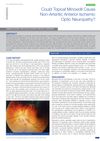
January 2016 in “Journal of Clinical and Diagnostic Research” This case report describes a non-arteritic anterior ischemic optic neuropathy that resolved after discontinuing topical 5% minoxidil treatment.
3 citations
,
June 2022 in “e-Journal of Cardiovascular Medicine” This study found no significant difference in the ability of ischemia modified albumin and exercise electrocardiograms to determine myocardial ischemia in patients with stable angina pectoris.
October 2024 in “African Journal of Medicine Surgery and Public Health Research” In this review, the authors discuss how both genetic and epigenetic factors influence the development of vascular systems, highlighting the natural and pathological roles of angiogenesis in processes like pregnancy and diseases such as cancer and diabetes.
14 citations
,
January 2023 in “Engineered Regeneration” In this study, researchers highlighted the potential of antioxidative nanozymes as a promising treatment for ischemic stroke, due to their stability, cost-effectiveness, and ability to regulate ROS-induced inflammation, positioning them as a noteworthy alternative to natural enzymes like catalase and superoxide dismutase.
 6 citations
,
January 2020 in “BMC Neuroscience”
6 citations
,
January 2020 in “BMC Neuroscience” In this study, male-derived brain tissue exhibited higher cell death following ischemia compared to female-derived tissue, and certain steroid hormones showed different neuroprotective effects depending on the sex of the tissue.
3 citations
,
July 2024 in “Journal of Vascular Diseases” This review compiles existing research on ischemia-modified albumin (IMA) as a biomarker for myocardial ischemia, highlighting current gaps in understanding its formation and detection, with no new clinical results reported.
2 citations
,
November 2004 in “Hospital pharmacy” This article reviews adverse drug reactions, emphasizes methods of prevention, and encourages reporting to the FDA's medWatch program, but presents no new study findings.
 1 citations
,
October 2017 in “Circulation”
1 citations
,
October 2017 in “Circulation” The researchers reported that introduction of SOX9 in ischemic heart tissues is linked to cardiac fibrosis, marking it as a potential target for future therapeutic strategies.
1 citations
,
May 1992 in “Pharmacological Research” January 2025 in “Journal of Carcinogenesis” This review highlights the potential of anti-inflammatory therapies to reduce major adverse cardiac events in patients with ischemic heart disease, emphasizing that such treatments can be effective even without traditional lipid-lowering strategies.
 January 2024 in “Research Square (Research Square)”
 This study identified key genes related to ischemic stroke through the ferroptosis pathway and highlighted the potential role of specific traditional Chinese medicines in regulating associated biological processes.
39 citations
,
April 2023 in “Science Advances” This study identified that bone marrow-derived CD34+ cells act as fibroblast progenitors to enhance tissue regeneration in ischemic limbs by promoting angiogenesis through interactions with macrophages.
30 citations
,
May 2015 in “Current Cardiology Reviews” This review analyzed observational studies on endogenous sex steroids and CVD risk, reporting mixed findings: lower testosterone and higher estradiol levels were associated with increased CVD risk, but significant literature gaps remain.
 18 citations
,
March 2024 in “Frontiers in Pharmacology”
18 citations
,
March 2024 in “Frontiers in Pharmacology” This review highlights that the NLRP3 inflammasome is a promising therapeutic target for cerebral ischemia-reperfusion injury and discusses recent advancements in using natural plant products to modulate this pathway and reduce inflammation.
 14 citations
,
January 2024 in “Theranostics”
14 citations
,
January 2024 in “Theranostics” In this study involving a mouse model, researchers reported that intranasal delivery of protein-based CRISPR/dCas9 nanoparticles targeting the gene *Sirt1* reduced cerebral edema and increased survival following ischemic stroke, with no significant toxicity observed.
 14 citations
,
March 2018 in “Translational Stroke Research”
14 citations
,
March 2018 in “Translational Stroke Research” In this animal study, researchers found that finasteride may offer neuroprotective benefits as a post-ischemic treatment for strokes in aged male rats, suggesting its potential as a therapeutic agent in this context.
12 citations
,
February 2023 in “Stem Cell Research & Therapy” This study found that injecting hepatocyte growth factor-enhanced hair follicle stem cells into a rat model of ischemic stroke improved recovery by reducing inflammation, protecting the blood-brain barrier, and promoting angiogenesis.
6 citations
,
October 2022 in “Frontiers in Cell and Developmental Biology” This study suggests that hair follicle mesenchymal stem cells may alleviate small intestinal ischemia-reperfusion injury in rats by promoting angiogenesis, reducing apoptosis, and enhancing intestinal stem cell expression.
 4 citations
,
May 2019 in “Biology open”
4 citations
,
May 2019 in “Biology open” This study found that while testosterone administration reduced myocardial damage in gonadectomized rats after ischemia/reperfusion injury, Finasteride led to greater improvements, whereas 4-hydroxyandrostenedione worsened outcomes.
 1 citations
,
November 2001 in “Acc Current Journal Review”
1 citations
,
November 2001 in “Acc Current Journal Review” This review found that 5α‐reductase inhibitors were associated with slightly increased rates of decreased libido, erectile and ejaculatory dysfunction, gynecomastia, and mood disorders compared to placebo, though their long-term effects remain unclear.
 June 2022 in “Research Square (Research Square)”
 This study suggests that hair follicle mesenchymal stem cells may alleviate small intestinal ischaemia-reperfusion injury in rats by promoting angiogenesis, reducing apoptosis, and protecting intestinal mucosal function.
 March 2024 in “Frontiers in medicine”
 In this nonrandomized controlled trial, tenon capsule injection of platelet-rich plasma improved capillary perfusion and may enhance short-term vision in patients with acute nonarteritic anterior ischemic optic neuropathy.
 September 2023 in “Translational medicine reports”
 This case study reported that an 18-year-old woman ingested a large amount of topical minoxidil, leading to symptoms like low blood pressure, increased heart rate, and elevated liver enzymes, but recovered fully after treatment. Minoxidil toxicity may rarely cause abnormal liver enzyme levels.
December 2014 in “Journal of Biomedical Research” In a mouse model of peripheral vascular disease, this study found that recombinant thymosin β4 treatment increased expression levels of certain proteins, promoting angiogenesis.

This study found that Meshushit, a new herbal ointment, enhanced granulation tissue formation and hair follicle preservation in treated burns compared to a control in an animal model.