 April 2026 in “Cellular and Molecular Immunology”
 In a conditional knockout mouse model, this study found that loss of the transcription elongation factor SPT6 in basal keratinocytes led to psoriasis-like skin inflammation and delayed wound healing, suggesting SPT6 plays a crucial role in maintaining epidermal immune quiescence by suppressing proinflammatory NF-κB signaling.
 January 2026 in “Frontiers in Molecular Biosciences”
 This study identified a four-gene loop as a non-invasive biomarker that selectively activates in alopecia areata, providing a precise target for JAK inhibitor treatments.
 December 2025 in “BMC Medical Genomics”
 This study demonstrated that RNA-seq can effectively expand hair follicle transcriptomic profiling in a multi-center study, offering deeper insights than blood transcriptomics alone.

This review reports that empirical evidence suggests an overlap between Long Covid, chronic fatigue syndrome, and fibromyalgia, highlighting the need for standardized definitions and rigorous methodologies in related research.
 October 2025 in “Animal Bioscience”
 This review summarizes the application of genome wide association studies and selection signature analyses in sheep and goat breeding in China, highlighting genomic regions that influence traits like reproductive performance and body size.
 September 2025 in “Arthritis Research & Therapy”
 In this study, researchers found that the compound BMS-470539 induced a senescence-like state in fibroblasts from systemic sclerosis patients, reducing fibrosis-associated markers in vitro and decreasing skin thickness in a mouse model of skin fibrosis, suggesting a novel therapeutic strategy for managing fibroblast-driven diseases.
 June 2025 in “Animal Bioscience”
 This study found that miRNA-24 downregulates the KLF6 gene, influencing coat color by affecting melanogenesis pathways in Cashmere goats, and that miRNA-24 inhibition increased melanin content in mice.
 December 2023 in “bioRxiv (Cold Spring Harbor Laboratory)”
 This study observed that extracellular matrix scaffold membranes performed less effectively in wound healing for aged mice compared to younger ones, with senescent SPP1+ macrophages potentially hindering epidermal and fibroblast repair abilities.
 November 2023 in “npj regenerative medicine”
 This study found that engineered reconstituted skin can form morphogenetic units that promote tissue patterning and hair regeneration, with certain signaling pathways restoring this ability in adult and fetal cells.
 January 2023 in “Åbo Akademi University Research Portal”
 This study found that vimentin is essential for proper wound healing and cell growth by influencing EMT signaling and mTOR activity in mice.
 March 2017 in “Fundamental & Clinical Pharmacology”
 This case study reported an improvement in lower limb edema for a patient with type 2 diabetes mellitus after starting dulaglutide treatment, suggesting a potential role of the drug in sodium retention disorders.
 January 2016 in “SpringerBriefs in bioengineering”
 This article discusses the structure and function of the skin's epidermis, detailing its role as a protective barrier and nutrient exchange system, without presenting new research findings.
 November 2008 in “Medical & surgical dermatology”
 This study reports that a prototype device may accurately measure changes in hair quantity, diameter, and density in patients with balding by assessing the cross-sectional area of hair bundles.
 April 2026 in “Frontiers in Cell and Developmental Biology”
 This study found that CD200-negative human hair follicle bulge cells have a higher hair-regenerative capability compared to CD200-positive cells, suggesting that reduced CD200 expression may enhance hair regeneration, providing insights for improving bulge cell-based hair restoration techniques.
 March 2026 in “Folia Histochemica et Cytobiologica”
 This review highlights LTBP1 as a critical integrator in disease processes, showing its dual role in cancer progression and suppression, its pathological influence in fibrosis, and its contribution to various disorders, suggesting its potential as a biomarker and therapeutic target.
 November 2025 in “Frontiers in Immunology”
 This study introduces stem cell activity as a key factor influencing the effects of IFN-γ and TGF-β1 on autoimmune disease dynamics, showing that varying cytokine levels can modulate stem cell activity and immune privilege, impacting tissue regeneration and disease flares.
 August 2025 in “Cermin Dunia Kedokteran”
 This article discusses Human Metapneumovirus (HMPV) and highlights the need for continued research, noting that while supportive treatments exist, no vaccines or specific therapies are currently available.
 June 2025 in “Medical academic journal”
 The study found that hybrid nanoparticles incorporating exosomes with cationic liposomes 2X3-DOPE significantly improved the delivery of both messenger RNA and small interfering RNA to rat cardiac mesenchymal stem cells in vitro, achieving up to 100% transfection efficiency for small interfering RNA.

In this study assessing post-menopausal Asian women, distinct shifts in Malassezia species prevalence on the skin were linked to increased inflammation and impaired skin barrier function, potentially driving disorders like psoriasis and seborrheic dermatitis.
January 2025 in “Multimedialen Archiv und Publikationsserver der Christian-Albrechts-Universität zu Kiel (Christian-Albrechts-Universität zu Kiel)” In this study, human gingival mesenchymal stem cells responded differently to inflammation mediated by oxidized low-density lipoprotein (oxLDL) compared to cytokines; oxLDL significantly reduced cell proliferation but had less negative impact on differentiation characteristics.
 October 2024 in “Frontiers in Oncology”
 This review examines the potential of K18 as a diagnostic and prognostic marker in epithelial-derived tumors, highlighting its specific expression in tumor tissues and interaction with proteins involved in tumor progression, without reporting new clinical findings.
 August 2024 in “Qucosa (Saxon State and University Library Dresden)”
 In this study on mice, researchers observed that dermal white adipose tissue (dWAT) plays a key role in regulating skin inflammation and tissue repair; however, reduced expression of certain cytokines in obese mice may hinder these processes, indicating potential metabolic disruptions in dWAT during inflammation.
 September 2023 in “Frontiers in cell and developmental biology”
 This study found that a catalytically active version of Vav2 significantly altered gene expression patterns in hair follicle stem cells in mice, with these changes varying over the animals' lifespans.
 September 2023 in “Nature communications”
 This study found that VE-cadherin and Alk1, traditionally linked to vascular functions, also play crucial roles in maintaining nerve homeostasis in mice during hair growth cycles by modulating certain cell populations.
 January 2018 in “Stem cells in clinical applications”
 This review discusses the potential of exosomes and the secretome in stem cell-based regenerative therapies but reports no new experimental findings.

This study suggests that hair follicle dermal stem/progenitor cells play a key role in both hair regeneration and skin wound healing, with potential implications for preventing hair follicle miniaturization linked to aging or alopecia.
 86 citations
,
April 2016 in “Nature Communications”
86 citations
,
April 2016 in “Nature Communications” This study suggests that Notch1 acts as a key signal in skin epithelium, promoting immune cell recruitment and aiding in normal skin repair after damage.
 86 citations
,
February 2003 in “Journal of The American Academy of Dermatology”
86 citations
,
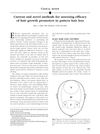
February 2003 in “Journal of The American Academy of Dermatology” This article discusses various mechanisms for promoting hair growth in pattern hair loss and highlights the challenge of balancing short-term measurable results in trials with the need for long-term efficacy data.
 51 citations
,
September 2020 in “Cell Metabolism”
51 citations
,
September 2020 in “Cell Metabolism” This study highlights that the mammalian target of rapamycin complex 2 (mTORC2)-Akt signaling axis is essential for hair follicle stem cells to return to their niche and regenerate effectively by regulating metabolic pathways.
 45 citations
,
October 2014 in “Stem cell research & therapy”
45 citations
,
October 2014 in “Stem cell research & therapy” This study found that using 3D Gel-C6S-HA scaffolds seeded with VEGF165-modified rat hair follicle stem cells enhanced angiogenesis and vascularization in tissue-engineered skin, improving wound healing.