 April 2023 in “The journal of investigative dermatology/Journal of investigative dermatology”
 This study found that deleting Ube2n in adult mouse skin leads to inflammation and other skin changes, and identifies IRAK1/4 as potential treatment targets for inflammatory skin disorders.
 22 citations
,
February 2013 in “Wound Repair and Regeneration”
22 citations
,
February 2013 in “Wound Repair and Regeneration” In this study, CD109 overexpression in transgenic mice led to reduced inflammation and improved collagen organization during wound healing without affecting wound closure.
January 2026 in “Journal of Investigative Dermatology” Female-pattern hair loss may involve an autoimmune-like process, suggesting new treatment options.
2 citations
,
October 2014 in “Orbit” This study observed that lacrimal gland inflammation and alopecia areata, both autoimmune conditions, can occur together in patients.
31 citations
,
January 2009 in “Autoimmunity Reviews” This study suggests that damage to stem cells in the bulge region of hair follicles may contribute to scarring in chronic cutaneous lupus erythematosus.
 April 2026 in “Journal of Clinical Medicine”
 This review summarizes recent research into the effects of GLP-1 receptor agonists on skin processes, noting potential benefits for wound healing but also potential cosmetic concerns like facial fat loss and decreased collagen, highlighting the need for more clinical studies to clarify their dermatological impact.
 December 2024 in “Здобутки клінічної і експериментальної медицини”
 This study reviews current research on skin repair and regeneration, highlighting promising methods such as stem cell therapies, nanotechnology, and skin substitutes, which may enhance healing and resistance to environmental damage.
 November 2023 in “British journal of nutrition”
 This study found that curcumin supplementation in adults significantly increased serum adiponectin levels and decreased leptin levels, based on a meta-analysis of 13 randomized controlled trials.
 124 citations
,
June 2020 in “Cell Stem Cell”
124 citations
,
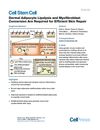
June 2020 in “Cell Stem Cell” This study found that in mice, dermal adipocytes initiate inflammation and aid repair after skin injury by releasing lipids, suggesting a role in managing inflammatory diseases and impaired wound healing.
 13 citations
,
January 2020 in “Scientific Reports”
13 citations
,
January 2020 in “Scientific Reports” This study found distinct differences in protein expression and wound healing pathways between Acomys cahirinus and Mus musculus, highlighting potential targets for reducing fibrotic response in mammals.
 1 citations
,
October 2022 in “international journal of endocrinology and metabolism”
1 citations
,
October 2022 in “international journal of endocrinology and metabolism” This study found that patients with hypothyroidism and hair loss exhibited significant differences in dermoscopic findings, including hair shaft abnormalities and vascular changes, compared to euthyroid individuals.
1 citations
,
January 2012 in “Human health handbooks” This review discusses the essential role of linoleic acid in preventing deficiency symptoms and enhancing skin function, but notes that scientific knowledge on its potential therapeutic use for skin diseases remains limited.
 August 2025 in “Aesthetic Cosmetology and Medicine”
 In this article, researchers explored how blue light exposure affects the scalp and hair follicles, highlighting oxidative stress and hair growth disruptions, while emphasizing the importance of protective strategies like antioxidants and limiting light exposure.
 September 1998 in “Journal of the European Academy of Dermatology and Venereology”
 This article reviews the role of androgen in male pattern hair loss and its impact on hair follicle miniaturization, but it does not present new research findings.
 March 2017 in “The American Journal of Cosmetic Surgery”
 This case report suggests that transplanted hair follicles may be more resistant to alopecia areata than native hair, potentially offering new insights into the condition's pathophysiology and treatment options.
 27 citations
,
September 2017 in “Journal of Investigative Dermatology Symposium Proceedings”
27 citations
,
September 2017 in “Journal of Investigative Dermatology Symposium Proceedings” This article discusses central centrifugal cicatricial alopecia, noting its prevalence in women of African descent and highlighting the need for further genetic research to improve treatment options; it reports no new clinical results.
8 citations
,
April 2017 in “American Journal of Dermatopathology” In this study, nail matrix pathology in a patient with Cronkhite–Canada Syndrome revealed matrix hypergranulosis, suggesting that an inflammatory process may play a key role in the condition's pathogenesis.
77 citations
,
September 2017 in “Journal of Investigative Dermatology” This study found that TRPV3 ion channels on human epidermal keratinocytes suppress cell proliferation, induce cell death, and trigger a proinflammatory response, suggesting a role in cutaneous inflammatory processes.
 31 citations
,
July 2017 in “Clinical Science”
31 citations
,
July 2017 in “Clinical Science” This review discusses the role of microRNAs in skin function and potential therapeutic applications, emphasizing their importance in wound healing and disease management, though it reports no new experimental findings.
 February 2020 in “Definitions”
 This article discusses a proprietary botanical lotion with potential to reverse chemotherapy-induced alopecia, restore hair cycles, and improve patient wellbeing; however, it reports no new clinical results.
 68 citations
,
September 2018 in “International Journal of Molecular Sciences”
68 citations
,
September 2018 in “International Journal of Molecular Sciences” In this study, researchers found that exposure to PM10 significantly increased inflammation and impaired collagen synthesis in human dermal fibroblasts, suggesting PM10 contributes to skin aging through these mechanisms.
 7 citations
,
January 2021 in “Biology”
7 citations
,
January 2021 in “Biology” This study documented a variety of skin lesions in COVID-19 patients, indicating that skin rashes might be an early or sole symptom of the disease.
 December 2024 in “World s Veterinary Journal”
 This case study from Ukraine describes a 5-year-old Akita dog diagnosed with sebaceous adenitis, presenting with pruritus, alopecia, and inflammation; treatment over 30 days led to complete restoration of affected areas, implicating potential heritability in Akitas.
 March 2024 in “Indian Journal of Dermatology/Indian journal of dermatology”
 This review discusses the potential of exosomes as cell-free treatments for skin aging and various dermatological diseases, highlighting their role in preventing scarring and promoting wound healing, while acknowledging the need for further research and quality control methodologies.
 24 citations
,
March 2009 in “Journal of the European Academy of Dermatology and Venereology”
24 citations
,
March 2009 in “Journal of the European Academy of Dermatology and Venereology” This paper highlights trichodynia as a distinguishing symptom of telogen effluvium, but it does not present new clinical findings.
 September 2021 in “CRC Press eBooks”
 This review discusses fibrosing alopecia in a pattern distribution and highlights diagnostic features, but reports no new clinical results; the authors emphasize the value of trichoscopy and histology in diagnosis.
 10 citations
,
November 2015 in “Experimental Dermatology”
10 citations
,
November 2015 in “Experimental Dermatology” The study observed that mRAGE expression is prevalent in keratinocytes of the healthy human epidermis and may regulate inflammation and apoptosis to maintain skin homeostasis rather than responding to aging processes.
March 2026 in “Frontiers in Immunology” This review highlights the complex role of leukocyte migration in both driving inflammation and facilitating its resolution, suggesting that targeted modulation of this process could improve therapeutic strategies for inflammatory diseases.
August 2026 in “eScholarship (California Digital Library)” This study explored IL-17D's role in skin biology and found no significant difference in disease progression between IL-17D KO and WT mice in skin inflammation models, but IL-17D did promote cell migration and modestly accelerated wound healing, suggesting it may influence tissue repair processes.
 February 2026 in “Medicina”
 This study found that intradermal injections of Profhilo® significantly reduced skin inflammation and pain, while altering spinal cord markers in mice with ovalbumin-induced atopic dermatitis, suggesting potential therapeutic benefits for inflammatory skin conditions involving both peripheral and central processes.