 119 citations
,
July 2016 in “Annals of the New York Academy of Sciences”
119 citations
,
July 2016 in “Annals of the New York Academy of Sciences” This review examines the impact of vitamin D signaling in extraskeletal tissues and notes that expected benefits from animal and cell studies have not been consistently replicated in human clinical trials.
 118 citations
,
December 2014 in “International Journal of Medical Sciences”
118 citations
,
December 2014 in “International Journal of Medical Sciences” This review discusses the potential of mesenchymal stem cells from the oral cavity for tissue regeneration in oral and maxillofacial surgery but reports no new clinical results.
 115 citations
,
November 2015 in “The journal of allergy and clinical immunology/Journal of allergy and clinical immunology/The journal of allergy and clinical immunology”
115 citations
,
November 2015 in “The journal of allergy and clinical immunology/Journal of allergy and clinical immunology/The journal of allergy and clinical immunology” This review discusses the impact of sleep cycles and circadian rhythms on nighttime exacerbation of atopic dermatitis in children and presents potential treatment options for related sleep disturbances, but reports no new clinical results.
 106 citations
,
July 2013 in “Advances in wound care”
106 citations
,
July 2013 in “Advances in wound care” This review discusses the potential of ultraviolet (UV) radiation technologies in wound care, highlighting their antimicrobial properties and risks of DNA damage, but reports no new clinical findings.
 98 citations
,
December 2008 in “Journal of Investigative Dermatology”
98 citations
,
December 2008 in “Journal of Investigative Dermatology” This review discusses the possible impacts of prolactin on skin conditions like psoriasis, alopecia, and stress-related dermatoses, emphasizing the need for further research to explore its therapeutic potential.
 90 citations
,
October 1996 in “Dermatologic Clinics”
90 citations
,
October 1996 in “Dermatologic Clinics” This study found that red ginseng oil may enhance hair growth and protect skin from UV damage in mouse models by promoting regenerative processes and reducing inflammation.
 89 citations
,
October 1996 in “Dermatologic Clinics”
89 citations
,
October 1996 in “Dermatologic Clinics” This review discusses androgenetic alopecia and alopecia areata through a systems biology lens, emphasizing the role of multi-omics data integration to explore molecular mechanisms and potential therapeutic strategies, but offers no new clinical results.
 86 citations
,
June 2017 in “Anais Brasileiros de Dermatologia”
86 citations
,
June 2017 in “Anais Brasileiros de Dermatologia” This review discusses the role of antioxidants in managing oxidative skin damage and reports no new results, emphasizing the need for understanding their mechanisms, limitations, and risks for safe use.
 86 citations
,
October 2005 in “Experimental Dermatology”
86 citations
,
October 2005 in “Experimental Dermatology” This review explores the role of Foxn1 in mammalian skin biology, discussing its influence on hair follicle function and the potential for further research to enhance understanding of epithelial differentiation.
 82 citations
,
March 2016 in “Autoimmunity reviews”
82 citations
,
March 2016 in “Autoimmunity reviews” This review explores animal models of alopecia areata, particularly focusing on the insights they've provided into the disease's immune mechanisms and potential treatment approaches, without reporting new experimental data.
 77 citations
,
August 2025 in “Signal Transduction and Targeted Therapy”
77 citations
,
August 2025 in “Signal Transduction and Targeted Therapy” This review highlights the potential of extracellular vesicle-based therapies for treating various diseases, but it also notes challenges like the lack of regulatory guidelines that hinder their clinical development.
 77 citations
,
July 2020 in “European Journal of Clinical Pharmacology”
77 citations
,
July 2020 in “European Journal of Clinical Pharmacology” This review explores potential early-stage pharmacologic interventions for COVID-19 by targeting virus entry into host cells, identifying several existing drugs for further investigation, but reports no new clinical results.
 77 citations
,
December 2010 in “The journal of investigative dermatology/Journal of investigative dermatology”
77 citations
,
December 2010 in “The journal of investigative dermatology/Journal of investigative dermatology” This study found that human skin expresses proenkephalin, whose expression is upregulated by environmental stress and varies in pathological conditions, increasing in psoriasis and decreasing in melanocytic tumors.
 76 citations
,
July 2019 in “Cellular and Molecular Life Sciences”
76 citations
,
July 2019 in “Cellular and Molecular Life Sciences” This article reviews the role of stem cells in tissue development, tumor formation, and organoid generation, and highlights the potential of epigenetic regulation in advancing regenerative medicine and cancer treatment, without presenting new experimental results.
 75 citations
,
August 2018 in “Biochemical pharmacology”
75 citations
,
August 2018 in “Biochemical pharmacology” This review discusses the potential of targeting the endocannabinoid system for treating skin disorders and reports no new clinical results, highlighting the need for further research.
 72 citations
,
January 2001 in “Drugs”
72 citations
,
January 2001 in “Drugs” This review discusses current and emerging drug therapies for treating androgenetic alopecia and alopecia areata, and reports no clinical results; it highlights a need for improved and novel treatments.
 70 citations
,
February 2019 in “The journal of immunology/The Journal of immunology”
70 citations
,
February 2019 in “The journal of immunology/The Journal of immunology” This study found that short-chain fatty acids produced by the skin microbe Propionibacterium acnes may drive inflammatory gene expression in sebocytes, potentially contributing to acne.
 68 citations
,
December 2014 in “Cell Biochemistry and Function”
68 citations
,
December 2014 in “Cell Biochemistry and Function” This review examines the role of nuclear hormone receptors in skin wound repair processes and reports no new clinical results, highlighting the importance of their interaction with skin cells for effective healing.
 61 citations
,
May 2015 in “Planta”
61 citations
,
May 2015 in “Planta” Certain fungi and bacteria help orchid seeds germinate and plants grow better.
 60 citations
,
June 2019 in “Ageing Research Reviews”
60 citations
,
June 2019 in “Ageing Research Reviews” This review discusses the potential of adipose-derived tissue components like nanofat and stem cells for aesthetic rejuvenation, covering their use in hair growth, scar reduction, and more, without reporting new clinical results.
 60 citations
,
May 2015 in “Archives of dermatological research”
60 citations
,
May 2015 in “Archives of dermatological research” This review discusses the role of peroxisome proliferator-activated receptors and their agonists in dermatology but reports no new clinical results.
 59 citations
,
October 2020 in “Stem Cell Reviews and Reports”
59 citations
,
October 2020 in “Stem Cell Reviews and Reports” This review discusses potential mechanisms contributing to higher COVID-19 mortality among men, particularly the roles of smoking, genetic factors, and reproductive hormones, without presenting new clinical findings.
 51 citations
,
June 2016 in “Journal of the European Academy of Dermatology and Venereology”
51 citations
,
June 2016 in “Journal of the European Academy of Dermatology and Venereology” In this study, tofacitinib treatment was associated with significant hair regrowth in two patients with alopecia universalis over eight months, with minimal adverse effects reported.
 49 citations
,
November 1992 in “Archives of dermatology”
49 citations
,
November 1992 in “Archives of dermatology” This article discusses the emotional and psychological impact of severe alopecia areata on patients, emphasizing feelings of loss, vulnerability, and self-identity changes, and reports no new results.
 48 citations
,
February 2025 in “Nano-Micro Letters”
48 citations
,
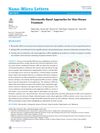
February 2025 in “Nano-Micro Letters” This review summarizes the application of microneedles in treating various skin diseases and highlights challenges like low drug loading, noting no new clinical results are reported.
 48 citations
,
September 2017 in “Frontiers in Bioscience”
48 citations
,
September 2017 in “Frontiers in Bioscience” This review explores the role of nanotechnology in wound healing, highlighting its potential through antimicrobial properties, selective inflammatory action, angiogenesis promotion, and its use in drug and gene delivery.
 48 citations
,
February 2013 in “Molecular and Cellular Endocrinology”
48 citations
,
February 2013 in “Molecular and Cellular Endocrinology” This review discusses the presence of the StAR protein in 17 non-classical steroidogenic tissues, suggesting that advanced detection methods are needed for a complete understanding of its functions in these tissues.
 48 citations
,
January 2000 in “Hormone Research in Paediatrics”
48 citations
,
January 2000 in “Hormone Research in Paediatrics” This article reviews the regulation of androgens in human skin and adrenals, highlighting their role in skin disorders, but reports no new research findings.
 47 citations
,
May 2020 in “Cardiovascular Research”
47 citations
,
May 2020 in “Cardiovascular Research” This review explores how sex differences influence the pathophysiology, incidence, and treatment outcomes of ischaemic heart disease, and emphasizes the need for more sex-specific research.
 47 citations
,
February 2015 in “European Journal of Clinical Investigation”
47 citations
,
February 2015 in “European Journal of Clinical Investigation” This review discusses Chrousos syndrome, a rare condition caused by NR 3C1 gene mutations leading to glucocorticoid resistance, and reports no new clinical results; early identification and genetic testing are recommended for diagnosis.