 59 citations
,
March 2020 in “Journal of Biomedical Science”
59 citations
,
March 2020 in “Journal of Biomedical Science” This study explored the complex roles of niche cells in regulating hair follicle stem cells, identifying specific cell functions such as signaling, sensing, and relaying messages, which could provide insights into treating hair loss conditions like androgenetic alopecia and alopecia areata.
56 citations
,
November 2022 in “Biomolecules” This review explores the role of macrophage subsets in adult cutaneous wound healing and emphasizes their potential for therapeutic targeting, but reports no new experimental results.
20 citations
,
December 2020 in “Actas Dermo-Sifiliográficas” This review examines the JAK/STAT signaling pathway's significance in inflammatory skin diseases and evaluates the efficacy and safety of oral and topical JAK inhibitors for treating vitiligo and alopecia areata. Results are not reported in this study.
9 citations
,
May 2016 in “Clinics in dermatology” This article reviews the use of phototherapy for alopecia areata and highlights its potential due to the therapy's modulatory effects on the skin's immune system, but it presents no new research findings.
May 2026 in “Frontiers in Immunology” This review discusses the dual role of extracellular vesicles in the pathophysiology and treatment of atopic dermatitis but reports no new clinical results; future research should address standardization and safety challenges.
 290 citations
,
December 2017 in “Journal of The American Academy of Dermatology”
290 citations
,
December 2017 in “Journal of The American Academy of Dermatology” This article reviews the epidemiology, clinical evaluation, and pathogenesis of alopecia areata and highlights recent advancements, but it does not report new clinical findings.
 120 citations
,
November 2014 in “Biological Reviews”
120 citations
,
November 2014 in “Biological Reviews” This article explores the dynamic and energy-efficient nature of telogen hair follicles, challenging the notion of dormancy, and highlights their potential in advancing treatments for hair growth disorders.
69 citations
,
February 2008 in “The American journal of pathology” This study found that local injections of interleukin-4 and neutralizing anti-interferon-γ antibody effectively treated alopecia in a mouse model, suggesting potential therapeutic pathways for human alopecia areata.
 31 citations
,
May 2008 in “Drug Discovery Today: Disease Mechanisms”
31 citations
,
May 2008 in “Drug Discovery Today: Disease Mechanisms” This review discusses the physiology of hair follicles, their disorders, and the principles behind developing treatments, reporting no new results.
30 citations
,
February 2023 in “Journal of Investigative Dermatology” OX40-targeted therapies may help treat skin diseases by reducing inflammation and balancing immune responses.
18 citations
,
October 2024 in “Medical Science Monitor” This review discusses the mechanisms of skin barrier impairment in acne vulgaris and suggests strategies for its repair but reports no new clinical results.
 10 citations
,
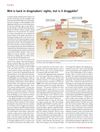
November 2018 in “Nature Biotechnology”
10 citations
,
November 2018 in “Nature Biotechnology” Drugmakers are optimistic about targeting the Wnt pathway for new treatments despite past challenges.
 9 citations
,
March 2021 in “Hormones”
9 citations
,
March 2021 in “Hormones” This review discusses how COVID-19 may affect gonadal function and potential gender differences, but reports no clinical results; it highlights possible mechanisms and new treatment approaches from recent literature.
1 citations
,
July 2025 in “Barrier Immunity” This review synthesizes existing research on the multilayered defense system of the skin, highlighting how physical, chemical, immune, and microbial barriers work together to maintain skin health, with disruptions in one often leading to broader barrier dysfunctions.
1 citations
,
June 2024 in “Preprints.org” This review explores the roles of dermal sheath cells in wound healing, highlighting their multifunctional contributions to inflammation, proliferation, and extracellular matrix remodeling, and proposes new insights into tissue regeneration and repair, especially in differentiating between hairy and non-hairy skin sites.
 1 citations
,
October 2022 in “Annual review of cell and developmental biology”
1 citations
,
October 2022 in “Annual review of cell and developmental biology” This review discusses the roles of peripheral nerves in stem cell and immune responses within the skin and hematopoietic system, emphasizing their potential in developing new therapies; it reports no new experimental results.
 January 2023 in “Discovery immunology”
 T cells and bacteria in the gut and skin help maintain health and protect against disease.
 5 citations
,
April 2011 in “Bioorganic & Medicinal Chemistry Letters”
5 citations
,
April 2011 in “Bioorganic & Medicinal Chemistry Letters” In this study, a new Finasteride conjugate showed stronger inhibition of 5α-reductase and similar reduction of prostate hyperplasia in rats compared to Finasteride, with potentially improved toxicity.
66 citations
,
October 1999 in “Annals of the New York Academy of Sciences” This article discusses the potential role of a local skin POMC system in the murine hair cycle and cutaneous stress responses, with no new results presented.
14 citations
,
March 2021 in “Actas Dermo-Sifiliográficas” This review discusses the JAK/STAT signaling pathway's role in immune-mediated skin diseases and examines the efficacy and safety of JAK inhibitors for treating vitiligo and alopecia areata, but reports no new clinical results.
 4 citations
,
May 2021 in “Biomedicines”
4 citations
,
May 2021 in “Biomedicines” This review explores the potential role of caveolin-1 in cicatricial alopecia, particularly frontal fibrosing alopecia, and discusses possibilities for targeted therapies without providing new research results.
 May 2026 in “Zenodo (CERN European Organization for Nuclear Research)”
 This review explores the complex causes and treatment options for alopecia, emphasizing that current therapies mainly offer symptomatic relief, while new advancements like stem cell approaches and improved drug delivery systems show promise for addressing underlying disease mechanisms.
 May 2026 in “Zenodo (CERN European Organization for Nuclear Research)”
 This review highlights that alopecia's complex causes include hormonal, genetic, and environmental factors, and discusses traditional and emerging therapies, suggesting a need for multi-targeted, mechanism-based treatments to improve long-term management and efficacy.
 April 2016 in “Journal of Investigative Dermatology”
 This study found that a single high dose of oral vitamin D reduced UV-induced skin erythema and inflammation in humans by enhancing autophagy, suggesting new clinical avenues for skin repair.
January 2025 in “Scholarly Commons (University of Pennsylvania)” This study found that the X-linked gene UTX is crucial for regulating skin differentiation and inflammation in females by affecting retinoic acid signaling, also highlighting potential links to sex disparities in skin diseases.
101 citations
,
July 1998 in “Journal of Investigative Dermatology” This study found that UV exposure in human skin induces IL-10 production by macrophages, while Langerhans cells are depleted and their IL-12 production is downregulated.
March 2017 in “Current dermatology reports” Topical JAK inhibitors can effectively treat alopecia areata and vitiligo by modulating immune responses.
 421 citations
,
April 2012 in “The New England Journal of Medicine”
421 citations
,
April 2012 in “The New England Journal of Medicine” Alopecia Areata is an autoimmune condition causing hair loss with no cure and treatments that often don't work well.
20 citations
,
January 2023 in “Frontiers in Immunology” This review discusses the role of skin-associated adipocytes in modulating skin immune responses and infection, reporting no new experimental results.
 41 citations
,
September 1991 in “Medical hypotheses”
41 citations
,
September 1991 in “Medical hypotheses” This article reviews the potential role of prolactin as a neuroendocrine modulator in skin biology and pathology, discussing its relevance for conditions such as psoriasis and hair growth, but reports no new clinical findings.