 December 2023 in “Revista de la Facultad de Ciencias Médicas (Quito)”
 This case report describes a 15-year-old female whose initial systemic lupus erythematosus manifestations were fever and rash appearing separately, illustrating diagnostic challenges between SLE and infection.
In this case report, a patient's atypical neuropsychiatric and dermatological symptoms were crucial for diagnosing systemic lupus erythematosus, highlighting the disease's clinical heterogeneity and the importance of early detection to prevent organ damage.
 October 2023 in “Clinical medicine and medical research”
 This study indicates that higher thyroid-stimulating hormone levels may be linked to post-COVID-19 hair loss in women, while ferritin levels showed no significant correlation.
 September 2023 in “medRxiv (Cold Spring Harbor Laboratory)”
 This study found that many conditions in patients with COVID-19 were significantly increased compared to controls, with specific phenotypes identified across different demographic and diagnostic attributes.
 August 2023 in “JOJ dermatology & cosmetics”
 This literature review found that antibiotics are a major cause of cutaneous adverse drug reactions, which represent up to 60% of all adverse drug reactions, and emphasized the need for clinicians to better understand and manage these reactions.
 May 2023 in “Sučasna pedìatrìâ. Ukraïna”
 In a clinical observation study, researchers documented a case of total alopecia in an 11-year-old child, highlighting a potential link to genetic conditions such as autoimmune polyendocrinopathy candidiasis-ectodermal dystrophy (APECED syndrome) requiring further genetic and serological testing to verify the diagnosis.
 April 2023 in “Research Square (Research Square)”
 This study found that lower GPX4 mRNA levels in polymorphonuclear neutrophils of systemic lupus erythematosus patients were negatively associated with disease activity and serological markers, suggesting a diagnostic value for GPX4 mRNA.

This case report details a 38-year-old woman in Sri Lanka diagnosed with systemic lupus erythematosus-associated protein-losing enteropathy, identified through hypoalbuminemia and EULAR criteria in a resource-limited setting.
 March 2023 in “Journal of Pakistan Society of Internal Medicine.”
 This case report highlights a young woman diagnosed with lupus enteritis, illustrating the importance of early diagnosis and treatment in this rare clinical manifestation of systemic lupus erythematosus.
 January 2023 in “Italian Journal of Medicine”
 This study found that Italian nurses who worked night shifts, in non-COVID wards, and reported regular meal intake were more likely to contract SARS-CoV-2.
 December 2022 in “Sudan Journal of Medical Sciences”
 This review paper discusses the effectiveness of repurposed drugs and potential novel therapies for treating COVID-19, highlighting remdesivir as the only FDA-approved medication and listing others with Emergency Use Authorization.
 December 2022 in “Biological and Clinical Sciences Research Journal”
 This study found that among mixed connective tissue disease patients in a tertiary care hospital in Pakistan, Raynaud phenomenon was the most common clinical feature, present in 80% of patients.
 October 2022 in “International journal of research in dermatology”
 This case report documents a 31-year-old woman with bullous SLE who showed improvement with high-dose parenteral steroids and dapsone, with ongoing follow-up due to potential kidney involvement.

This study found a significant discordance between clinical symptoms and dermatoscopic signs with histopathological inflammation in patients with LPP and AFF, affecting diagnostic and therapeutic approaches.
 July 2022 in “International Journal of Research in Dermatology”
 This report details a pediatric COVID-19 case with skin symptoms aligning with multisystem inflammatory syndrome.

This study found that the nutraceutical product DERM decreased the pro-inflammatory cytokine IL-6 in mesenchymal stem cells under in vitro conditions.
 April 2022 in “JOURNAL OF RESEARCH AND REVIEW IN SCIENCE”
 This review examines existing scientific literature on African plants with anti-cancer properties and reports no new experimental results.
March 2022 in “Biomedical Journal of Scientific & Technical Research” This review discusses therapeutics for mitochondrial dysfunction and reports no new clinical findings.

This study found that all examined biomarkers and clinical features were elevated in systemic lupus erythematosus patients, particularly ANA and Anti-dsDNA autoantibodies, but no single biomarker was sensitive or specific enough for diagnosis.
 March 2022 in “The Journal of Family Practice”
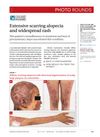
 Following treatment plans is crucial to prevent worsening skin and hair conditions.
 January 2022 in “Dermatology Review”
 This study found that patients with chronic kidney disease-associated pruritus had elevated serum levels of interleukin 31, suggesting a possible role of this cytokine in the condition.
 December 2021 in “Journal of Rheumatic Diseases”
 In this case report, a 13-year-old girl with pediatric systemic lupus erythematosus experienced rare ischemic vaso-occlusive retinopathy as a first symptom, and early interventions improved her visual acuity and fever but did not fully restore vision.
 May 2021 in “Bőrgyógyászati és venerológiai szemle”
 This review summarizes literature and experiences on the skin manifestations in COVID-19 patients, suggesting some may help identify asymptomatic cases, but it reports no new clinical results.
 April 2021 in “Journal of Law Public Policies and Human Sciences”
 In this note, editors discuss the reproduction of medical content by Dr. Paul E. Marik, related to standardized coronavirus treatments, emphasizing that the materials appear effective and cautioning readers to consult their doctors for guidance.
 March 2021 in “Research Square (Research Square)”
 This study found that patients with RASopathies demonstrated lower levels of serum IgA and CD8 T cells compared to controls, potentially indicating an increased risk of developing autoimmune disorders.
 January 2021 in “bioRxiv (Cold Spring Harbor Laboratory)”
 This study identified non-structural proteins in preschool children's scalp hair that suggest potential biomarkers for brain development, immune function, and stress response with heritability and age-related differences.
 December 2020 in “Rev. Amazon.”
 This study identified that 80% of a rural population in Ecuador uses medicinal plants like Aloe vera for treating hair conditions, highlighting the prevalence of ancestral plant knowledge.
 November 2020 in “International journal of contemporary pediatrics”
 This study reports two siblings with severe combined immunodeficiency due to a mutation in the FOXN1 gene, characterized by T-cell immunodeficiency, alopecia totalis, and nail dystrophy.
 July 2020 in “Scholarly Journal of Psychology and Behavioral Sciences”
 This article discusses psychological and clinical responses to the recent pandemic and emphasizes the potential for a virus-free future, but it reports no new research findings.
 May 2020 in “Research Square (Research Square)”
 This study found that hair follicle stem cells, when transplanted in a rat model of ischaemic stroke, migrated to affected areas, expressed neuron-specific markers, and reduced infarct volume, suggesting potential therapeutic benefits.