January 2020 in “프로그램북(구 초록집)” This study found that treating androgenetic alopecia patients with microneedle-delivered GFC containing FGF5s and NMN increased hair density and diameter compared to normal saline.
October 2025 in “International Journal of Advanced Pharmaceutical Sciences and Research” This review found that intermittent fasting might benefit skin health by enhancing skin regeneration, delaying aging, and improving inflammatory skin conditions; however, most evidence is based on preclinical data, indicating a need for more human trials to confirm these findings.
January 2020 in “Global dermatology” This study found that iontophoresis with growth factor cocktail including fibroblast growth factor 5-short significantly increased hair density in patients with androgenetic alopecia over 24 weeks.
January 2016 in “Indian dermatology online journal” This case report describes a 50-year-old woman with frontal fibrosing alopecia who showed no improvement despite multiple treatments, including intralesional triamcinolone and topical glucocorticoids.
2 citations
,
May 2021 in “bioRxiv (Cold Spring Harbor Laboratory)” This study found that fibronectin is crucial for hair follicle stem cell function and regeneration, with its deletion impairing regeneration but restoration by dermal injection of exogenous fibronectin.
Linalool in personal care products may worsen frontal fibrosing alopecia by damaging hair follicle stem cells and triggering harmful immune responses.
 3 citations
,
February 2024 in “Journal of the American Academy of Dermatology”
3 citations
,
February 2024 in “Journal of the American Academy of Dermatology” This source discusses that while oral JAK inhibitors are used for treating lichen planopilaris and frontal fibrosing alopecia, they carry significant risk of adverse events; two cases showed promising results using tofacitinib cream as a safer topical alternative.
 41 citations
,
December 2015 in “JAMA Dermatology”
41 citations
,
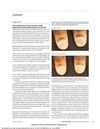
December 2015 in “JAMA Dermatology” Tofacitinib citrate improved nail dystrophy and pain in patients with alopecia universalis without causing side effects.
2 citations
,
September 2022 in “World Rabbit Science” This study found that the WIF1 gene may play a crucial role in hair follicle growth and development in Angora rabbits by regulating specific genes and proteins.
 October 2020 in “International Journal of Research in Dermatology”
 This review discusses the possible immune-mediated and environmental factors contributing to frontal fibrosing alopecia but reports no new clinical findings, emphasizing the need for standardized treatment evaluations.
 1 citations
,
February 2021 in “Journal of Natural Remedies”
1 citations
,
February 2021 in “Journal of Natural Remedies” This study found that a combination of Ficus religiosa and Morus alba extracts promoted hair growth and Hair Follicle regeneration in a mouse model of hair loss by inducing the anagen phase and upregulating stem cell-associated genes.
7 citations
,
March 2022 in “International Journal of Molecular Sciences” This study found that FGF21 suppresses inflammation induced by C. acnes in both human skin cells and mouse models, suggesting potential use in acne treatment.
2 citations
,
March 2011 in “International Journal of Dermatology” This case report describes an 18-year-old male with IFAP syndrome, confirmed by total hair loss, severe photophobia, and characteristic skin changes, marking a rare presentation of the condition.
 2 citations
,
April 2017 in “Actas Dermo-Sifiliográficas”
2 citations
,
April 2017 in “Actas Dermo-Sifiliográficas” This review discusses the etiology, pathogenesis, clinical presentation, and treatment of frontal fibrosing alopecia, noting the lack of clinical trial data and limited observational treatment results.
July 2024 in “Journal of Investigative Dermatology” The Fas/FasL pathway may play a role in alopecia areata.
 January 2025 in “International Journal of Dermatology”
 In this case report, a 14-year-old male with alopecia areata subtotalis and nail involvement showed significant improvement after 9 months of treatment with oral tofacitinib, including complete hair regrowth and nail texture improvement, though further studies are needed to confirm these findings.
 June 2026 in “International Journal of Drug Delivery Technology”
 In this study, researchers optimized fast-dissolving tablets of nifedipine using a systematic approach, resulting in formulations that demonstrated rapid disintegration, enhanced dissolution profiles, and improved solubility, potentially improving oral delivery for patients requiring poorly soluble antihypertensive medication.
 8 citations
,
September 2011 in “European Journal of Dermatology”
8 citations
,
September 2011 in “European Journal of Dermatology” This study reports that most cases of frontal fibrosing alopecia did not show significant improvement with available treatments, and effective management remains unproven.
 103 citations
,
June 2018 in “International Journal of Molecular Sciences”
103 citations
,
June 2018 in “International Journal of Molecular Sciences” This review discusses the applications and research on fibroblast growth factors, including their use in wound healing, diabetes, and cancer, but it reports no new clinical results.
 123 citations
,
August 2005 in “Journal of the European Academy of Dermatology and Venereology”
123 citations
,
August 2005 in “Journal of the European Academy of Dermatology and Venereology” In this study, the researchers observed that treatment with intralesional and topical corticosteroids, finasteride, and minoxidil may stop the progression of frontal fibrosing alopecia in postmenopausal and premenopausal women.
1 citations
,
October 2025 in “Journal of Investigative Dermatology” In this study of women with frontal fibrosing alopecia, delgocitinib cream improved the molecular signature of lesions and demonstrated potential as a treatment, showing significant transcriptomic changes and some clinical improvements over 12 weeks compared to a cream vehicle.
 1 citations
,
September 2016 in “Journal of Dermatological Science”
1 citations
,
September 2016 in “Journal of Dermatological Science” This study found that FGF18 signaling helps protect hair follicles from radiation damage by maintaining the resting phase and supporting stem cell survival, potentially reducing radiation-induced hair loss.
8 citations
,
July 2017 in “The journal of investigative dermatology/Journal of investigative dermatology” This study identified four circulating microRNAs as highly predictive of frontal fibrosing alopecia status, suggesting potential roles in diagnostics and disease understanding.
6 citations
,
November 2020 in “JAAD Case Reports” This study identified overlapping genetic susceptibility loci in both alopecia areata and inflammatory bowel disease, specifically with Crohn's disease and ulcerative colitis.
 September 2021 in “Revista Interdisciplinar em Saúde”
 In this observational study, treatment with oral isotretinoin was reported to stabilize hair loss in patients with frontal fibrosing alopecia, offering potential guidance for clinicians on its therapeutic use, with implications for improving affected patients' self-esteem.
July 2024 in “Journal of Investigative Dermatology” Linalool in fragrances may harm hair follicles and contribute to hair loss.
9 citations
,
April 2006 in “International Journal of Dermatology” This article reviews the potential for α-difluoromethylornithine to help control hair growth and prevent cancer, but it does not present new clinical results.
 September 2023 in “Journal of the American Academy of Dermatology”
 Topical tofacitinib helped a man with severe scalp condition after other treatments failed.
 January 2024 in “Editora In Vivo eBooks”
 In this case report, a female mixed-breed dog was observed with dermatophytosis, presenting with alopecia in the neck and ear, highlighting the zoonotic nature of the infection caused by fungi that can affect both animals and humans.
6 citations
,
May 2013 in “Journal of Clinical Oncology” Combining Ficlatuzumab and Gefitinib can cause severe hair loss.