20 citations
,
July 2005 in “Experimental dermatology” This study found that the fuzzy mutation in mice is linked to both structural hair defects and accelerated hair follicle cycling, influencing the regulation of hair cycle phases such as catagen and anagen.
 3 citations
,
February 2024 in “Journal of the American Academy of Dermatology”
3 citations
,
February 2024 in “Journal of the American Academy of Dermatology” This source discusses that while oral JAK inhibitors are used for treating lichen planopilaris and frontal fibrosing alopecia, they carry significant risk of adverse events; two cases showed promising results using tofacitinib cream as a safer topical alternative.
 January 2015 in “Hair transplant forum international”
 This snippet mentions an increase in women seeking surgical hair restoration and subsequently encountering more cases of frontal fibrosing alopecia, but the abstract doesn't contain results or conclusions.
 March 2025 in “International Journal of Trichology”
 This case report describes the first observed instance of fibrosing alopecia in a pattern distribution in a child, suggesting the condition is not solely androgen dependent.
November 2017 in “DOAJ (DOAJ: Directory of Open Access Journals)” This study found an IFIS incidence rate of 3.18% among cataract surgeries in a Chinese hospital and identified reserpine, clozapine, and post-panretinal photocoagulation as new risk factors.
 6 citations
,
October 2019 in “Case Reports in Dermatology”
6 citations
,
October 2019 in “Case Reports in Dermatology” This report describes a case of fibrosing alopecia in a pattern distribution in a postmenopausal woman, highlighting its distinction from other forms of lichen planopilaris and pattern hair loss.
 6 citations
,
January 2019 in “The American Journal of Dermatopathology”
6 citations
,
January 2019 in “The American Journal of Dermatopathology” This study discovered that adipose tissue infiltration at the isthmus level appears significantly more often in frontal fibrosing alopecia cases compared to controls, suggesting a potential role in the condition's pathology.
 March 2023 in “PARIPEX INDIAN JOURNAL OF RESEARCH”
 This study found that prolonged tofacitinib treatment in adult Indian patients with moderate-to-severe alopecia areata was associated with a high regrowth rate, which varied with factors like age at disease onset and treatment duration.
 May 2022 in “Journal of Cosmetic Dermatology”
 This review discusses the characteristics and diagnostic challenges of fibrosing alopecia pattern distribution, proposing an algorithm for hair transplantation, but reports no new clinical results.
 16 citations
,
July 2018 in “Dermatologic Surgery”
16 citations
,
July 2018 in “Dermatologic Surgery” In this study, iL-PRF injections produced significantly better clinical scores for androgenetic alopecia patients compared to controls, especially in those with more severe baseline conditions.
 January 2007 in “대한피부과학회지”
 In this clinical trial, the topical agent AP-FHG0604T significantly increased hair counts and growth rates in women with female pattern hair loss compared to a placebo, though some reported mild local irritation.
Ivarmacitinib effectively regrows hair in severe alopecia areata.
August 2017 in “Seoul National University Open Repository (Seoul National University)” The study investigated the role of Aminoacyl-tRNA synthetase interacting multifunctional protein 1 (AIMP1) in hair follicle stem cell proliferation and its potential as a treatment for alopecia. AIMP1, when dissociated from the multi-tRNA synthetase complex, was found to be secreted by dermal papilla cells in a sonic hedgehog (Shh) signal-dependent manner. This secretion increased the proliferation of CD34+ hair follicle stem cells by promoting the wnt signaling pathway through inhibition of sFRP1, a known wnt antagonist. The research demonstrated that the N-terminal fragment of AIMP1 could be developed into a therapeutic peptide for hair loss. When applied topically to depilated mice, this peptide significantly accelerated hair growth, especially when formulated with carbomer. The findings highlighted a novel mechanism of AIMP1 action and its potential application in alopecia treatment.
 1 citations
,
January 2016 in “Journal of Microbial & Biochemical Technology”
1 citations
,
January 2016 in “Journal of Microbial & Biochemical Technology” This study found that the free androgen index (FAI) is a superior marker of hyperandrogenism in men with premature androgenetic alopecia compared to DHEAS and testosterone levels.
July 2021 in “British Journal of Dermatology” In this study, the researchers reported that early diagnosis and treatment of fibrosing alopecia in a pattern distribution may arrest or potentially reverse disease progression, though some patients experienced continued hair loss.
 7 citations
,
December 2021 in “European Respiratory Review”
7 citations
,
December 2021 in “European Respiratory Review” This review covers the current status of the interstitial pneumonia with autoimmune features (IPAF) category, pointing out the need for revision of its criteria to establish it as a standalone diagnostic term, but reports no new clinical findings.
January 2020 in “Menoufia Medical Journal” This study found that the expression of IGF-1 receptor was significantly reduced in women with female androgenetic alopecia compared to healthy controls.
September 2023 in “Journal of the American Academy of Dermatology” This study examined the application of new clinical guidelines for diagnosing frontal fibrosing alopecia in 18 men, highlighting that current diagnostic criteria may often overlook early beard involvement and sideburn recession.
 September 2015 in “Journal of Steroids & Hormonal Science”
 This study reports a significant reduction in hair loss and other androgen-related signs in hyperandrogenism patients using inositol supplementation, although further research is needed to confirm these findings.
 December 2024 in “Research Journal of Medical Sciences”
 Injectable Platelet Rich Fibrin effectively improves hair growth in males with hair loss.
 August 2018 in “Journal of Investigative Dermatology”
 This study of alopecia areata patients found that a 10 mg twice-daily dose of oral tofacitinib led to significant hair regrowth, suggesting it may be beneficial for treatment.
 29 citations
,
May 2011 in “Journal of Cataract and Refractive Surgery”
29 citations
,
May 2011 in “Journal of Cataract and Refractive Surgery” This case report suggests a possible association between long-term finasteride use for male pattern baldness and the development of cataracts and intraoperative floppy-iris syndrome in a patient.
 January 2021 in “Hair transplant forum international”
 This article describes a new T-Fast multi-implanter that potentially reduces operating costs and surgical time by implanting two follicular unit excision grafts simultaneously, which may encourage clinics to adopt this technique.
 March 2024 in “Journal of cosmetic dermatology”
 This study found that oral isotretinoin significantly reduced symptoms in nearly 90% of patients with frontal fibrosing alopecia, affecting both facial papules and hair loss.
 July 2020 in “CRS 2020 Virtual Annual Meeting”
 This study found that the newly developed microarray patches for intradermal delivery of finasteride showed high drug content and significantly improved skin deposition compared to existing methods.
2 citations
,
July 2025 in “Journal of the European Academy of Dermatology and Venereology” This study involved 69 hair experts using a Delphi process to achieve consensus on treating frontal fibrosing alopecia, finding strong agreement on disease monitoring but less on physical and systemic therapies, indicating the need for more research.
 1 citations
,
April 2017 in “Journal of Investigative Dermatology”
1 citations
,
April 2017 in “Journal of Investigative Dermatology” This study found that oral tofacitinib led to variable hair regrowth in patients with resistant alopecia areata, implying that longer treatment durations may be needed to fully assess its effectiveness.
 May 2025 in “Journal of Investigative Medicine”
 This study concluded that the Free Androgen Index (FAI) could serve as a reliable biomarker for hyperandrogenism in women with androgenetic alopecia, showing more predictive value than testosterone or SHBG alone.
December 2015 in “Endocrinology and Metabolic Syndrome” This study observed that treatment with inositol, in various doses based on BMI, led to significant reductions in hair loss and symptoms of hyperandrogenism in patients with androgenetic alopecia.
 32 citations
,
September 2017 in “Journal of the American Academy of Dermatology”
32 citations
,
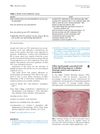
September 2017 in “Journal of the American Academy of Dermatology” In this study, researchers reported that oral isotretinoin effectively treated facial papules in frontal fibrosing alopecia, with histopathologic findings suggesting the involvement of elastic fibers and sebaceous glands in papule formation beyond perifollicular inflammation.