July 2023 in “Media Dermato Venereologica Indonesiana” In this study, researchers highlighted that in sarcoidosis, macrophages in granulomas can produce vitamin D, potentially leading to calcium imbalances, where vitamin D supplementation may cause hypercalcemia, necessitating careful laboratory assessment before supplementation.
The authors of this study concluded that higher calcium levels in hair may indicate early metabolic changes leading to osteopenia or osteoporosis in menopausal women, even before detectable by standard DEXA imaging.
May 2025 in “Hormone Research in Paediatrics” This case study described a girl with vitamin D-dependent rickets type 2A who developed long-standing tertiary hyperparathyroidism, yet this did not hinder the healing of her rickets or normalization of hypophosphatemia; high doses of intravenous calcium were pivotal for recovery.
10 citations
,
January 2013 in “TURKISH JOURNAL OF MEDICAL SCIENCES” This retrospective study found that a majority of patients with low vitamin D levels also exhibited secondary hyperparathyroidism, highlighting the relationship between vitamin D deficiency and increased parathyroid hormone levels.
11 citations
,
May 1985 in “Archives of Dermatology” This study found that calcitriol-resistant rickets is associated with alopecia in children and should be considered in the differential diagnosis of hair loss.
October 2025 in “Journal of the Endocrine Society” In this case study, a 69-year-old woman with severe hypercortisolism developed acute adrenal insufficiency after starting ketoconazole treatment, highlighting the need for cautious dosing and close monitoring of adrenal function, particularly in patients with prior glucocorticoid exposure.
 November 2022 in “Journal of the Endocrine Society”
 This case study reports that immunotherapy with ipilimumab and nivolumab induced hypophysitis in a patient with renal cell carcinoma, emphasizing the need for careful monitoring of endocrine function in such treatments.
 April 2020 in “Journal of the Endocrine Society”
 This case report details an atypical presentation of Hodgkin's lymphoma in an 87-year-old man, where severe hypercalcemia and mental status changes prompted further investigation and diagnosis.
 May 2021 in “Journal of the Endocrine Society”
 This case report describes the rare association of an ovarian Leydig cell tumor and primary hyperparathyroidism in a postmenopausal woman, highlighting the importance of considering rare causes in patients with virilizing symptoms.
170 citations
,
May 1979 in “The journal of pediatrics/The Journal of pediatrics” This report describes two sisters with rickets and alopecia unresponsive to high doses of vitamin D2, where oral phosphorus supplements led to significant clinical improvement.
52 citations
,
May 1982 in “The American journal of the medical sciences” This study found that the most likely cause of hypercalcemia in a patient with symptoms of hypervitaminosis A and a history of chronic vitamin A ingestion was vitamin A toxicity.
18 citations
,
March 2016 in “Journal of Investigative Dermatology” This study found that calbindin-D9k knockout mice on a maternal vitamin D-deficient and low-calcium diet developed transient alopecia, but a high-vitamin D and calcium diet in mothers reduced this effect.
35 citations
,
August 1978 in “Australian Veterinary Journal” In this study, a sole diet of Leucaena leucocephala caused hypothyroidism and poor weight gain in steers, but mineral supplementation improved some symptoms without normalizing thyroid hormone levels.
5 citations
,
October 2003 in “PubMed” This case report describes a 30-year-old male with a late diagnosis of Kallmann's syndrome, highlighting the necessity of hormonal therapy to reduce the risk of osteoporosis and bone fractures despite the patient's acceptance of his physical appearance.
55 citations
,
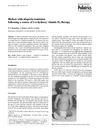
May 1985 in “Archives of Dermatology” This study found that alopecia in four children was linked to severe calcitriol-resistant rickets, suggesting this condition should be considered among inherited hair growth disorders.
 6 citations
,
August 1989 in “European journal of pediatrics”
6 citations
,
August 1989 in “European journal of pediatrics” This case study describes a child with rickets and alopecia who responded to a small dose of 1-a-hydroxyvitamin D3, but her alopecia remained unchanged despite treatment.
 October 2024 in “Journal of the Endocrine Society”
 This case report highlights that in severe illnesses like sepsis, myxedema coma can occur with less elevated TSH levels than typical for primary hypothyroidism, likely due to inflammatory cytokines affecting TSH secretion, even when central lesions are absent.
October 2025 in “Journal of the Endocrine Society” This case report describes a 36-year-old female patient with panhypopituitarism, experiencing severe adrenal insufficiency and thyroid hormone deficiency, which led to electrolyte imbalance, QT interval prolongation, and ventricular tachycardia; treatment stabilized her condition, underscoring the importance of hormonal evaluation in arrhythmia assessment.
100 citations
,
October 1986 in “Clinical Endocrinology” This study found that alopecia in hereditary resistance to 1,25(OH)2D may indicate a more severe form of the condition, associated with earlier diagnosis and different responses to calciferol therapy.
 3 citations
,
January 2012 in “Internal Medicine”
3 citations
,
January 2012 in “Internal Medicine” In this case study, a 68-year-old woman was diagnosed with central diabetes insipidus and hypothalamic hypopituitarism due to a Rathke's cleft cyst.
October 2022 in “British Journal of Dermatology” In this retrospective study, the incidence of hyperkalaemia within the first year of spironolactone use was assessed among women over 65 with female-pattern hair loss, highlighting a potential safety concern.
12 citations
,
December 1965 in “Immunology and Cell Biology” This study found that experimentally induced calcification in rat skin led to rapid and localized mineralization in hair follicles, progressing to more extensive calcification with prior hypercalcemic treatment.
 January 2020 in “Frontiers in Medical Case Reports”
 This case study reported that reducing glucocorticoids resolved calcinosis cutis in a dog with hypoadrenocorticism, while demodicosis was treated with a fluralaner chewable tablet.
 October 2024 in “Journal of the Endocrine Society”
 This case study reports on a rare form of vitamin D resistant rickets in a 37-year-old male, highlighting the condition's clinical features and the necessity for a thorough understanding of calcium and vitamin D metabolism in the diagnosis and management of metabolic bone diseases.
119 citations
,
October 1998 in “Endocrinology” This study found that normalizing mineral ion levels in vitamin D receptor-ablated mice prevented hyperparathyroidism, rickets, and osteomalacia, but alopecia persisted, indicating a separate role for the receptor in hair growth.
 May 2024 in “Journal of clinical case studies reviews & reports”
 This case report detailed a unique instance of hypopituitarism in a 65-year-old male presenting with symptoms including nausea, vomiting, and fatigue, attributed to secondary adrenal insufficiency, which improved following appropriate cortisol treatment.
24 citations
,
July 1979 in “Archives of Dermatology” This article discusses the potential for hypervitaminosis A in patients with chronic renal disease undergoing dialysis, highlighting the risks associated with low-dose vitamin A supplementation, and reports no new clinical results.
Hair can show daily calcium changes, linked to body calcium levels and influenced by hormones, and can help assess calcium metabolism issues.
 December 2025 in “Cureus”
 In this case report, a 40-year-old woman with systemic lupus erythematosus developed calcinosis cutis, a rare complication characterized by calcified deposits in her legs, requiring surgical intervention and ongoing medical treatment due to infection.
3 citations
,
February 2022 in “Canadian Medical Association Journal” This case report describes a 72-year-old man who developed symptoms of fatigue and cold intolerance after discontinuing his levothyroxine treatment for hypothyroidism six months earlier.