81 citations
,
May 2019 in “Frontiers in Endocrinology” This study found that administering melatonin for 12 weeks to women with PCOS significantly reduced hirsutism, testosterone, and inflammation markers, while enhancing antioxidant levels compared to a placebo.
 9 citations
,
July 2002 in “Journal of the European Academy of Dermatology and Venereology”
9 citations
,
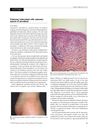
July 2002 in “Journal of the European Academy of Dermatology and Venereology” This article discusses multiple minute digitate hyperkeratosis in a dermatological context and reports no new clinical findings; the authors focus on a descriptive review.
 12 citations
,
November 1993 in “International Journal of Dermatology”
12 citations
,
November 1993 in “International Journal of Dermatology” The document explains that hirsutism, often caused by hormonal issues, can be managed with treatment to improve both physical appearance and mental health.
October 2025 in “Journal of the Endocrine Society” This case study reported a unique instance of a benign adrenal adenoma co-secreting cortisol and DHEA-S, which initially mimicked PCOS symptoms. Surgical removal resulted in significant clinical improvement, confirming the diagnosis of cyclic adrenal Cushing's syndrome.
 4 citations
,
June 2019 in “Revista brasileira de ginecologia e obstetrícia”
4 citations
,
June 2019 in “Revista brasileira de ginecologia e obstetrícia” This article discusses the prevalence of hirsutism in women and highlights that many cases exhibit normal androgen levels, suggesting a need for broader diagnostic approaches.
1 citations
,
June 2006 in “Experimental dermatology” This article reviews possible pathogenesis scenarios for hidradenitis suppurativa and emphasizes the need for focused research on the innate immune system of hair follicles to better understand the disease.
January 2002 in “HAL (Le Centre pour la Communication Scientifique Directe)” In this study, researchers characterized a dehydroepiandrosterone hydroxylating enzyme system in hair follicles similar to the liver monooxygenase system, noting its inhibition by carbon monoxide and its dependence on NADPH.
 9 citations
,
November 2013 in “Presse Medicale”
9 citations
,
November 2013 in “Presse Medicale” This article discusses clinical features and treatment options for hyperandrogenism in women and does not report new findings, highlighting current practices in diagnosis and management.
January 2025 in “International Journal of Forest Animal and Fisheries Research” This review found that while elevated DHEA levels are observed in some women with PCOS, especially those with hyperandrogenism, inconsistencies across studies suggest that standardized measurement and analyses are needed to clarify DHEA's role as a biomarker and factor in PCOS pathophysiology.
2 citations
,
January 1975 in “Archives of Dermatological Research” Certain enzymes react strongly with some hormones in rat skin during hair growth, mainly in sebaceous glands and hair sheaths.
September 2021 in “Fertility and sterility” In this study, daily administration of 100mg DHEA for 16 weeks in women with adequate ovarian reserve did not modify metabolic or reproductive variables, apart from increased antral follicular count and anti-Müllerian hormone levels.
 30 citations
,
October 2014 in “Journal of The American Academy of Dermatology”
30 citations
,
October 2014 in “Journal of The American Academy of Dermatology” This article reviews current treatment options for acne, hirsutism, and androgenetic alopecia in women with PCOS, recommending individualized and multidisciplinary approaches, but reports no new clinical results.
 January 2023 in “Open Journal of Endocrine and Metabolic Diseases”
 This study in Senegal reported that among women with hyperandrogenism, the primary diagnosis was polycystic ovarian syndrome, with symptoms including hirsutism, menstrual disorders, and acne.
 April 2018 in “Journal of Investigative Dermatology”
 This study identified the osteopontin-derived peptide, FOL-005, as a potential inhibitor of unwanted human hair growth by promoting catagen development without reducing stem cell numbers or showing toxicity.
 April 2017 in “Journal of Investigative Dermatology”
 This study found that a 10% carbamide peroxide solution significantly reduced acne lesions more effectively than a vehicle solution, suggesting it as a safe and effective alternative to benzoyl peroxide for treating mild to moderate acne.
 39 citations
,
May 2011 in “European Journal of Clinical Investigation”
39 citations
,
May 2011 in “European Journal of Clinical Investigation” This review discusses the various causes of hirsutism other than PCOS, emphasizing the importance of distinguishing potentially life-threatening conditions like androgen-secreting tumors from more benign causes; it reports no new clinical findings.
 5 citations
,
March 2010 in “Gynecologic and obstetric investigation”
5 citations
,
March 2010 in “Gynecologic and obstetric investigation” This study found that parenteral administration of cyproterone acetate was more effective than high-dose oral treatment in reducing facial hair diameter and improving dermatological parameters in patients with severe hirsutism, despite similar androgen suppression.
5 citations
,
July 1987 in “European Journal of Obstetrics & Gynecology and Reproductive Biology” This study found that a combined oral contraceptive containing ethinyl estradiol and desogestrel appeared effective in temporarily treating ovarian hyperandrogenism in adolescents, with reductions in hormone levels and ovarian volume observed.
 1 citations
,
October 2025 in “Nano Research”
1 citations
,
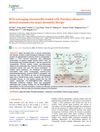
October 2025 in “Nano Research” In this study, researchers developed a dissolvable microneedle patch combining HA-TEMPO and Portulaca oleracea L.-derived nanoparticles, which effectively reduced oxidative stress and inflammation in an atopic dermatitis model while restoring immune balance, suggesting a promising treatment strategy.
January 1995 in “Seoul National University Open Repository (Seoul National University)” This study found that skin sulfhydryl oxidase plays a role in keratinization and may contribute to skin's protective functions, with its expression influenced by irritants and differentiation modifiers.
18 citations
,
March 2010 in “Gynecologic and obstetric investigation” This study found that both combined therapy with goserelin and oral contraceptives, and oral contraceptives alone, significantly reduced hair diameter in severe hirsutism without a significant difference between treatments.
49 citations
,
October 1988 in “The Journal of Clinical Endocrinology & Metabolism” This study found that low doses of leuprolide effectively suppressed serum estradiol and LH response, while higher doses were needed to suppress testosterone and reduce hair growth in hirsute women.
 January 2023 in “International journal of homoeopathic sciences”
 This study collected data on PCOS symptoms among female students and assessed the prevalence of menstrual irregularities, obesity, hirsutism, alopecia, and severe acne in this group.
 80 citations
,
November 1975 in “Acta dermato-venereologica”
80 citations
,
November 1975 in “Acta dermato-venereologica” This study found that while some patients with severe alopecia areata responded to high-dose prednisolone, the response was inconsistent and the therapy's risks prevent recommending it for general use.
 16 citations
,
December 2008 in “Journal of The American Academy of Dermatology”
16 citations
,
December 2008 in “Journal of The American Academy of Dermatology” This study found that adherence to topical hydrocortisone in adults with atopic dermatitis was inconsistent and not significantly different across different medication vehicles, though disease severity improved markedly within 2 weeks.
8 citations
,
May 1991 in “PubMed” This case study from Boston University details a 35-year-old woman diagnosed with congenital adrenal hyperplasia, treated with dexamethasone, leading to normalized androgen levels and successful conception.
 May 2011 in “Journal of The American Academy of Dermatology”
 This research letter observed that patients with severe atopic dermatitis showed normal serum cortisol levels after hospitalization despite continued use of potent topical corticosteroids, though poor adherence may lead to overestimations of actual medication use.
 12 citations
,
April 2016 in “Chinese Medicine”
12 citations
,
April 2016 in “Chinese Medicine” The research identified 12 antioxidant compounds in Polygonum multiflorum roots, suggesting these as quality markers for the plant's processed roots.
March 2023 in “Current Pharmaceutical Design” This study found that spironolactone significantly reduced hirsutism scores in women with idiopathic hirsutism compared to finasteride and cyproterone acetate but showed no significant difference among women with PCOS compared to flutamide and finasteride, and it was well tolerated overall.
1 citations
,
April 1993 in “Problemy e̊ndokrinologii” This article discusses hyperandrogenism syndrome in women, highlighting systemic antiandrogenic therapy as advisable for severe or moderate hirsutism but reports no new clinical results.