 4 citations
,
December 2018 in “Case reports in endocrinology”
4 citations
,
December 2018 in “Case reports in endocrinology” This case study reported a postmenopausal woman with a testosterone-secreting ovarian tumor that was not detected through standard clinical or radiological examination but was found via biopsy.
 January 2016 in “Springer eBooks”
 This article reviews causes and treatments of hyperandrogenism, including hirsutism and acne, but presents no new clinical findings.
18 citations
,
January 1985 in “Acta Obstetricia Et Gynecologica Scandinavica” In this study of hirsute women, researchers found that correlations between hirsutism and hyperandrogenism were observed only in patients with a low LH/FSH ratio.
October 2025 in “Journal of the Endocrine Society” In this case study, a 68-year-old woman with hyperandrogenism and presumed ovarian origin responded well to GnRH agonist therapy, normalizing testosterone levels and stabilizing blood pressure, suggesting its effectiveness as a non-surgical treatment option.
 21 citations
,
January 2017 in “European Journal of Obstetrics & Gynecology and Reproductive Biology”
21 citations
,
January 2017 in “European Journal of Obstetrics & Gynecology and Reproductive Biology” This study suggests that acne is often associated with hyperandrogenemia in women, contradicting previous recommendations that acne is not linked to androgen excess disorders.
 4 citations
,
June 2005 in “Andrology”
4 citations
,
June 2005 in “Andrology” This case report describes a woman with severe hyperandrogenism due to ovarian tumors, where surgical removal led to dramatic improvement in her diabetes control and reduced insulin requirements.
 17 citations
,
September 2017 in “Journal of Cosmetic Dermatology”
17 citations
,
September 2017 in “Journal of Cosmetic Dermatology” In this study of women with PCOS, hirsutism strongly correlated with metabolic abnormalities, while acne and androgenic alopecia were not clear markers of biochemical hyperandrogenemia or metabolic dysfunction.
 4 citations
,
March 2012 in “Our Dermatology Online”
4 citations
,
March 2012 in “Our Dermatology Online” This study conducted physical examinations on fifty women with hirsutism, focusing on virilization signs, but reports no new clinical findings.
 7 citations
,
January 2011 in “Journal of The American Academy of Dermatology”
7 citations
,
January 2011 in “Journal of The American Academy of Dermatology” This study observed that moderate to severe acne is the most common manifestation in women with hyperandrogenism and highlights acanthosis nigricans and hirsutism as useful clinical markers.
 July 2023 in “Journal of Education, Health and Sport”
 This study found that while many women were aware of some symptoms and causes of androgen excess, there is a need to improve education on this endocrine disorder, especially among those without medical backgrounds.
 12 citations
,
May 2005 in “Current obstetrics and gynaecology/Current obstetrics & gynaecology”
12 citations
,
May 2005 in “Current obstetrics and gynaecology/Current obstetrics & gynaecology” This review discusses the causes and treatment strategies for hirsutism, emphasizing that combination therapy targeting androgen suppression and hair removal techniques is most effective; no new clinical results are reported.
 October 2024 in “Journal of the Endocrine Society”
 This case report describes a patient with an ovarian steroid cell tumor that initially presented as non-classical adrenal hyperplasia, emphasizing the difficulty in differential diagnosis with hyperandrogenism and the importance of close clinical monitoring.
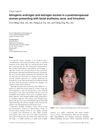 August 2009 in “International Journal of Dermatology”
 This case report describes a postmenopausal woman who experienced facial erythema, acne, and hirsutism due to excess androgen and estrogen levels.
 14 citations
,
January 2018 in “Advances in Clinical Chemistry”
14 citations
,
January 2018 in “Advances in Clinical Chemistry” This review discusses the evaluation of hyperandrogenemia in women and hypogonadism in men across different life stages and presents biomarkers used for diagnosing male hypogonadism, reporting no new clinical results.
4 citations
,
January 2007 in “Gynecological endocrinology” This case study suggests that low leptin levels in obese hyperandrogenic postmenopausal women might indicate the presence of androgen-secreting tumors.
 April 2020 in “Journal of the Endocrine Society”
 This case report describes a 58-year-old woman whose virilization symptoms were linked to a steroid tumor of the ovary, emphasizing the importance of prompt diagnosis and treatment to improve her quality of life.
May 2023 in “Problems of Endocrinology” This study observed that "physiological" hyperandrogenism due to elevated total testosterone was associated with a 23.5% incidence of arterial hypertension, unlike hyperandrogenism due to elevated DHT levels.
 10 citations
,
May 1995 in “Journal of General Internal Medicine”
10 citations
,
May 1995 in “Journal of General Internal Medicine” Most women with excessive hair growth have PCOS; treatment varies and focuses on preventing new hair, with electrolysis as the only permanent removal method.
23 citations
,
June 1997 in “Baillière's clinical obstetrics and gynaecology” This article discusses various diagnostic categories and treatments for hyperandrogenism, with a focus on polycystic ovary syndrome and reports no new clinical findings, calling for specific treatments and lifestyle changes.
 2 citations
,
January 2013 in “Elsevier eBooks”
2 citations
,
January 2013 in “Elsevier eBooks” This chapter reviews the causes and underlying steroid pathways of hirsutism and virilization in women, detailing relevant conditions and laboratory assays without reporting new clinical results.
 82 citations
,
May 2016 in “Best Practice & Research in Clinical Obstetrics & Gynaecology”
82 citations
,
May 2016 in “Best Practice & Research in Clinical Obstetrics & Gynaecology” This article outlines the clinical features, evaluation, and treatment strategies for androgen excess in polycystic ovary syndrome, highlighting important diagnostic and management approaches but reporting no new research results.
3 citations
,
January 2021 in “touchREVIEWS in Endocrinology” This case report describes how a 68-year-old woman's hyperandrogenic symptoms improved and testosterone levels normalized after the surgical removal of an occult Leydig cell tumour.
 8 citations
,
April 2019 in “Journal of the Endocrine Society”
8 citations
,
April 2019 in “Journal of the Endocrine Society” In this study, long-term normalization of testosterone levels in postmenopausal women with hyperandrogenism did not improve body mass index, glucose, or lipid metabolism.
 77 citations
,
March 2004 in “Human Reproduction”
77 citations
,
March 2004 in “Human Reproduction” This study found that women with symptoms of oligomenorrhoea and/or hirsutism are more likely to have polycystic ovaries and less favorable biochemical and clinical markers compared to asymptomatic women.
 October 2023 in “Journal of the Endocrine Society”
 In this study, distinct androgen excess subtypes were identified in women with PCOS, with the adrenal androgen excess cluster showing significantly higher rates of insulin resistance and type 2 diabetes, suggesting 11-oxygenated androgens as potential drivers of metabolic risk.
 January 2011 in “Yearbook of Dermatology and Dermatologic Surgery”
 Acne and hair loss are not good indicators of hormone imbalance in PCOS, but excessive body hair is.
16 citations
,
August 1989 in “Human Reproduction” This article discusses the complex pathogenesis of hirsutism and reports no new clinical results; further research is needed for better diagnostic and therapeutic strategies.
11 citations
,
August 2019 in “PubMed” This review discusses the causes, evaluation, and treatment options for hirsutism in women, but reports no new clinical results.
August 2025 in “Frontiers in Endocrinology” This study examined postmenopausal hyperandrogenism related to ovarian disease and found that specific biochemical markers can help differentiate between tumorous and non-tumorous cases, with a good level of sensitivity and specificity, supporting surgical intervention for resolution.
 13 citations
,
January 2012 in “International Journal of Trichology”
13 citations
,
January 2012 in “International Journal of Trichology” In this study, idiopathic hirsutism was identified as the most common cause of hirsutism among the participants, with a significant difference in hormone levels between cases of polycystic ovarian syndrome and idiopathic hirsutism.