10 citations
,
July 1980 in “British Journal of Dermatology” This study observed that applying polyamines to the skin of hairless mice stimulates thymidine incorporation, suggesting polyamines may play a role in DNA synthesis control in the epidermis.
128 citations
,
August 2020 in “Cell stem cell” In this study, researchers found that extrafollicular progenitors marked by Hic1 are the main contributors to reparative fibroblasts in wound repair, with potential to modulate healing outcomes through genetic and pharmacological interventions.
 January 2018 in “Stem cell biology and regenerative medicine”
 This paper reviews the role of ATP-dependent chromatin remodeling complexes in epidermal homeostasis, hair regeneration, and skin repair, noting contributions to 3D-genomic organization and suppression of UV-induced hyper-proliferation, without presenting new results.
56 citations
,
November 1958 in “The Journal of Cell Biology” This study used electron microscopy to identify a distinct dendritic cell in the human epidermis, similar to the melanocyte, with unique structural features and variable melanin content.
14 citations
,
January 2021 in “Stem cell research & therapy” This study suggests that interfollicular epidermal keratinocytes with stem-like features may serve as an alternative to follicular keratinocytes for hair regeneration by supporting hair follicle morphogenesis in vivo.
 January 2015 in “Durham e-Theses (Durham University)”
 This study found that glucose starvation and hypoxia are physiological triggers of ER stress in in vitro differentiated adipocytes, rather than high concentrations of saturated fatty acids, cholesterol, or proinflammatory cytokines.
 March 2026 in “Preprints.org”
 This review analyzed how the chirality of peptide building blocks affects their self-assembly into hydrogels, comparing structural and mechanical properties of homochiral and heterochiral peptides, and discussed potential biological applications of these peptide systems.
 58 citations
,
April 1998 in “Journal of biological chemistry/The Journal of biological chemistry”
58 citations
,
April 1998 in “Journal of biological chemistry/The Journal of biological chemistry” This study identified that the enzyme CYP2B12 is skin-specific and likely plays a role in the metabolism of arachidonic acid, a key component in lipid signaling within sebaceous glands.
2 citations
,
June 2017 in “The journal of investigative dermatology/Journal of investigative dermatology” This review discusses recent advancements in skin epigenetics, focusing on how epigenetic mechanisms regulate gene expression during normal skin function and their dysregulation in conditions like skin disorders and cancer, but reports no new clinical results.
 16 citations
,
October 2003 in “Journal of applied polymer science”
16 citations
,
October 2003 in “Journal of applied polymer science” This study found that chemically modifying hair with 2-iminothiorane hydrochloride improved the permanence of hair setting without damaging the hair by increasing disulfide bonds.
 September 2025 in “American Journal of Dermatopathology”
 In this research, most cases of mammary and extramammary Paget disease were reported to express PRAME, expanding the understanding of its presence in cutaneous epithelial tumors, though its diagnostic utility is limited by overlap with other conditions.
 6 citations
,
September 2023 in “Experimental physiology”
6 citations
,
September 2023 in “Experimental physiology” In this study, researchers identified the PLD-mGluR protein in primary mechanosensory terminals as the homomeric GluK2 kainate receptor, functioning purely metabotropically, which is suggested to be common to various sensory endings.
39 citations
,
November 2005 in “The journal of investigative dermatology/Journal of investigative dermatology” The study concluded that fatty acid transport protein 4 in epidermal keratinocytes is crucial for maintaining normal skin structure, as its deficiency led to hyperkeratosis and epidermal barrier disruption in mice.
 July 2018 in “Our Dermatology Online”
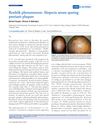
 In this study, researchers examined the under-studied mechanisms behind specific dermatological phenomena such as co-localization, Wolf's isotopic phenomenon, Koebner's isomorphic phenomenon, and the recently described Renbök phenomenon, noting that only a few cases have been reported so far.
11 citations
,
January 2023 in “World Journal of Clinical Cases” This study suggests that idiopathic hirsutism may involve higher local androgen synthesis despite normal serum androgen levels, challenging its categorization as idiopathic.
46 citations
,
June 2013 in “Journal of structural biology” This study suggests that the mechanical robustness of hair may be enhanced by the binding interactions of keratin-associated proteins, particularly KAP8.1, with intermediate filament proteins.
 August 2019 in “Journal of Medical Histology”
 This review discusses the role of epithelial mesenchymal transition (EMT) in wound healing and tissue repair, highlighting its potential contributions to progenitor cell pools, but reports no new clinical findings.
 23 citations
,
November 2018 in “Development, Growth & Differentiation”
23 citations
,
November 2018 in “Development, Growth & Differentiation” This review discusses the role of stem cell heterogeneity and compartmentalization within the epidermis and highlights their significance as niches for neighboring cells, without reporting new experimental results.
414 citations
,
August 2005 in “Nature” In this study, researchers discovered that activating TERT in mouse skin epithelium triggers dormant hair follicle stem cells, leading to rapid hair growth, through a pathway independent of telomere extension.
 August 2024 in “Clinical Cosmetic and Investigational Dermatology”
 This report describes the successful resolution of an epidermoid cyst using a minimally invasive approach with intralesional injection of recombinant enzymes.
 April 2017 in “Journal of Investigative Dermatology”
 This study found that hyperproliferative stimuli dysregulated the balance of stem cell divisions in keratinocytes, suggesting potential treatment strategies for both benign and cancerous hyperproliferative diseases.
 31 citations
,
November 2016 in “Cell Reports”
31 citations
,
November 2016 in “Cell Reports” This study reveals that somatosensory neurons in mouse skin exhibit structural plasticity during hair-follicle regeneration, which may temporarily impair the reliability of encoding gentle touch.
3 citations
,
January 2022 in “Journal of neuroendocrinology” This study found that Arc/Arg3.1 expression in hippocampal neurons is regulated by sex steroids in a sex-dependent manner, with E2 increasing expression in females and DHT in males.
 January 2018 in “bioRxiv (Cold Spring Harbor Laboratory)”
 This study identified a new cis-regulatory element in the mouse Hr gene that influences its expression in skin and brain cells, highlighting a complex molecular network involved in hair follicle formation.
28 citations
,
November 2009 in “Journal of Structural Biology” This study found that the molecular structure of hair is more sensitive to synchrotron X-ray radiation than its supramolecular architecture, indicating potential concerns for biological analyses using such radiation.
16 citations
,
November 2018 in “The journal of pain/Journal of pain” This study found that in a rat model, 14,15-EET may alleviate central poststroke pain by enhancing thalamic inhibition through neurosteroid signaling, potentially outperforming gabapentin in early-stage treatment.
September 2004 in “Experimental Dermatology” This study developed a tissue-engineered model of innervated skin, allowing for examination of how epidermis and capillaries affect nerve growth and offering a tool for further research on skin-related processes.
76 citations
,
December 2011 in “Journal of Cell Science” This study found that keratins have evolutionarily conserved and domain-selectively enriched amino acids, which likely reflect their unique structural roles, with distinct patterns observed among epidermal, hair, and simple-type epithelial keratins.
 February 2024 in “New phytologist”
 This study reported that during wheat polyploidization, decreased DNA methylation and specific hypomethylated promoters were associated with altered gene transcription, contributing to root hair elongation and improved nitrate uptake, highlighting the role of epigenetic regulation in enhancing crop traits.
 June 2022 in “Scientific Reports”
 This study found that prevelex coatings on microwell array devices enhanced the formation of uniform cell spheroids and enabled the development of hair follicles in tissue engineering applications.