 April 2016 in “Journal of Investigative Dermatology”
 This study suggests that hepatocyte growth factor (HGF) may play a role in hair follicle neogenesis and that an HGF mimetic could enhance skin substitute development.
8 citations
,
March 2019 in “Journal of Biomedical Materials Research Part A” This laboratory study found that collagen matrices with high-sulfated hyaluronan may enhance the cultivation of human keratinocytes and melanocytes from hair follicles for epidermal graft development.
January 2026 in “International Journal of Biological Macromolecules” This study found that different polypeptides, including KP peptide and hydrolyzed keratin, can improve the mechanical properties of damaged hair under varying conditions, with reduction environments and cysteine content influencing their effectiveness.
3 citations
,
March 2016 in “Experimental Dermatology” This study found that a hypomorphic mutation in the Hr gene contributes to the development of diet-induced pruritic atopic skin in mice, particularly when combined with dietary deficiencies of polyunsaturated fatty acids and starch.
 29 citations
,
December 2017 in “Molecular therapy”
29 citations
,
December 2017 in “Molecular therapy” This study found that enzyme replacement therapy in mice with a severe form of classical homocystinuria improved metabolic patterns and alleviated many clinical symptoms.
 42 citations
,
July 2007 in “Journal of Biological Chemistry”
42 citations
,
July 2007 in “Journal of Biological Chemistry” This study found that most pathogenic HR mutants associated with atrichia with papular lesions had abolished corepressor activity due to defective interactions with histone deacetylases.
328 citations
,
November 2020 in “Nature Materials” This study found that D-peptide crosslinked MAP hydrogel accelerated material degradation in vivo but significantly enhanced skin regeneration, suggesting an adaptive immune response can drive regenerative healing even with rapid scaffold breakdown.
13 citations
,
January 2018 in “Advances in experimental medicine and biology” 5 citations
,
April 2014 in “International Journal of Pediatric Endocrinology” This study concluded that prepubertal girls with hypertrichosis have androgen receptors with enhanced sensitivity, which may contribute to their increased body hair growth.
 3 citations
,
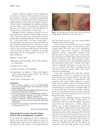
May 2011 in “Journal of the American Academy of Dermatology”
3 citations
,
May 2011 in “Journal of the American Academy of Dermatology” This case report describes a 54-year-old woman who developed hypertrichosis around a leg ulcer while using PGE1 ointment, suggesting a potential side effect of the treatment.
3 citations
,
June 2016 in “JEADV. Journal of the European Academy of Dermatology and Venereology/Journal of the European Academy of Dermatology and Venereology” This letter to the editor describes a case of postcast hypertrichosis in a patient with frontal fibrosing alopecia and reports no new research findings.
 42 citations
,
September 2007 in “The Journal of Clinical Endocrinology and Metabolism”
42 citations
,
September 2007 in “The Journal of Clinical Endocrinology and Metabolism” This study found that women with PCOS who have an exaggerated 17-hydroxyprogesterone response to buserelin exhibit more severe hyperandrogenemia, increased insulin secretion, and reduced insulin sensitivity.
4 citations
,
January 2006 in “PubMed” This study found that finasteride-induced DHT deficiency altered estrogen receptor expression in the epididymis, potentially destabilizing its function.
 April 2018 in “Journal of Investigative Dermatology”
 This study found that the absence of Hes1 in hair follicles delays secondary hair germ activation and shortens the anagen phase, impacting HFSC self-renewal and long-term hair regeneration.
3 citations
,
July 2023 in “Acta Biomaterialia” This study demonstrates that a bioinspired peptide, PepACS, can efficiently and safely perm hair by interacting with keratin's sulfhydryl group without compromising tensile strength, and it shows potential for hair repair and dyeing applications in the hair care industry.
 April 2018 in “Journal of Investigative Dermatology”
 This study found that the protein p63 requires morphogenetic signals to regulate gene expression effectively during skin cell differentiation, highlighting its complex role in therapeutic reprogramming for conditions like epidermolysis bullosa.
189 citations
,
July 2009 in “The Journal of clinical investigation/The journal of clinical investigation” This review discusses how research on keratin biology has enhanced the understanding of epidermolysis bullosa simplex and indicates potential new therapeutic approaches, but it presents no new experimental results.
9 citations
,
March 2022 in “Military Medical Research” This study developed a method to convert fibroblasts into sweat gland-like cells, suggesting potential for regenerating damaged skin and restoring sweat gland function.
31 citations
,
November 2022 in “Cold Spring Harbor Perspectives in Biology” This review explores how epithelial cells from various niches in the skin respond and adapt during acute wound repair, highlighting the role of cellular plasticity in reepithelialization and restoring the skin's barrier function.
 82 citations
,
January 2000 in “Hormone Research in Paediatrics”
82 citations
,
January 2000 in “Hormone Research in Paediatrics” This study describes the enzymatic processes through which DHEA is converted to active sex steroids in human skin, highlighting an androgenic effect on sebaceous glands and estrogenic effects in the vagina.
7 citations
,
December 2021 in “In Vivo” In this study, researchers found that hTERT/SV40 immortalization of human dermal fibroblasts up-regulates skin cell markers and highlights the SIRT1 and miR-93 pathways' roles in maintaining fibroblast proliferation, potentially benefiting developments in the cosmetic industry.
 19 citations
,
March 2017 in “PLoS ONE”
19 citations
,
March 2017 in “PLoS ONE” This study found that intact pilosebaceous units were more effective than truncated hair follicles at regenerating a multilayered epidermis in a de-epidermalized dermis in vitro.
6 citations
,
June 2018 in “bioRxiv (Cold Spring Harbor Laboratory)” This study found that human centromeric regions exhibit large-scale haplotypes with significant diversity, including entire Neanderthal haplotypes, which may affect chromosome transmission.
 July 2024 in “Journal of Investigative Dermatology”
 A single medium, PRIME AIRLIFT, supports better human hair follicle formation in grafts.
92 citations
,
March 2016 in “Developmental Cell” Zebrafish skin regeneration relies on cell behaviors and reactive oxygen species, with antioxidants reducing and hydrogen peroxide increasing regeneration.
 October 2018 in “Current Opinion in Genetics & Development”
 The document emphasizes the importance of ongoing research and ethical considerations in genome editing and cellular reprogramming.
 82 citations
,
July 2011 in “Journal of Neuroscience”
82 citations
,
July 2011 in “Journal of Neuroscience” In this study, ethanol was found to enhance GABAergic neurosteroid production and inhibit long-term potentiation in rat hippocampal slices via unblocked NMDA receptor activation, effects reversible by specific inhibitors.
 191 citations
,
September 2011 in “Cell stem cell”
191 citations
,
September 2011 in “Cell stem cell” This study found that polycomb-group-mediated repression plays a key role in regulating hair follicle stem cell states and lineage progression by distinct mechanisms in adult mouse skin.
54 citations
,
November 1994 in “Differentiation” This study found that trichohyalin is expressed in various normal and pathological epithelia beyond hair follicle cells, where it is uniquely associated with filaggrin, suggesting a specific role in aggregating K6/K16-containing intermediate filaments.
24 citations
,
September 2023 in “Science Advances” In this study, deleting the gene Mettl3 in mouse epidermal progenitors resulted in impaired epithelial development and self-renewal, highlighting m6A's crucial role in regulating chromatin modifiers and maintaining normal epithelial tissue function.