 4 citations
,
April 2018 in “Journal of Investigative Dermatology”
4 citations
,
April 2018 in “Journal of Investigative Dermatology” This study suggests that hydroxypinacolone retinoate (HPR) may be an effective alternative to tretinoin for anti-aging skin treatments, offering similar collagen production benefits without increased skin irritation.
 24 citations
,
October 2022 in “Revista Brasileira de Farmacognosia”
24 citations
,
October 2022 in “Revista Brasileira de Farmacognosia” This review discusses the pharmacological actions of mangiferin and the potential of delivery carriers to overcome its limitations, but reports no new clinical results.
 April 2015 in “Andrology”
 This special issue contains abstracts from the ASA 40th Annual Meeting, providing an overview of various studies without reporting new primary results.
February 2023 in “Clinical Toxicology” This letter to the editor raises concerns about minoxidil, an arterial vasodilator also used for androgenic alopecia, noting that overdose can cause severe side effects such as distributive shock, pulmonary edema, and myocardial ischemia.
November 2025 in “Biomedicines” This review highlights hypochlorous acid's potential benefits in various medical fields due to its antimicrobial and healing properties but stresses the need for further research on dosing and product development.
35 citations
,
November 2024 in “Gels” This review discusses hydrogel-forming microneedles for non-invasive drug delivery in dermatology and reports no new clinical results, emphasizing their promise in improving treatment adherence and patient comfort.
 7 citations
,
June 1989 in “Steroids”
7 citations
,
June 1989 in “Steroids” In this study, the synthesis of C-4 and C-6 bridged haptens of 11 alpha-hydroxyprogesterone revealed an unexpected formation of a C-4 substituted product using a 6-bromo derivative, contrary to prior reports.
 2 citations
,
June 2022 in “Journal of Applied Pharmaceutical Science”
2 citations
,
June 2022 in “Journal of Applied Pharmaceutical Science” This review discusses the pharmacological properties of 4-0-methylhonokiol from Magnolia species and reports no new experimental results, highlighting potential areas for future research.
 March 2025 in “Frontiers in Pharmacology”
 This study developed a hydrogel dressing incorporating angelica polysaccharides, demonstrating enhanced wound healing properties in a mouse model by promoting rapid hemostasis, tissue healing, and new blood vessel formation compared to Tegaderm™ film.
 20 citations
,
June 2007 in “Recent Patents on Endocrine, Metabolic & Immune Drug Discovery”
20 citations
,
June 2007 in “Recent Patents on Endocrine, Metabolic & Immune Drug Discovery” This review summarizes recent research and patents on 17β-HSD3, 17β-HSD5, and 3α-HSD3 inhibitors, suggesting their potential in treating androgen-dependent diseases, but reports no new clinical results.
21 citations
,
September 2019 in “International Journal of Nanomedicine” RADA16-I can effectively deliver and release mangiferin, improving its solubility and bioavailability.
48 citations
,
July 2023 in “Biomedicines” This review discusses transdermal drug delivery using hydrogel-forming microneedles and highlights their potential for disease treatment, but notes challenges in their clinical application.
2 citations
,
January 2023 in “Frontiers in Oncology” In this rat study, subcutaneous injections of hydrogen peroxide and cumene hydroperoxide appeared to completely prevent chemotherapy-induced hair loss by inducing cell cycle arrest, suggesting a novel approach to help cancer patients maintain their quality of life during treatment.
 14 citations
,
April 2009 in “Acta Medica Scandinavica”
14 citations
,
April 2009 in “Acta Medica Scandinavica” In this study, oral minoxidil combined with other medications improved blood pressure control in patients with severe hypertension but often had to be discontinued due to side effects.
 October 2025 in “Asian Journal of Pharmaceutical Research and Development”
 This study reported that phytosome formulations of citrus flavonoids naringenin and naringin showed significantly increased oral bioavailability and plasma drug concentration in rabbits, suggesting that phytosome technology effectively addresses the pharmacokinetic limitations of these compounds.
 4 citations
,
January 2014 in “RSC Advances”
4 citations
,
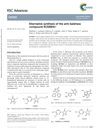
January 2014 in “RSC Advances” A new, less toxic and more efficient method to create the anti-baldness compound RU58841 was developed in 2014.
July 2026 in “Theranostics” This study developed a novel ferritin-based delivery system (LR@Fn) that effectively co-delivers RG108 and LLY283 for hearing loss treatment in animal models, reducing hair cell loss and synaptic damage more effectively than dexamethasone.
5 citations
,
July 2023 in “World Journal of Stem Cells” In a study using a rat model, researchers developed injectable hydrogels from antler reserve mesenchyme which enhanced regenerative healing of full-thickness cutaneous wounds by creating a fetal-like niche that increased stem cell presence and modulated gene expression related to wound healing.
7 citations
,
May 2024 in “Gels” This study evaluated a new collagen and tannic acid hydrogel in rat liver and heart bleeding models, finding it reduced blood loss and hemostatic time compared to commercial products, with benefits such as enhanced biodegradability and potential for clinical use.
 December 2023 in “Toxicology communications”
 This report describes a case of prolonged distributive shock attributed to minoxidil overdose, which involved intentional ingestion alongside trauma and NSAIDs, successfully managed with medications and hydration despite persistent low blood pressure.
 August 2026 in “Pharmaceutics”
 In this study, researchers developed a dexpanthenol-infused nanotechnological platform within hyaluronic acid hydrogels that promoted wound healing in mice by providing a protective barrier and significantly enhancing skin regeneration, including increased fibroblast activity and tissue remodeling.
 37 citations
,
December 2024 in “Theranostics”
37 citations
,
December 2024 in “Theranostics” In this study, a newly developed nanoparticle-loaded hydrogel wound dressing demonstrated significant antibacterial, antioxidant, anti-inflammatory, and proangiogenic activities, effectively reducing pain and promoting healing in a murine burn wound model while preventing infection by *Staphylococcus aureus*.
 180 citations
,
July 1973 in “The New England Journal of Medicine”
180 citations
,
July 1973 in “The New England Journal of Medicine” In this study, minoxidil effectively reduced blood pressure to near normal levels in patients with malignant or accelerated hypertension resistant to conventional treatments, offering a potential alternative to nephrectomy.
2 citations
,
July 2025 in “Chemical Engineering Journal” The hydrogel dressing effectively treats infected wounds by combining infection control and tissue regeneration.
 35 citations
,
December 1979 in “Naunyn-schmiedebergs Archives of Pharmacology”
35 citations
,
December 1979 in “Naunyn-schmiedebergs Archives of Pharmacology” These drugs raise prostaglandin-like material in dog blood, possibly causing blood vessel widening.
3 citations
,
January 2023 in “Nutrients” This study found that Hordenine promotes hair regrowth and enhances dermal-papilla cell activity in mice by activating the Wnt/β-catenin signaling pathway, suggesting potential for treating alopecia.
2 citations
,
February 2025 in “Journal of Cosmetic Dermatology” In a randomized clinical trial presented in this study, a novel lip hydrant with polyherbal extracts significantly reduced lip roughness and chapped lips compared to petroleum gel over 28 days among Thai participants, although both treatments improved perceived lip dryness.
3 citations
,
November 2025 in “Biomimetics” This review discusses the potential of hydrogel-based interventions for radiation-induced skin injury, providing no new clinical results but highlighting their synergistic mechanisms and promise in improving treatment strategies.
14 citations
,
December 2024 in “Pharmaceutics” This review examines hydrogel microneedles for transdermal drug delivery, discussing their applications and challenges but reports no new clinical results.
 May 2024 in “Journal of molecular structure”
 This study found that a novel thiohydantoin derivative, 3a, effectively inhibited androgen receptor activity in LNCaP cells and showed promising in vivo results by reducing testosterone-induced prostate changes, outperforming finasteride in mitigating prostate index and histopathological alterations.