14 citations
,
February 2025 in “Pharmaceutics” This review highlights recent advancements in using niosomes as nanocarriers for improved delivery and sustained release of active cosmetic compounds, discussing their properties, applications, and future potential in cosmetic chemistry.
1 citations
,
July 2025 in “Cosmetics” This review highlights the multifunctional benefits of plant-derived ingredients in skincare, such as antioxidant and anti-inflammatory effects, supported by biological evidence from medicinal plants like Camellia sinensis and Panax ginseng, suggesting their potential as natural dermocosmetic agents.
82 citations
,
July 2022 in “Bioengineering & Translational Medicine” This review examines how biochemical and biophysical induction factors influence cell fate in tissue engineering and reports no new experimental results.
16 citations
,
April 2025 in “Foods” This study highlights the diverse applications of *Perilla frutescens* in traditional medicine, cuisine, and industrial settings, noting its significant antioxidant and antimicrobial properties in experimental models, as well as research efforts to enhance its bioactive content and ensure safety and standardization.
 3 citations
,
May 2021 in “Evidence-based Complementary and Alternative Medicine”
3 citations
,
May 2021 in “Evidence-based Complementary and Alternative Medicine” This review discusses the potential antiaging effects of Chinese herbal medicines and suggests their role in regulating aging-related genes through various signaling pathways; it reports no new clinical results.

This review examines natural bioactive compounds for their potential to alleviate androgenetic alopecia, emphasizing compounds like ginseng and curcumin, but reports no new experimental results.
213 citations
,
September 2020 in “Journal of Functional Biomaterials” This review discusses bio-based polymers, highlighting their potential in wound healing applications, but reports no new clinical results.
 8 citations
,
November 2024 in “Scientific Reports”
8 citations
,
November 2024 in “Scientific Reports” In this study, different drying methods for Hedychium spicatum rhizomes significantly affected the essential oil yield, antioxidant potential, and compound composition, with the HSOV30 method yielding the highest oil content, antioxidant activity, and specific compound levels such as 1,8-cineole and elemol.
 9 citations
,
September 2024 in “Scientific Reports”
9 citations
,
September 2024 in “Scientific Reports” This study found that cardamonin may inhibit OSCC cell migration, proliferation, and invasion by affecting the PI3K/AKT pathway, suggesting its potential as a treatment.
 8 citations
,
May 2021 in “Applied Materials Today”
8 citations
,
May 2021 in “Applied Materials Today” This study found that Cur-Fe-mesoporous silica nanoparticles synergistically inhibited scar formation and promoted hair follicle regeneration in skin burn wound healing by releasing bioactive components like SiO32−, Fe3+, and Fe-Cur chelates.
 April 2026 in “International Journal of Drug Delivery Technology”
 In this study, phytochemical analysis and molecular docking suggested that bioactive compounds in several Ayurvedic herbs may interact persistently with hair growth and antifungal protein targets, indicating potential as plant-based treatments for dandruff and hair loss.
 170 citations
,
September 2019 in “Evidence-based Complementary and Alternative Medicine”
170 citations
,
September 2019 in “Evidence-based Complementary and Alternative Medicine” This review discusses the use of 36 medicinal plant species for cutaneous wound healing and reports no new clinical results; the authors highlight the potential for these traditional practices to inform modern therapies.
 January 2025 in “International Journal of Biological Innovations”
 This review article discusses the potential benefits of phytochemicals in hair care, highlighting their ability to improve scalp health, reduce dandruff, and promote hair growth, while emphasizing their safety and minimal side effects compared to conventional therapies.
 August 2022 in “International journal of research in pharmacy and chemistry”
 This review summarizes the chemical composition and pharmacological properties of Teak (Tectona grandis) but presents no new research findings, emphasizing its use in traditional medicine and therapeutic potentials.
 67 citations
,
June 2018 in “Engineering in Life Sciences”
67 citations
,
June 2018 in “Engineering in Life Sciences” This review discusses advancements in plant cell culture technology for producing potent natural cosmetic ingredients and reports no new experimental results.
July 2022 in “International Journal of Science and Research (IJSR)” This study describes the development of an herbal hair oil using thirteen ingredients to address various hair problems like baldness, dandruff, and hair damage, although the abstract does not report results or evaluate efficacy.
 38 citations
,
February 2023 in “International Journal of Advanced Research in Science Communication and Technology”
38 citations
,
February 2023 in “International Journal of Advanced Research in Science Communication and Technology” This article reviews plant-based secondary metabolites with potential anticancer properties and highlights the need for new treatments due to the side effects of current cancer therapies, but it provides no clinical results.
 June 2025 in “Asia-Pacific Journal of Molecular Biology and Biotechnology”
 This study used in-silico analyses to investigate papain's potential as a fibrinolytic agent and found that certain fibrin peptides displayed strong interactions with papain, suggesting it may be beneficial for cardiovascular disease treatment.
 August 2023 in “International journal of basic and clinical pharmacology”
 This review article describes the ingredients and evaluation tests for formulating a hair serum aimed at improving hair growth and preventing hair loss, highlighting the roles of Citrus sinensis, Nigella sativa, flax seed, and coconut oil in addressing hair and scalp health.
 July 2021 in “International Journal of Research in Ayurveda and Pharmacy”
 This review discusses the potential of plant-synthesized secondary metabolites as natural therapeutics for COVID-19 and reports no new clinical results.
 October 2023 in “International journal of biology, pharmacy and allied sciences”
 This article provides an in-depth exploration of both natural and synthetic treatments for alopecia, examining their mechanisms, benefits, limitations, and current research, while noting that synthetic therapies can have potential adverse effects.
 1 citations
,
February 2013 in “InTech eBooks”
1 citations
,
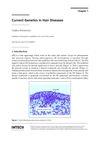
February 2013 in “InTech eBooks” Genetic mutations cause various hair diseases, and whole genome sequencing may reveal more about these conditions.
 54 citations
,
November 1998 in “Archives of dermatology”
54 citations
,
November 1998 in “Archives of dermatology” This article discusses the potential role of nutritional ingredients, such as thiols and tannins, in triggering pemphigus, and reports no new empirical findings.
 22 citations
,
July 2017 in “BMC complementary and alternative medicine”
22 citations
,
July 2017 in “BMC complementary and alternative medicine” This study documented the use of 41 plant species in the West Bank for treating hair and scalp disorders, highlighting their folkloric significance and potential for new cosmetic and cosmeceutical products.
 9 citations
,
July 2018 in “Current Pharmaceutical Design”
9 citations
,
July 2018 in “Current Pharmaceutical Design” This review discusses the importance of heme oxygenase in skin physiology and disease, but it reports no new clinical results; the authors highlight its potential as a treatment target for conditions like atopic dermatitis and psoriasis.
 9 citations
,
January 1966 in “Economic botany”
9 citations
,
January 1966 in “Economic botany” Plant-based ingredients in hair care are being replaced by synthetic alternatives.
 1 citations
,
January 2017 in “Social Science Research Network”
1 citations
,
January 2017 in “Social Science Research Network” This paper suggests that to better protect traditional and indigenous knowledge, TKDL should expand its database or establish a separate confidential resource for indigenous, tribal, and nomadic communities.

This study discusses the potential of phytochemicals, such as isoflavones and polyphenols, to manage PCOS symptoms by improving insulin resistance, regulating hormones, and reducing cyst size, highlighting their promise as alternative treatments given the limitations of current pharmacological options.
 October 2025 in “Journal of Drug Delivery and Therapeutics”
 In this review, the researchers compared the traditional use of Senna Makki in Unani medicine for various ailments to modern pharmacological evidence, endorsing its role as a laxative but indicating further research is needed for its efficacy in other therapeutic areas.
 October 2025 in “International Journal For Multidisciplinary Research”
 In this study, researchers documented the use of 69 plant species across 38 families in traditional medicine by herbal practitioners in Raichur District, detailing their therapeutic properties for 22 ailments such as fever, epilepsy, and diabetes, though interest in traditional practices is declining.