93 citations
,
March 2017 in “Molecular Plant” This study concluded that CNGC14 is a calcium-permeable channel crucial for polarized tip growth in Arabidopsis root hairs, but other channels may also influence the observed calcium influx.
 April 2018 in “Journal of Investigative Dermatology”
 This study found that Fgf20 signaling facilitates fibroblast migration and influences dermal condensate cell development during hair follicle morphogenesis by supporting cellular activities such as cell cycle exit and specific cell shape adoption.
June 2026 in “Journal of Investigative Dermatology” This study reported that the anti-γc antibody hC2 restored hair follicle homeostasis and suppressed hair loss in an AA-like mouse model by inhibiting autoreactive T-cell activity, suggesting that hC2 may offer a safer and more effective treatment for alopecia areata compared to current Jak inhibitors.
 11 citations
,
August 2019 in “Journal of Molecular Histology”
11 citations
,
August 2019 in “Journal of Molecular Histology” This study found that upregulation of NFIC may enhance proliferation and osteogenic/cementogenic differentiation in rat dental follicle cells.
1 citations
,
July 2019 in “Small ruminant research” This study suggests that the NGF/TrkA/CREB system plays a crucial role in promoting outer root sheath cell proliferation in cashmere goats, which may aid in marker-assisted breeding.
11 citations
,
January 2022 in “Experimental Dermatology” This study suggests that patients with severe, extensive central centrifugal cicatricial alopecia may exhibit a distinct gene expression pattern in the lesional scalp, highlighting potential targets for future research on disease severity and therapies.
 64 citations
,
January 2015 in “BioMed Research International”
64 citations
,
January 2015 in “BioMed Research International” In this study, topical application of fibroblast growth factors was found to promote hair growth by inducing and prolonging the anagen phase in telogenic C57BL/6 mice, suggesting potential as hair growth-promoting agents.
 115 citations
,
March 2019 in “Nature Communications”
115 citations
,
March 2019 in “Nature Communications” This study identified significant genetic associations with frontal fibrosing alopecia at four genomic loci, suggesting it is a genetically predisposed immuno-inflammatory disorder influenced by the HLA-B*07: 02 allele.
2 citations
,
August 2004 This study found that early diagnosis using gas chromatography/mass spectrometry and appropriate long-term treatment are crucial for improving outcomes in patients with methylmalonic acidemia.
2 citations
,
May 2020 in “Journal of the American Academy of Dermatology” Hair shaft changes may be linked to CCCA, but their role is unclear.
20 citations
,
March 2014 in “Molecular Endocrinology” This study suggests that NFIB and STAT5 work together to control cell-specific genetic programs in mammalian tissues, particularly in mammary and hair follicle stem cells.
19 citations
,
March 1975 in “British Journal of Dermatology” This study presents a method for extracting and measuring cyclic AMP in small amounts of skin tissue, finding varying levels in the dermis, epidermis, and hair follicles.
39 citations
,
January 2020 in “Frontiers in Genetics” This study found that stage-specific epigenetic changes, particularly involving the gene PDGFC, may affect wool fiber development in Zhongwei goats, potentially serving as a biomarker for fur goat selection.
5 citations
,
August 2023 in “G3 Genes Genomes Genetics” This study developed an improved reference genome for the African spiny mouse using long Nanopore sequencing reads, potentially aiding future research into the species' remarkable tissue regeneration capabilities.
 28 citations
,
November 2013 in “The FASEB journal”
28 citations
,
November 2013 in “The FASEB journal” In this study, a low-methionine diet significantly improved the health and physical traits of cystathionine β-synthase-deficient mice, contrasting with negative effects on mice with partial deficiency.
11 citations
,
October 2014 in “Gene” In this study, researchers characterized the FGF5 gene in Chinese Merino sheep, identified a new mRNA splicing variant, FGF5S, and noted its restricted expression in the brain, spleen, and skin.
 1 citations
,
October 2023 in “Journal of the Pakistan Medical Association”
1 citations
,
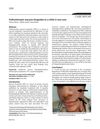
October 2023 in “Journal of the Pakistan Medical Association” This source describes a case of a 12-year-old male diagnosed with folliculotropic mycosis fungoides, presenting with an asymptomatic, erythematous plaque. Histology and immunohistochemistry confirmed FMF, which is typically rare in children and marked by follicular infiltration by CD4+ lymphocytes.
 April 2018 in “Journal of Investigative Dermatology”
 In a clinical phase I/IIa study, subcutaneous injections of the peptide FOL-005 increased hair growth by 8% and were safe for treating alopecia.
 7 citations
,
October 2013 in “Methods in molecular biology”
7 citations
,
October 2013 in “Methods in molecular biology” This article describes standard methods for studying DNA methylation dynamics in mouse skin and hair follicle stem cells but presents no new research findings.
 191 citations
,
September 2011 in “Cell stem cell”
191 citations
,
September 2011 in “Cell stem cell” This study found that polycomb-group-mediated repression plays a key role in regulating hair follicle stem cell states and lineage progression by distinct mechanisms in adult mouse skin.
6 citations
,
October 2023 in “Animal Biotechnology” This study found that a 22-bp InDel polymorphism in the FGF7 gene was significantly associated with growth traits in goats, with genotypes ID and/or II linked to better growth compared to genotype DD, indicating its potential as a molecular marker in breeding programs.
January 2018 in “Murdoch Research Repository (Murdoch University)” This study identified putative causal mutations for PCOS among first-degree relatives, although functional analysis of a specific GDF9 mutation was unsuccessful.
477 citations
,
March 2004 in “Proceedings of the National Academy of Sciences” This study reports that the DMI3 gene, essential for nodule formation in legume-rhizobial symbiosis, encodes a calcium/calmodulin-dependent protein kinase, highlighting its role in multiple plant symbioses.
 11 citations
,
January 2013 in “Indian Dermatology Online Journal”
11 citations
,
January 2013 in “Indian Dermatology Online Journal” This article reviews central centrifugal cicatricial alopecia, including its various forms and potential multifactorial causes, but provides no new clinical findings.
 9 citations
,
February 2022 in “BMC Genomics”
9 citations
,
February 2022 in “BMC Genomics” This study examined gene expression in cashmere goats and identified key pathways and molecular regulators that influence hair follicle growth stages and melatonin's role in promoting cashmere growth.
January 2004 in “Linchuang pifuke zazhi” This study found that in fetal skin development, both α- and β-catenins showed similar expression patterns, indicating their related roles in the development of the epidermis and skin appendages.
578 citations
,
April 1993 in “Cell” This study found that mice with a disrupted TGFα gene display a curly whisker-coat phenotype, similar to waved-1 mice, suggesting TGFα's crucial role in skin architecture and hair development.
58 citations
,
April 1993 in “Developmental Biology” This study found that subcutaneous injections of basic fibroblast growth factor in neonatal mice delayed the development and hair growth cycles of hair follicles compared to controls.
 14 citations
,
May 2019 in “Human gene therapy”
14 citations
,
May 2019 in “Human gene therapy” This study found that minicircle-based gene therapy significantly lowered total homocysteine levels and improved liver CBS activity in a mouse model of CBS deficiency.
June 2020 in “Journal of Investigative Dermatology” Hair shaft malformation contributes to Central Centrifugal Cicatricial Alopecia.