5 citations
,
January 2015 in “Case reports in medicine” In this case report, a novel missense mutation c.1360G>C (p.Ala454Pro) in the MBTPS2 gene was identified in a boy with typical IFAP syndrome and severe atopic features, although no phenotype/genotype correlation was established.
 5 citations
,
April 2019 in “Journal of The American Academy of Dermatology”
5 citations
,
April 2019 in “Journal of The American Academy of Dermatology” This review discusses the complex nature of frontal fibrosing alopecia, suggesting it is a misnomer and possibly a subset of lichen planopilaris, but reports no new clinical results.
 49 citations
,
December 2017 in “Journal of pharmaceutical and biomedical analysis”
49 citations
,
December 2017 in “Journal of pharmaceutical and biomedical analysis” This study developed and validated a high-resolution mass spectrometry method to screen for prohibited substances and analyze six endogenous steroids in urine according to World Antidoping Agency requirements, demonstrating its effectiveness for antidoping analysis.
 11 citations
,
May 2023 in “Journal of Cutaneous Medicine and Surgery”
11 citations
,
May 2023 in “Journal of Cutaneous Medicine and Surgery” This study found that combining plasma rich in growth factors with conventional treatment significantly improved hair regrowth and reduced symptoms in patients with frontal fibrosing alopecia compared to conventional treatment alone.
 March 2016 in “Reactions Weekly”
 Post-finasteride syndrome causes various symptoms in men using finasteride, with no known cure.
2 citations
,
January 2010 in “PubMed” This case report observed no hair regrowth after treating a woman with postmenopausal frontal fibrosing alopecia using systemic and local corticosteroids, suggesting the need for more innovative therapies.
 3 citations
,
September 2019 in “Skin appendage disorders”
3 citations
,
September 2019 in “Skin appendage disorders” This study found that females with frontal fibrosing alopecia had more preauricular lines than age-matched controls, indicating a potential new clinical marker for the condition.
56 citations
,
March 2017 in “Plant and Cell Physiology” This study used light sheet fluorescence microscopy to successfully image and analyze calcium oscillations in the root hairs of Arabidopsis thaliana, finding that these oscillations correlate with the root hair growth rate and that auxin affects these properties.
 1 citations
,
January 2019 in “Acta dermato-venereologica”
1 citations
,
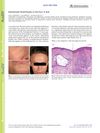
January 2019 in “Acta dermato-venereologica” The woman's skin and hair symptoms were confirmed as frontal fibrosing alopecia, and while facial papules are common in such cases, there's no effective local treatment, but systemic treatments can help.
1 citations
,
January 2024 in “Journal of personalized medicine” This narrative review suggests a strong association between abrupt hormonal imbalances and frontal fibrosing alopecia in women, especially related to reduced fertile years and certain hormonal therapies.
 16 citations
,
January 2017 in “Anais brasileiros de dermatologia/Anais Brasileiros de Dermatologia”
16 citations
,
January 2017 in “Anais brasileiros de dermatologia/Anais Brasileiros de Dermatologia” This case study discusses a postmenopausal woman's frontal fibrosing alopecia and lichen planus pigmentosus, controlled with corticosteroids and finasteride, highlighting diagnostic and therapeutic challenges in scarring alopecia.
1 citations
,
August 2024 in “Anais Brasileiros de Dermatologia” This review discusses the non-follicular skin manifestations of frontal fibrosing alopecia and how they affect diagnosis and treatment, but reports no new clinical results.
January 2011 in “Zhongguo nongye Kexue” This study successfully established a transgenic sheep fibroblast cell line expressing the spider dragline silk protein gene, laying groundwork for developing transgenic sheep with this capability in hair follicles.
 16 citations
,
February 2010 in “Journal of the European Academy of Dermatology and Venereology”
16 citations
,
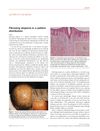
February 2010 in “Journal of the European Academy of Dermatology and Venereology” This article is a letter to the editor about fibrosing alopecia in a pattern distribution and reports no new research findings.
This study found that the Arabidopsis thaliana protein Formin 2 localizes to plasmodesmata and is crucial for regulating their permeability by anchoring actin filaments, which affects virus susceptibility.
13 citations
,
August 2013 in “International Journal of Dermatology” Frontal fibrosing alopecia can affect African men and may be underdiagnosed.
January 2014 in “Journal of Central South University(Science and Technology)” This study found that poly(propylene carbonate maleate) microspheres can successfully prolong finasteride release over 42 days, showing potential for long-term sustained drug delivery.
159 citations
,
August 2010 in “British journal of dermatology/British journal of dermatology, Supplement” In this study, hydroxychloroquine significantly reduced signs and symptoms of frontal fibrosing alopecia after 6 months of treatment, with maximal benefits observed within the first 6 months.
 115 citations
,
March 2019 in “Nature Communications”
115 citations
,
March 2019 in “Nature Communications” This study identified significant genetic associations with frontal fibrosing alopecia at four genomic loci, suggesting it is a genetically predisposed immuno-inflammatory disorder influenced by the HLA-B*07: 02 allele.
 23 citations
,
October 2018 in “Australasian Journal of Dermatology”
23 citations
,
October 2018 in “Australasian Journal of Dermatology” This review highlights that frontal fibrosing alopecia’s increasing incidence may involve immune, genetic, hormonal, and environmental factors, yet its pathogenesis remains complex and not fully understood.
 102 citations
,
April 2014 in “International Journal of Dermatology”
102 citations
,
April 2014 in “International Journal of Dermatology” This study found that early intervention and treatment with intralesional triamcinolone acetonide may stabilize hairline recession in patients with frontal fibrosing alopecia, although further research is needed for definitive treatment guidelines.
November 2025 in “OPAL (Open@LaTrobe) (La Trobe University)” This study developed a new method using ultrahigh-power sonication and mass spectrometry to improve protein extraction from hair shafts, identifying 239 differentially expressed proteins related to fetal growth restriction, which were validated as potential noninvasive biomarkers for perinatal diagnostics.
April 2019 in “Journal of Investigative Dermatology” Targeting immune pathways like JAK/STAT may help treat frontal fibrosing alopecia.
 March 2026 in “Egyptian Journal of Forensic Sciences”
 This review critically examines Forensic DNA Phenotyping, highlighting high accuracy in predicting certain traits but also legal and ethical challenges, particularly around regulatory fragmentation and issues of genetic privacy.
5 citations
,
April 2021 in “Journal of Academic Research in Medicine” In this study, the free androgen index (FAI) was found to be a reliable marker for diagnosing and monitoring adolescent girls with hyperandrogenism, suggesting clinical reference values for PCOS, obesity, and idiopathic hirsutism.
2 citations
,
June 2018 in “International Journal of Pharmacological Research” This article reviews treatments for progeria, including aspirin, hydrotherapy, and farnesyl transferase inhibitors, but reports no new clinical results.
4 citations
,
April 2018 in “Journal of vacuum science and technology. B, Nanotechnology & microelectronics” This study demonstrated the potential of a methodology combining ToF-SIMS and AFM to effectively analyze human hair structure and identify cosmetic residues, which can aid the cosmetic industry in product development.
3 citations
,
February 2017 in “The American journal of dermatopathology/American journal of dermatopathology” This case report details a 73-year-old woman with systemic sarcoidosis, whose scalp biopsy revealed features consistent with both sarcoidosis and frontal fibrosing alopecia, emphasizing the necessity of biopsy in complex alopecia diagnoses.
 8 citations
,
October 2018 in “Journal of The American Academy of Dermatology”
8 citations
,
October 2018 in “Journal of The American Academy of Dermatology” This study evaluated treatments for frontal fibrosing alopecia and found hydroxychloroquine and 5a-reductase inhibitors to be most effective, with 70-72% of patients experiencing stabilization or improvement, but limitations in treatment consistency and assessment methods remain.
4 citations
,
November 2017 in “PubMed” This study found that Synsepalum dulcificum seed oil hair treatment significantly reduced hair breakage and improved hair health indices in women, outperforming both placebo and argan oil treatments.