 126 citations
,
April 2006 in “International Journal of Dermatology”
126 citations
,
April 2006 in “International Journal of Dermatology” This study found that frontal fibrosing alopecia and lichen planopilaris have similar histopathological features, but FFA exhibits more prominent apoptosis and less inflammation with spared interfollicular epidermis.
7 citations
,
March 2023 in “The Journal of Biochemistry” This study suggests that LONRF1 may play a vital role in linking oxidative damage responses and tissue remodeling during wound healing, with distinct mechanisms in senescent and non-senescent cells.
 November 2023 in “Indian Journal of Dermatology”
 This study from North-East India analyzed 21 cases of frontal fibrosing alopecia, noting a high prevalence in post-menopausal women and distinct histological features such as perifollicular lymphocytic infiltrate and hydropic degeneration.
3 citations
,
December 2024 in “Stem Cell Reports” In this study, researchers observed that low levels of fucose-binding lectin staining characterize limbal epithelial progenitor cells, which maintain a high proliferative capacity and may be enhanced by inhibiting fucosylation, offering insights for regenerative therapy of the limbal stem cell niche.
 22 citations
,
March 1963 in “Archives of dermatology”
22 citations
,
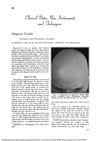
March 1963 in “Archives of dermatology” This case report describes hair regrowth in a patient with alopecia totalis using fluocinolone acetonide cream applied under thin plastic films.
January 2020 in “프로그램북(구 초록집)” This study found that treating androgenetic alopecia patients with microneedle-delivered GFC containing FGF5s and NMN increased hair density and diameter compared to normal saline.
2 citations
,
October 2024 in “Artificial Cells Nanomedicine and Biotechnology” This study found that silver nanoparticles synthesized using Lens culinaris extract exhibited potent anticancer activity against MCF-7, HCT-116, and HepG2 cell lines and significant antimicrobial effects against Klebsiella pneumoniae and Acinetobacter baumannii.
22 citations
,
September 2011 in “Journal of Investigative Dermatology” This study found that impaired TCF/Lef1 signaling in mice leads to significant skin barrier defects due to altered lipid metabolism and epidermal differentiation.
9 citations
,
January 2023 in “Journal of Clinical Medicine” This study presents a validated questionnaire, the FFA-QLI, which effectively assesses and differentiates the quality of life impact among patients with frontal fibrosing alopecia, showing greater sensitivity in identifying severe cases than the DLQI.
 February 2020 in “International Journal of Current Microbiology and Applied Sciences”
 This study found that canine hair follicle stem cells in vitro expressed markers associated with multipotency, suggesting their potential role in the hair cycle.
1 citations
,
April 2023 in “International journal of molecular sciences” In this study, AMACO was found to be non-essential for the formation or function of anchoring cords in mice, despite its presence in the structure.
September 2017 in “The journal of investigative dermatology. Symposium proceedings/The Journal of investigative dermatology symposium proceedings” This case report suggests that in African-American patients, the histology of Central Centrifugal Cicatricial Alopecia may resemble lichen planopilaris, indicating a potential diagnostic challenge.
 99 citations
,
July 2012 in “PLoS Genetics”
99 citations
,
July 2012 in “PLoS Genetics” This study identified a 69 bp deletion in the KRT75 gene as the cause of the frizzle feather trait in chickens, affecting feather curling.
 3 citations
,
January 2017 in “Indian journal of health sciences and biomedical research KLEU”
3 citations
,
January 2017 in “Indian journal of health sciences and biomedical research KLEU” This study found that women with chronic diffuse hair loss had low serum ferritin levels, indicating a significant association with decreased iron stores.
29 citations
,
February 2010 in “British Journal of Dermatology” This study explores the expression of Snail1 in the fibrotic dermis of postmenopausal women with frontal fibrosing alopecia, suggesting a possible link to epithelial-mesenchymal transition.
 166 citations
,
April 2012 in “Journal of The American Academy of Dermatology”
166 citations
,
April 2012 in “Journal of The American Academy of Dermatology” This study reviewed clinical data from 60 patients with frontal fibrosing alopecia and found increasing prevalence and generally poor response to treatment, with the cause remaining unclear.
 February 2023 in “Archives of Dermatological Research”
 This study found fractional carbon dioxide laser therapy effective in treating alopecia areata, both alone and with topical treatments, suggesting decorin's involvement in improving hair growth.
 25 citations
,
March 2013 in “British Journal of Dermatology”
25 citations
,
March 2013 in “British Journal of Dermatology” Woman has discoid lupus, frontal fibrosing, and androgenetic alopecia.
January 2025 in “Analytical Methods” This study reports the development of a fluorescent ionic liquid that shows high sensitivity and selectivity for detecting dextran sulfate sodium, with potential applications in clinical diagnostics and environmental monitoring.
 September 2025 in “Digital Commons - RU (Rockefeller University)”
 In this study, researchers found that mice lacking the transcription factor FOXC1 in their hair follicle stem cells had increased rounds of hair regeneration but experienced hair thinning due to impaired ability to maintain stem cell quiescence and adhesion.
January 2020 in “Journal of clinical and cosmetic dermatology” This article reviews the etiology of FPHL, distinguishing between androgen-dependent and androgen-independent forms, but reports no new clinical findings; it highlights the need to better understand its pathogenesis.
 1 citations
,
October 2008 in “Expert Review of Dermatology”
1 citations
,
October 2008 in “Expert Review of Dermatology” This review discusses frontal fibrosing alopecia, noting its frequent misdiagnosis and highlighting the need for larger studies to better understand its epidemiology, causes, and treatment options; it reports no new clinical findings.
2 citations
,
January 2023 in “Biomedicines” This study found that using a combination of ablative CO₂ fractional laser and fetal fibroblast transplantation significantly reduced scarring in mice, with long-term sphere-forming cultured fibroblasts producing scar appearances closest to normal skin.
4 citations
,
July 2021 in “Frontiers in Cell and Developmental Biology” This study demonstrates that the transcription factor DLX5 can promote hair follicle stem cell differentiation through regulating the c-MYC/miR-29c-3p/NSD1 axis.
4 citations
,
November 2020 in “Case reports in dermatology” This report summarizes recent cases of the rare condition erythromelanosis follicularis faciei et colli to illustrate its varied clinical presentations.
3 citations
,
January 2018 in “BIO-PROTOCOL” This protocol describes a method for cultivating stem cells on a fibrin carrier for potential transplantation to the eye, but it reports no new clinical findings.
6 citations
,
May 2013 in “Journal of Clinical Oncology” Combining Ficlatuzumab and Gefitinib can cause severe hair loss.
 May 2024 in “International Seven Journal of Multidisciplinary”
 This review discusses fibrosing frontal alopecia, including its causes, mechanisms, and treatments, and emphasizes the need for further research to improve understanding and treatments; it reports no new clinical results.
March 2026 in “Journal of the American Academy of Dermatology” In this study, patients with active lymphocytic cicatricial alopecia showed significant improvement using a three-stage treatment regimen involving Tofacitinib, Apremilast, and Crisaborole, with 93.5% experiencing marked improvement and only three mild adverse events reported.
92 citations
,
April 2009 in “Journal of Investigative Dermatology” The Celsr1 gene is crucial for normal hair patterning in mice.