10 citations
,
October 2009 in “Photomedicine and laser surgery” This study found that intense pulsed light treatment achieved a mean of 85% hair reduction in two patients with faun tail, although local anesthesia may be needed due to severe pain associated with neurological abnormalities.
 1 citations
,
January 2022 in “European Journal of Pharmacology”
1 citations
,
January 2022 in “European Journal of Pharmacology” In this study, FMN was found to inhibit androgen receptor function and androgen-regulated gene expression in prostate cancer cells, suggesting potential as an antiandrogen therapy.
 December 2012 in “Journal of dermatological science”
 This study reveals that hair follicles in mice and humans recruit epidermal Langerhans cells during skin inflammation via specific chemokine signaling pathways.
January 2020 in “Global dermatology” This study investigated the effects of GFC with FGF5s and NMN at a depth of 0.8 mm using a microneedle for treating hair loss, but the abstract provides no measurable results.
 April 2018 in “The journal of investigative dermatology/Journal of investigative dermatology”
 This study found that in a mouse model of Focal Dermal Hypoplasia, treatment with lithium carbonate improved skin disease symptoms compared to controls, though disease severity varied and posed interpretation challenges.
 25 citations
,
May 1994 in “Journal of Investigative Dermatology”
25 citations
,
May 1994 in “Journal of Investigative Dermatology” This study identified a novel gene, hacl-1, that is specifically expressed in the hair follicles of ICR mouse skin and is associated with their active state.
3 citations
,
March 2024 in “Journal of the American Academy of Dermatology” Low-dose naltrexone helps improve symptoms and stabilize frontal fibrosing alopecia and lichen planopilaris.
 17 citations
,
April 2021 in “Biointerface Research in Applied Chemistry”
17 citations
,
April 2021 in “Biointerface Research in Applied Chemistry” This review discusses nanostructured lipid carriers and their potential applications in pharmaceuticals and food, offering no new clinical findings but highlighting recent advancements and patents.
24 citations
,
January 2018 in “Development” This study found that Frizzled genes Fzd3 and Fzd6 are redundantly involved in controlling hair follicle polarity in mice, but operate through distinct mechanisms, highlighting their complex role in hair orientation.
January 2022 in “Figshare” This study found that knocking down lncRNA MTC in Liaoning Cashmere goat skin fibroblasts reduced cell proliferation and altered protein expression, suggesting its role in hair growth and regulatory pathways.
 13 citations
,
March 2020 in “Genes”
13 citations
,
March 2020 in “Genes” This study found that FGF5-/- rabbits exhibited a significant long hair phenotype by prolonging the anagen phase, suggesting FGF5 acts as a negative regulator of hair growth.
 63 citations
,
October 2011 in “Archives of Dermatology”
63 citations
,
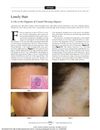
October 2011 in “Archives of Dermatology” Isolated long hairs at the original hairline can help diagnose Frontal Fibrosing Alopecia.
 13 citations
,
November 2012 in “PLoS ONE”
13 citations
,
November 2012 in “PLoS ONE” This study identified a novel recessive mutation in mice causing lethal congenital lamellar ichthyosis, with skin and hair follicle alterations similar to human congenital ichthyoses, linked to a specific genetic defect affecting Fatp4.
September 2018 in “Digital Access to Scholarship at Harvard (DASH) (Harvard University)” In this study, FN-based fiber scaffolds designed using Rotary Jet-Spinning were shown to enhance wound healing and reduce scar formation in a mouse model, suggesting potential for regenerating healthy skin structure.
 11 citations
,
May 2023 in “Journal of Cutaneous Medicine and Surgery”
11 citations
,
May 2023 in “Journal of Cutaneous Medicine and Surgery” This study found that combining plasma rich in growth factors with conventional treatment significantly improved hair regrowth and reduced symptoms in patients with frontal fibrosing alopecia compared to conventional treatment alone.
 11 citations
,
August 2017 in “Journal of Chromatographic Science”
11 citations
,
August 2017 in “Journal of Chromatographic Science” This study established a rapid and accurate ultra-performance liquid chromatographic method for chemical fingerprinting and analyzing Platycladi cacumen, effectively distinguishing batches based on geographical and climatic conditions.
3 citations
,
March 2017 in “Pediatric Dermatology” This case report documents the first known instance of FOXN1 duplication linked to congenital hypertrichosis.
 September 2017 in “Journal of Dermatology & Cosmetology”
 This study reports a case of frontal fibrosing alopecia associated with hepatitis C treatment involving interferon and ribavirin.
 April 2019 in “The journal of investigative dermatology/Journal of investigative dermatology”
 In this study, researchers found that CCCA in women of African descent is associated with molecular changes, including dysregulation of fatty acid metabolism and fibrosis pathways, suggesting potential targets for new treatments.
 107 citations
,
December 2003 in “Dermatologic Therapy”
107 citations
,
December 2003 in “Dermatologic Therapy” This paper reviews the use of interferons, particularly alfa interferon, in treating cutaneous T-cell lymphoma, noting its substantial efficacy both alone and in combination therapies with predictable, generally well-tolerated side effects.
 32 citations
,
January 2017 in “Orphanet journal of rare diseases”
32 citations
,
January 2017 in “Orphanet journal of rare diseases” This article reviews the genetic basis, diagnostic approaches, and treatment options for nude severe combined immunodeficiency, but does not present any new research findings.
 28 citations
,
January 2012 in “International Journal of Trichology”
28 citations
,
January 2012 in “International Journal of Trichology” This study observed that specific trichoscopic features like white peripilar signs, scalp pigmentation, and focal atrichia are associated with advanced female pattern hair loss in Fitzpatrick skin type III patients.
 3 citations
,
August 2014 in “Journal of The American Academy of Dermatology”
3 citations
,
August 2014 in “Journal of The American Academy of Dermatology” This article discusses the role of filaggrin gene mutations in understanding atopic dermatitis and their link to allergic sensitization but does not report new clinical results.
9 citations
,
July 2007 in “Journal of Investigative Dermatology” This study found that exposure to 12-O-tetradecanoyl-phorbol-13-acetate in mouse skin caused changes in claudin expression and localization, indicating disruption and eventual recovery of the epidermal barrier.
 8 citations
,
August 2014 in “Clinical and Experimental Dermatology”
8 citations
,
August 2014 in “Clinical and Experimental Dermatology” This study found that chronic telogen effluvium is a distinct condition from female pattern hair loss, with different pathogenic mechanisms observed in histomorphometric analyses.
 2 citations
,
January 2022 in “Hair transplant forum international”
2 citations
,
January 2022 in “Hair transplant forum international” This article introduces the Follicular Unit Excision-Linear Ellipse (FUE-LE) technique, which integrates both FUE and the linear ellipse method for optimal hair restoration, but presents no new clinical results.
 101 citations
,
November 2011 in “Nature Communications”
101 citations
,
November 2011 in “Nature Communications” Wnt/β-catenin signaling is crucial for cell fusion in placental development.
8 citations
,
July 2017 in “The journal of investigative dermatology/Journal of investigative dermatology” This study identified four circulating microRNAs as highly predictive of frontal fibrosing alopecia status, suggesting potential roles in diagnostics and disease understanding.
 8 citations
,
September 2002 in “Genes to Cells”
8 citations
,
September 2002 in “Genes to Cells” This study suggests that label-retaining cells in the hair follicle contribute to follicular renewal, indicating a specific role in the hair cycle by proliferating during the late telogen phase.
 126 citations
,
April 2006 in “International Journal of Dermatology”
126 citations
,
April 2006 in “International Journal of Dermatology” This study found that frontal fibrosing alopecia and lichen planopilaris have similar histopathological features, but FFA exhibits more prominent apoptosis and less inflammation with spared interfollicular epidermis.