In this retrospective study, all-female patients with iron deficiency anemia treated with ferric carboxymaltose experienced rapid symptom resolution and increased ferritine and hemoglobin levels, with some reporting manageable side effects such as rash and headache.
 May 2025 in “Afyon Kocatepe University Journal of Sciences and Engineering”
 The researchers monitored various pollutants in real cosmetics industry wastewater and reported high removal efficiencies for parameters like Chemical Oxygen Demand and heavy metals through coagulation-flocculation, yet suggested that more effective COD treatment alternatives are necessary to better protect the environment and human health.
 January 2004 in “Enshou saisei”
 This study observed that follistatin and activin interactions significantly influence hair follicle development in mice, suggesting potential regenerative treatments for alopecia.
4 citations
,
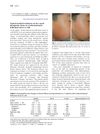
November 2020 in “Case reports in dermatology” This report summarizes recent cases of the rare condition erythromelanosis follicularis faciei et colli to illustrate its varied clinical presentations.
47 citations
,
September 2012 in “Human molecular genetics online/Human molecular genetics” This study suggests that the interaction between folliculin and plakophilin-4 (p0071) may play a role in folliculin's tumor suppressor function by regulating RhoA signaling, impacting cell migration and junction formation.
January 2018 in “Journal of Crohn s and Colitis” This study found that high-dose intravenous ferric carboxymaltose may reduce inflammatory activity in patients with inflammatory bowel disease and iron deficiency anaemia, as evidenced by decreased CRP levels and improved clinical disease indices.
 November 2015 in “Indian drugs”
 This study found that the aerial roots of Ficus benghalensis Linn contain flavonoids, phenolics, and saponins, with an ethyl acetate extract being particularly rich in flavonoids.
 11 citations
,
August 2019 in “Journal of Molecular Histology”
11 citations
,
August 2019 in “Journal of Molecular Histology” This study found that upregulation of NFIC may enhance proliferation and osteogenic/cementogenic differentiation in rat dental follicle cells.
 14 citations
,
July 2012 in “Journal of the American Academy of Dermatology”
14 citations
,
July 2012 in “Journal of the American Academy of Dermatology” This study found that topical tacalcitol improved roughness and scaling in erythromelanosis follicularis faciei et colli, although it was less effective for facial erythema.
January 2026 in “Biomacromolecules” This study reports that a novel nanolipogel with moderate rigidity (NLG-2.5) enhances transdermal delivery of fucosterol, displaying superior permeability, targeting hair follicles, and promoting hair growth in androgenetic alopecia model mice by inhibiting inflammation and androgen pathways and promoting angiogenesis.
 103 citations
,
June 2018 in “International Journal of Molecular Sciences”
103 citations
,
June 2018 in “International Journal of Molecular Sciences” This review discusses the applications and research on fibroblast growth factors, including their use in wound healing, diabetes, and cancer, but it reports no new clinical results.
January 2026 in “Journal of Materials Chemistry B” In this study, a newly engineered SFCC hydrogel in animal models demonstrated promising potential for skin reconstruction, promoting hair follicle regeneration, enhancing collagen and cellular proliferation, and accelerating burn healing by supporting favorable immune responses and tissue repair.
 20 citations
,
May 2023 in “Biological Trace Element Research”
20 citations
,
May 2023 in “Biological Trace Element Research” This study found that repeated oral intake of 0.5 or 5 mg/kg of cobalt ferrite nanoparticles induced pulmonary toxicity in rats, with dose-dependent oxidative stress and inflammation observed, but no notable toxicity was seen at a 0.05 mg/kg dose.
August 2021 in “Journal of the American Academy of Dermatology” This article reviews the use of hair filler fibers for improving the appearance of thinning hair and calls for more studies on patient satisfaction and side effects, without providing new clinical results.
 42 citations
,
September 2015 in “Gene”
42 citations
,
September 2015 in “Gene” This study demonstrated that FGF5s acts as an inhibitor of FGF5 in regulating hair growth cycles in cashmere goat dermal papilla cells.
January 2025 in “Dermatologic Therapy” In this study, treatment with fractional CO2 laser combined with recombinant humanized type III collagen led to significantly better improvements in atrophic acne scars compared to laser treatment with saline, attributed to collagen upregulation and MAPK pathway activation in human dermal fibroblasts.
 1 citations
,
April 2017 in “Journal of Investigative Dermatology”
1 citations
,
April 2017 in “Journal of Investigative Dermatology” In this study, D-OCT imaging revealed distinct structural and vascular changes in patients with frontal fibrosing alopecia, highlighting the technique's potential for diagnosing and monitoring the condition's activity.
 16 citations
,
April 2017 in “Journal of Cosmetic Dermatology”
16 citations
,
April 2017 in “Journal of Cosmetic Dermatology” This study found that fig leaf extract significantly downregulated inflammatory and androgenic gene expression in vitro, suggesting potential topical benefits for certain skin disorders.
 November 2023 in “Journal of cosmetic dermatology”
 This report describes three cases of erythromelanosis follicularis faciei et colli showing significant improvement in facial telangiectasia following treatment with a 595-nm pulsed dye laser, with minimal recurrence observed during follow-up.
 January 2023 in “Journal of animal science/Journal of animal science ... and ASAS reference compendium”
 This study found that the novel culture condition gHFEM, which includes Y-27632 and bFGF, optimally promotes the proliferation and pluripotency of goat hair follicle stem cells in vitro.
 August 2019 in “Research Square (Research Square)”
 This study explored how long non-coding RNA mediates the effects of FGF5 on the hair follicle development and villus growth of Liaoning cashmere goats.
6 citations
,
April 2025 in “Food Bioscience” This study found that fish scale collagen peptide significantly promoted wound healing in mice, with the <1 kDa fractions enhancing collagen synthesis and reducing inflammation, suggesting potential clinical benefits.
 179 citations
,
December 2004 in “Journal of The American Academy of Dermatology”
179 citations
,
December 2004 in “Journal of The American Academy of Dermatology” This study observed that frontal fibrosing alopecia in postmenopausal women involves selective follicular inflammation, and finasteride treatment may slow disease progression, suggesting a potential androgen-related component.
 83 citations
,
June 2020 in “Materials & Design”
83 citations
,
June 2020 in “Materials & Design” In this study, ACF sponges with 10% fucoidan significantly promoted wound healing and hair follicle regeneration in rats, showing improved hemostatic and antibacterial performance compared to other formulations.
December 2016 in “Anales del sistema sanitario de Navarra” This case study reports successful treatment of frontal fibrosing alopecia with daily 2.5mg finasteride in a 77-year-old woman.
 44 citations
,
January 2006 in “Biological & Pharmaceutical Bulletin”
44 citations
,
January 2006 in “Biological & Pharmaceutical Bulletin” This research suggests that testosterone-induced expression of TGF-beta1 and type I procollagen may lead to perifollicular fibrosis in androgenetic alopecia, with finasteride inhibiting this process as a possible mechanism for its effects.
 8 citations
,
September 2024 in “BMC Genomics”
8 citations
,
September 2024 in “BMC Genomics” In this study, researchers found that the novel gene circCFAP20DC enhances the proliferation of goat follicular granulosa cells by activating the RB pathway, facilitating their progression from the G1 to S phase during follicular development.
 December 2025 in “PubMed”
 This study suggests that low molecular weight fish collagen peptide may promote hair follicle growth and regeneration, improving overall hair quality in mouse models.
This study found that type XVII collagen is crucial for regulating epidermal cells' proliferation in mice and may be a promising target for anti-aging skin treatments.
 April 2018 in “Journal of Investigative Dermatology”
 In a clinical phase I/IIa study, subcutaneous injections of the peptide FOL-005 increased hair growth by 8% and were safe for treating alopecia.