1 citations
,
June 2016 in “FEBS open bio” This study reports that topical fish oil treatment in GsdmA3 Dfl/+ mice increased cellular proliferation and macrophages but did not affect COX-2 expression related to psoriasis-like skin changes.
 2 citations
,
July 2022 in “Stem cell research & therapy”
2 citations
,
July 2022 in “Stem cell research & therapy” This study found that a large number of pelage hair follicle mesenchymal stem cells can be efficiently isolated using two-step Ficoll Density Gradient Sedimentation, promoting hair growth by secreting exosomes in mice.
 January 2024 in “ACS Biomaterials Science & Engineering”
 In this study, researchers developed a microfluidics-based method to generate hair follicle germs on a large scale for potential hair regeneration therapies, demonstrating efficient hair follicle regeneration following transplantation into mice.
 April 2024 in “MRIMS journal of health sciences”
 This study observed that autologous growth factor concentrate combined with topical minoxidil significantly improved hair growth and patient satisfaction in individuals with androgenic alopecia, with no adverse effects reported.
6 citations
,
March 2024 in “Journal of Clinical Laboratory Analysis” This study reported that IGF2BP2 rs1470579 and IGFBP3 rs2854744 may increase the risk of polycystic ovary syndrome in a Southeastern Iranian population.
 June 2013 in “Faculty Opinions – Post-Publication Peer Review of the Biomedical Literature”
 FGF9 from certain cells can trigger new hair growth during wound healing, but humans have fewer of these cells, which may limit hair regrowth.
1 citations
,
December 2012 in “Journal of dermatological science” This study introduces ficlatuzumab, an anti-HGF monoclonal antibody, in combination with gefitinib in a phase 2 trial to address EGFR TKI resistance in Asian NSCLC patients.
 8 citations
,
May 2024 in “PLoS Biology”
8 citations
,
May 2024 in “PLoS Biology” This study on feather pattern formation in chicken skin found that inhibiting gap junctional intercellular communication can lead to the emergence of new feather buds in specific spatial patterns, suggesting that GJIC may facilitate Turing-type periodic patterning by propagating inhibitory signals over long distances.
2 citations
,
March 2011 in “Veterinary Dermatology” This study identified fibroblast growth factor 18 in various components of canine hair follicles and other tissues, but found no significant differences in its presence across seasons, body regions, or sexes in beagle dogs.
28 citations
,
June 1995 in “The Journal of Dermatology” This study reports that flaky skin mice exhibit skin and nail features that closely resemble human psoriasis vulgaris, suggesting they may serve as a natural model for this condition.
October 2021 in “QJM: An International Journal of Medicine” In this pilot study, treatment with lyophilized platelet derived growth factors showed improvement in women with androgenetic alopecia, suggesting it may be a promising new therapy.
 24 citations
,
July 2017 in “Structure”
24 citations
,
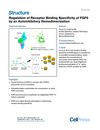
July 2017 in “Structure” In this study, researchers found that ligand homodimerization controls the receptor binding specificity of the FGF9 subfamily, preventing off-target activation of FGFR "b" isoforms.
3 citations
,
January 2022 in “Burns & Trauma” This study found that CTHRC1 is crucial for sweat gland function and vascular network integrity in mice, and its administration improved sweat gland performance by reconstructing nearby blood vessels.
 April 2026 in “International Journal of Current Pharmaceutical Review and Research”
 This study concluded that Growth Factor Concentrate was more effective than Platelet-Rich Plasma in enhancing hair growth and patient satisfaction for individuals with androgenic alopecia and telogen effluvium, while maintaining similar safety.
October 2022 in “Hair Transplantation” This article discusses the potential benefits of using modern combination grafting techniques in hair restoration surgery, highlighting the enhanced efficiency and cosmetic coverage compared to traditional follicular unit transplantation, but presents no new clinical results.
This study found that a modified scaffold with VEGF165 genetically modified hair follicle stem cells significantly promoted blood vessel growth and wound healing in rats, suggesting its potential as a skin substitute in clinical settings.
60 citations
,
April 2003 in “Biomaterials” This study found that the controlled release of specific growth factors from biodegradable hydrogels significantly enhanced hair follicle growth and hair shaft length in mice compared to growth factors in solution.
In this study, RNA-sequencing identified differentially expressed genes, including FGF5, FGFR1, and RRAS, that affect the hair follicle growth cycle in Inner Mongolian Cashmere goats.

This case report describes a 16-year-old girl with severe generalized gingival fibromatosis and hypertrichosis, who underwent successful treatment through gingivectomy, with uneventful healing observed over an eight-month follow-up.
 2 citations
,
December 2019 in “Cureus”
2 citations
,
December 2019 in “Cureus” This report describes a case of secondary cutis verticis gyrata due to a cerebriform intradermal nevus, highlighting clinical management and screening guidelines.
 3 citations
,
October 2021 in “Postepy Dermatologii I Alergologii”
3 citations
,
October 2021 in “Postepy Dermatologii I Alergologii” This study found that evaluating terminal hair growth on the chin, thighs, and either the upper lip or lower abdomen could streamline the modified Ferriman-Gallwey scoring, aiding hirsutism diagnosis under pandemic conditions.
50 citations
,
December 2007 in “Journal of Biomedical Materials Research Part B Applied Biomaterials” In this study, the combination of keratin-gelatin from poultry feathers promoted early acceptance and viability of full-thickness skin mesh grafts in experimental dogs compared to other treatments.
 January 2025 in “Journal of Food Biochemistry”
 In this study, 2′‐Fucosyllactose (2′‐FL) administration significantly reduced hair loss and increased hair length and thickness in a testosterone-induced androgenic alopecia mouse model, suggesting potential as a therapeutic agent for AGA.
 July 2025 in “Scientific Reports”
 This study reported that fermented grapeseed oil may enhance hair permeability and improve strength and color retention in chemically treated hair compared to regular grapeseed or silicone oils.
April 2005 in “World Journal of Pharmaceutical and life sciences” This article discusses the formulation and evaluation of hair gels that may improve the treatment and prevention of dandruff by providing longer-lasting effects compared to traditional shampoos and lotions, but it reports no new clinical findings.
 16 citations
,
April 2017 in “Journal of Cosmetic Dermatology”
16 citations
,
April 2017 in “Journal of Cosmetic Dermatology” This study found that fig leaf extract significantly downregulated inflammatory and androgenic gene expression in vitro, suggesting potential topical benefits for certain skin disorders.
 December 2023 in “Materials Today Sustainability”
 Scientists made glow-in-the-dark dots from human hair that can detect iron, prevent counterfeiting, and reveal fingerprints.
December 2022 in “Clinical and experimental dermatology and therapies” In this study, the addition of a topical gel containing growth-factor mimicking oligopeptides and other ingredients showed improved efficacy in subjects with androgenic alopecia using minoxidil or finasteride compared to drug treatment alone.
32 citations
,
August 2003 in “Journal of the European Academy of Dermatology and Venereology” This article reviews the clinical aspects and potential mechanisms of chronic graft vs host disease skin manifestations, describing a novel form of premature skin aging, but presents no new research findings.