
This source outlines common health issues in weanling gerbils, including skin infections often tied to beta-hemolytic Staphylococcus aureus, and obesity-related conditions like diabetes, as well as respiratory infections and musculoskeletal problems, without detailing specific new study results.
 January 2012 in “Elsevier eBooks”
 This chapter reviews therapies for skin and corneal regeneration and hair loss, discussing various treatments but presenting no new research findings.
 153 citations
,
October 2007 in “Cell Stem Cell”
153 citations
,
October 2007 in “Cell Stem Cell” New research suggests that skin cell renewal may not require a special type of cell previously thought to be essential.
 61 citations
,
January 2018 in “Cosmetics”
61 citations
,
January 2018 in “Cosmetics” This review highlights the potential of coffee silverskin's bioactive compounds in combating skin aging and related conditions, suggesting it as a promising natural ingredient for cosmetics due to its antioxidant, anti-inflammatory, and anti-aging properties.
 59 citations
,
June 2023 in “Nature Aging”
59 citations
,
June 2023 in “Nature Aging” This study observed that in aged mouse skin, there was an increase in IL-17-expressing T helper cells, γδ T cells, and innate lymphoid cells, and blocking IL-17 signaling reduced skin inflammation and delayed age-related changes, suggesting it as a potential target to mitigate skin aging.
 47 citations
,
January 2017 in “RSC Advances”
47 citations
,
January 2017 in “RSC Advances” Keratin peptides can change hair shape gently without harsh chemicals.
 38 citations
,
June 2019 in “International Journal of Molecular Sciences”
38 citations
,
June 2019 in “International Journal of Molecular Sciences” This review discusses the potential role of extracellular vesicles in modulating hair follicle dynamics and reports no new clinical results; future investigations may inform treatment strategies for skin disorders.
 30 citations
,
November 2018 in “EMBO Reports”
30 citations
,
November 2018 in “EMBO Reports” This study found that the Ovol2-Zeb1 regulatory circuit is crucial for controlling directional migration and proliferation in epithelial cells, facilitating skin regeneration and repair in mice.
 10 citations
,
October 2015 in “Medicina Clínica (english Edition)”
10 citations
,
October 2015 in “Medicina Clínica (english Edition)” This review discusses the therapeutic potential and safety of bioidentical recombinant human epidermal growth factor (rhEGF) for various skin and mucosa conditions and reports no new clinical results.
 4 citations
,
October 2012 in “Expert Review of Dermatology”
4 citations
,
October 2012 in “Expert Review of Dermatology” Dermoscopy greatly improves melanoma diagnosis and reduces unneeded surgeries.
 3 citations
,
October 2022 in “PloS one”
3 citations
,
October 2022 in “PloS one” This study developed a method to culture and maintain chicken feather follicles in vitro, preserving structure and biology similar to their in vivo state, though some gene expression was altered.
 April 2021 in “Arab Journal of Nuclear Sciences and Applications/Arab Journal of Nuclear Sciences and Applications ”
 This study found that repeated use of a protein hair conditioner, followed by hot air and gamma irradiation, may lower serum collagen I and increase heat shock protein concentrations in rats, suggesting potential cumulative risks.
 September 2016 in “Journal of dermatological science”
 This study found that COL17 plays a key role in regulating epidermal keratinocyte differentiation and proliferation, influencing the expression of differentiation markers and cellular growth in specific conditions.
 September 2016 in “Journal of dermatological science”
 This study found that adult dermal papilla cells guided high-passage adult keratinocytes to produce new hair fibers, suggesting potential for large-scale hair follicle bioengineering.
 384 citations
,
June 2005 in “Genes & development”
384 citations
,
June 2005 in “Genes & development” This study found that stabilized beta-catenin is crucial for activating stem cell transition from quiescence to proliferation in hair follicles by influencing gene expression within the stem cell niche.
 291 citations
,
October 2005 in “Proceedings of the National Academy of Sciences of the United States of America”
291 citations
,
October 2005 in “Proceedings of the National Academy of Sciences of the United States of America” This study found that rat whisker follicle stem cells can be expanded in culture and transplanted to form functional hair follicles, demonstrating their multipotency and potential for regenerative medicine.
 174 citations
,
April 2005 in “The American journal of pathology (Print)”
174 citations
,
April 2005 in “The American journal of pathology (Print)” This study found that TRPV1 activation in human scalp hair follicles inhibited hair shaft elongation, suppressed proliferation, and induced apoptosis, suggesting TRPV1 as a potential target for managing hair growth and epithelial disorders.
 174 citations
,
November 2016 in “Cell stem cell”
174 citations
,
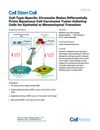
November 2016 in “Cell stem cell” This study found that squamous cell carcinomas from hair follicle stem cells are more prone to epithelial to mesenchymal transition and metastasis than those from interfollicular epidermis, due to distinct chromatin landscapes.
 143 citations
,
September 2008 in “Experimental gerontology”
143 citations
,
September 2008 in “Experimental gerontology” This review discusses the diverse roles and characteristics of epidermal and dermal stem cells in skin regeneration and aging, highlighting their potential applications in regenerative medicine and reports no new clinical results.
 105 citations
,
May 2011 in “The journal of investigative dermatology/Journal of investigative dermatology”
105 citations
,
May 2011 in “The journal of investigative dermatology/Journal of investigative dermatology” This study found that activation of the TRPV3 ion channel inhibits human hair growth by affecting hair follicles and outer root sheath keratinocytes.
 98 citations
,
August 2007 in “PLoS ONE”
98 citations
,
August 2007 in “PLoS ONE” This study found that Myc activation in epidermal stem cells leads to chromatin modifications that promote stem cell exit and differentiation, which can be influenced by HDAC inhibitors like trichostatin A.
 89 citations
,
November 2017 in “Journal of Cellular Physiology”
89 citations
,
November 2017 in “Journal of Cellular Physiology” This review discusses the role of Wnt/β‐catenin signaling in stem and cancer stem cell maintenance and its involvement in the development and regeneration of various organs, but reports no new experimental results.
 77 citations
,
April 2016 in “Science Advances”
77 citations
,
April 2016 in “Science Advances” Researchers created a fully functional, bioengineered skin system with hair from stem cells that successfully integrated when transplanted into mice.
 71 citations
,
October 2008 in “The journal of investigative dermatology/Journal of investigative dermatology”
71 citations
,
October 2008 in “The journal of investigative dermatology/Journal of investigative dermatology” This study presents a novel in vitro assay using human folliculoid microspheres to research hair growth, which may facilitate preclinical testing of hair growth-modulatory agents.
 71 citations
,
September 2006 in “Cell Transplantation”
71 citations
,
September 2006 in “Cell Transplantation” This study concludes that fetal skin cells can significantly enhance wound healing and reduce scarring when used to treat severe burns and various wounds in children.
 68 citations
,
August 2014 in “Stem Cells Translational Medicine”
68 citations
,
August 2014 in “Stem Cells Translational Medicine” This study found that composite skin constructs containing dermal papilla cells promoted better skin healing and hair regeneration in nude mice, highlighting their role in tissue-engineered skin for severe injuries.
 64 citations
,
January 2010 in “The FASEB Journal”
64 citations
,
January 2010 in “The FASEB Journal” This study found that prolactin is a key regulator of keratin expression in human hair follicles, enhancing specific keratin types and influencing epithelial stem cell-associated keratins.
 64 citations
,
August 2007 in “Artificial Organs”
64 citations
,
August 2007 in “Artificial Organs” This study found that PHBV cocultured with epithelial and dermal cells might enhance early-stage wound healing by promoting wound closure and re-epithelization more effectively than PHBV/collagen.
 61 citations
,
December 2016 in “The EMBO Journal”
61 citations
,
December 2016 in “The EMBO Journal” This study established a new in vitro culture system that supports the growth and dynamic self-organization of hair follicle stem cells and their progeny, promoting a stable population equilibrium.
 50 citations
,
September 2014 in “Stem cell reports”
50 citations
,
September 2014 in “Stem cell reports” In this study, BLIMP1 was found to function in terminally differentiated epidermal cells to maintain homeostasis, rather than defining a sebocyte progenitor population.