 2 citations
,
June 2024 in “Archives of Dermatological Research”
2 citations
,
June 2024 in “Archives of Dermatological Research” In this study, researchers compared three treatments for stable vitiligo and found that a combination of follicular cell suspension and mini punch grafting resulted in significantly better re-pigmentation after six months compared to using either method alone.
4 citations
,
January 2008 in “Journal of Shandong University” In this study, goat hair follicles cultured in serum-free medium grew faster than those in medium with serum, and growth rates increased with the addition of VEGF and EGF.
 2 citations
,
July 2013 in “EDIS”
2 citations
,
July 2013 in “EDIS” This fact sheet discusses the impacts of zinc deficiency, including its effects on the immune system, cognitive function, and growth in children, and highlights the increased risk for those who consume alcohol excessively; it reports no new clinical results.
 August 2004 in “Journal of the American College of Surgeons”
 This study found that endothelial cells under serum deprivation significantly upregulated genes related to inflammation and coagulation, which may impact outcomes in tissue transfer procedures.
 August 1993 in “Journal of Dermatological Science”
 Testosterone metabolism in balding scalp cells may not be the main cause of hair loss.
 175 citations
,
December 2014 in “PLoS Biology”
175 citations
,
December 2014 in “PLoS Biology” This study found that macrophages near hair follicles contribute to the activation of skin epithelial stem cells in mice, suggesting a novel role for macrophages in regulating hair growth.
 78 citations
,
June 2003 in “Journal of Investigative Dermatology Symposium Proceedings”
78 citations
,
June 2003 in “Journal of Investigative Dermatology Symposium Proceedings” TGF-β1 from dermal papilla cells suppresses hair growth, and targeting it may help treat androgenetic alopecia.
 63 citations
,
January 1984 in “Journal of Investigative Dermatology”
63 citations
,
January 1984 in “Journal of Investigative Dermatology” Minoxidil promotes hair growth by increasing cell division and DNA synthesis.
 56 citations
,
July 2005 in “Experimental Dermatology”
56 citations
,
July 2005 in “Experimental Dermatology” This study demonstrated that hair follicle-derived cells can induce hair follicle formation in an in vitro skin organ culture system using human retroauricular skin specimens.
 34 citations
,
February 1999 in “Journal of Dermatological Science”
34 citations
,
February 1999 in “Journal of Dermatological Science” This study found that minoxidil increased 17ß-hydroxysteroid dehydrogenase activity by nearly 40% in dermal papilla cells from balding scalps but not in nonbalding scalp cells or dermal fibroblasts.
 29 citations
,
February 2007 in “Hormone and metabolic research”
29 citations
,
February 2007 in “Hormone and metabolic research” This study found that antisense oligonucleotides can significantly reduce androgen receptor expression in cultured human sebocytes and may offer new therapeutic possibilities for androgen-associated skin diseases.
 20 citations
,
October 2008 in “Archives of dermatological research”
20 citations
,
October 2008 in “Archives of dermatological research” This study found that angiogenin is expressed in human dermal papilla cells, where it might stimulate hair growth by promoting cell proliferation and local skin angiogenesis.
 19 citations
,
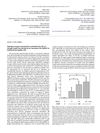
September 2011 in “Journal of Dermatological Science”
19 citations
,
September 2011 in “Journal of Dermatological Science” TGF-β1 increases androgen receptor activity in hair loss, but Hic-5/ARA55 can counter this effect.
 13 citations
,
December 1991 in “Annals of the New York Academy of Sciences”
13 citations
,
December 1991 in “Annals of the New York Academy of Sciences” This study observed that human anagen hair follicles can grow in vitro when maintained serum-free, with possible implications for understanding hair follicle growth mechanisms.
 8 citations
,
August 2007 in “Histopathology”
8 citations
,
August 2007 in “Histopathology” This article discusses the kinetic and topographical heterogeneity in follicular thyroid neoplasms and reports no new research findings; the authors emphasize understanding diverse growth patterns.
 6 citations
,
March 2015 in “Journal of Endocrinological Investigation”
6 citations
,
March 2015 in “Journal of Endocrinological Investigation” This study suggests that using both finasteride and dutasteride may increase the risk of acute coronary syndrome in patients with benign prostate hyperplasia.
 5 citations
,
February 2016 in “Genetic Testing and Molecular Biomarkers”
5 citations
,
February 2016 in “Genetic Testing and Molecular Biomarkers” This study found that the expression levels of nucleolin, nucleophosmin, and UBTF genes were lower in normal sites compared to hair loss sites in males with alopecia.
 27 citations
,
December 2013 in “Endocrinology”
27 citations
,
December 2013 in “Endocrinology” This study established a mouse model for Cushing's syndrome due to a specific Crh mutation, which may help explore the effects of glucocorticoid excess and evaluate treatments for corticosteroid-induced osteoporosis.
 417 citations
,
September 2005 in “PLoS biology”
417 citations
,
September 2005 in “PLoS biology” This study developed molecular signatures for dermal papilla cells and their niche, uncovering novel signaling regulators and genes linked to hair disorders, which may inform future hair development research.
 363 citations
,
March 2017 in “Nature Communications”
363 citations
,
March 2017 in “Nature Communications” This study found that, in mouse tail epidermis, stem cells rapidly activate and regenerate new progenitors to repair wounds, with mechanisms affecting their proliferation, differentiation, and migration.
 316 citations
,
June 2004 in “The journal of investigative dermatology/Journal of investigative dermatology”
316 citations
,
June 2004 in “The journal of investigative dermatology/Journal of investigative dermatology” This study found that using a standardized protocol with microspheres of approximately 1.5 micrometers enhances penetration into hair follicles, particularly when skin is treated with cyanoacrylate skin surface stripping.
 254 citations
,
September 2014 in “Menopause”
254 citations
,
September 2014 in “Menopause” The NAMS 2014 recommendations guide healthcare providers on treating health issues in midlife women, emphasizing individualized care and informed decision-making.
 249 citations
,
April 2002 in “The FASEB journal”
249 citations
,
April 2002 in “The FASEB journal” This study provides evidence that human skin contains genes and enzymes necessary for producing serotonin and melatonin.
 237 citations
,
June 2013 in “Nature Medicine”
237 citations
,
June 2013 in “Nature Medicine” This study found that fibroblast growth factor 9, initially secreted by γδ T cells, plays a key role in modulating hair follicle regeneration in mice after skin wounds.
 208 citations
,
January 2013 in “Lab on a Chip”
208 citations
,
January 2013 in “Lab on a Chip” The researchers described a chip-based bioreactor platform for dynamic perfusion, which may enhance in vitro skin models by introducing mechanical shear stress and extending culture periods.
 192 citations
,
March 2017 in “Cell host & microbe”
192 citations
,
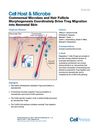
March 2017 in “Cell host & microbe” The researchers reported that hair follicle development and commensal microbe colonization promote the accumulation of regulatory T cells in neonatal skin, with the Ccl20-Ccr6 pathway playing a key role in this process.
 192 citations
,
March 1998 in “British Journal of Dermatology”
192 citations
,
March 1998 in “British Journal of Dermatology” This study found that minoxidil significantly increases VEGF mRNA and protein expression in dermal papilla cells, suggesting a role in enhancing hair follicle vascularization in androgenetic alopecia.
 190 citations
,
October 2002 in “The FASEB journal”
190 citations
,
October 2002 in “The FASEB journal” In this study, androgen did not affect keratinocyte growth in coculture with androgenetic alopecia-derived dermal papilla cells, but did significantly suppress keratinocyte growth when androgen receptor was overexpressed in the papilla cells.
 187 citations
,
April 2019 in “npj Regenerative Medicine”
187 citations
,
April 2019 in “npj Regenerative Medicine” This study found that hMSC secretomes from umbilical cord Wharton's jelly had the most potent angiogenic effects, whereas those from adipose tissue demonstrated the weakest angiogenic potential.
 146 citations
,
June 2012 in “PLoS ONE”
146 citations
,
June 2012 in “PLoS ONE” This study observed that quiescent label-retaining cells in the intestine, identified by Paneth cell markers, can switch to a proliferative state and activate Bmi1 expression during tissue injury, contributing to tissue regeneration.