
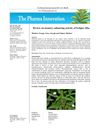
This review discusses the medicinal uses and phytochemical composition of Eclipta alba and reports no new clinical findings; the authors suggest its potential therapeutic significance due to complex interactions of its constituents.
February 2023 in “Reactions Weekly”  April 2016 in “Journal of The American Academy of Dermatology”
 Ixekizumab is effective and safe for patients who did not improve with etanercept treatment for psoriasis.
26 citations
,
May 1991 in “Clinical and experimental dermatology” In this study, oral etretinate resulted in increased hair length and loss of beading in a childhood monilethrix case, while the scalp's keratosis pilaris persisted.
6 citations
,
October 2023 in “Pharmaceuticals” This study found that the extract of Eclipta prostrata L. demonstrated high antioxidant and anti-acetylcholinesterase activities, moderate inhibition of enzymes linked to diabetes, and favorable ADMET properties, suggesting potential cognitive and diabetes management benefits.
January 2022 in “Zenodo (CERN European Organization for Nuclear Research)” This review discusses the various traditional uses and reported bioactivities of Eclipta prostrata but does not present new research findings.
January 2013 in “International journal of contemporary surgery” This study found that combining cyproterone acetate with topical eflornithine was a safe and effective treatment for facial hirsutism in women.
 January 2026 in “Zenodo (CERN European Organization for Nuclear Research)”
 This study reports the discovery of LX-38, a novel non-steroidal drug candidate that may offer safer treatment for conditions like Benign Prostatic Hyperplasia by avoiding hormonal side effects associated with current therapies.
46 citations
,
May 2013 in “The journal of investigative dermatology/Journal of investigative dermatology” This review discusses the state-of-the-art knowledge on pseudoxanthoma elasticum, summarizing recent advancements in genetics, pathomechanisms, and potential treatments but reports no new clinical findings.
2 citations
,
September 2024 in “Journal of the American Academy of Dermatology” Deuruxolitinib is generally safe for treating alopecia areata.
 21 citations
,
November 2021 in “Biomolecules”
21 citations
,
November 2021 in “Biomolecules” This review compiles information on traditional uses, phytoconstituents, and biological activities of Eclipta prostrata but reports no new experimental results; the authors call for more studies to understand its pharmacological mechanisms.
July 2026 in “Journal of the American Academy of Dermatology” 2 citations
,
November 2025 in “British Journal of Pharmacology” In this study, researchers validated a computational workflow for repurposing non-antibacterial drugs as antibacterial agents and highlighted daprodustat, combined with an efflux pump inhibitor, as a promising strategy against bacterial pathogens.
1 citations
,
January 1999 in “The European journal of contraception & reproductive health care” This study found that a low-dose oral contraceptive containing dienogest provides effective contraception, improves cycle stability, and may reduce excessive scalp and skin oiliness, with high user satisfaction.
1 citations
,
January 2009 in “Elsevier eBooks” This review discusses the potential enhanced effectiveness of combining Eflornithine cream with laser or light-based systems for facial hair removal and emphasizes the need for safer and more satisfactory solutions.
September 2025 in “Journal of the American Academy of Dermatology” Deuruxolitinib significantly improves hair satisfaction in severe alopecia areata patients.
June 2026 in “International Journal of Pharmaceutics”  September 2018 in “Reactions Weekly”
 Two women had skin reactions from a hair loss treatment and got better after stopping use.
2 citations
,
February 2018 in “International Research Journal of Pharmacy” This study reported that an alkaloid isolated from E. alba leaves inhibited HIV-1 reverse transcriptase activity with minimal cytotoxicity, suggesting its potential as an antiviral agent.
 July 2016 in “Dermatologie pro praxi”
 This article discusses the use of Espumil foam base in pharmacies for preparing dermatological medications and reports no new clinical results.
 27 citations
,
February 2009 in “Autoimmunity Reviews”
27 citations
,
February 2009 in “Autoimmunity Reviews” This study describes the development of the EUSCLE Core Set Questionnaire for cutaneous lupus erythematosus, designed to standardize data collection, facilitate epidemiological analysis, and guide diagnostic and therapeutic strategies across European centers.
 2 citations
,
July 2017 in “Deleted Journal”
2 citations
,
July 2017 in “Deleted Journal” This review discusses the memory enhancing activity of the ethanolic extract of Eclipta alba and reports no new clinical results.
 2 citations
,
November 2022 in “Skin research and technology”
2 citations
,
November 2022 in “Skin research and technology” This study found that the p.E402K mutation in the KRT86 gene is a hotspot in Chinese patients with monilethrix, and treatment with 5% topical minoxidil significantly improved hair density and quality.
This study characterized the physical-chemical properties of Eclipta alba and identified compounds in the plant that could support its use in developing hair loss treatments.
 1 citations
,
July 2018 in “CMAJ. Canadian Medical Association journal”
1 citations
,
July 2018 in “CMAJ. Canadian Medical Association journal” This case report describes a three-year-old girl with a two-year history of hair loss who was previously treated with selenium sulfide shampoo, with no family history of alopecia.
 61 citations
,
March 1990 in “Clinical pharmacology and therapeutics/Clinical pharmacology & therapeutics”
61 citations
,
March 1990 in “Clinical pharmacology and therapeutics/Clinical pharmacology & therapeutics” In this study, albendazole treatment in patients with hydatid disease was associated with decreased microsomal enzyme function and induced its own metabolism, but also showed potential hepatotoxicity and severe side effects, necessitating careful monitoring.
31 citations
,
January 2014 in “The Scientific World JOURNAL” This study found that the water extract of Eclipta prostrata L. may protect skin cells against UVB-induced damage, likely due to its antioxidant properties and absorption of UVA and UVB radiation.
This overview discusses the medicinal uses and pharmacological activities of Eclipta alba, yet reports no new experimental findings; it emphasizes the plant's significant role in traditional medicine.
 January 2022 in “Revista Dermatológica Centro Uraga”
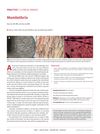
 This article reviews two cases of monilethrix in siblings, detailing their clinical and dermatoscopic characteristics, but reports no new findings.
September 2022 in “Health and Medical Journal” This case report describes a 19-year-old woman with systemic lupus erythematosus and telogen effluvium, who experienced new hair growth and increased hair density after 90 days of treatment with 2% topical minoxidil and oral keratin-based antioxidants.