 29 citations
,
July 2014 in “PloS one”
29 citations
,
July 2014 in “PloS one” In this study, Meis1 was found to regulate epidermal homeostasis and act as a proto-oncogenic factor in skin tissues, with differences in expression patterns between normal and tumor cells.
January 2005 in “Enlighten: Publications (The University of Glasgow)” In this transgenic mouse study, preliminary findings suggest that overt melanocyte hyperplasia may require prior keratinocyte hyperplasia, indicating a potential role for keratinocyte mutation in early melanoma development.
4 citations
,
August 2013 in “Chinese Medical Journal” This study found that a mutation in the seventh exon of the KRT86 gene plays a major role in the pathogenesis of monilethrix in a Chinese family.
3 citations
,
December 2014 in “Annals of Laboratory Medicine” In this study, a somatic KRAS mutation was identified in a Korean infant with nevus sebaceus and associated extracutaneous manifestations, suggesting a diagnosis of nevus sebaceus syndrome.
3 citations
,
November 2011 in “Small GTPases” This study identified hair follicle stem cells as a source of squamous cell carcinoma in an inducible mouse model and proposes targeting these for future cancer therapies.
153 citations
,
June 2015 in “GenomeBiology.com” This study found that both genome-wide screening methods identified the VTRNA2-1 epiallele as highly responsive to environmental influences, suggesting a link between early embryonic environment, epigenetic changes, and human disease.
 1 citations
,
February 2009 in “Journal of Investigative Dermatology”
1 citations
,
February 2009 in “Journal of Investigative Dermatology” This study found that VEGF-deficient keratinocytes can form tumors using different aneuploidy and signaling patterns, highlighting VEGF's role beyond angiogenesis in tumor cell growth and survival.
 June 2023 in “British Journal of Dermatology”
 This study reports a unique case of coinheritance of BRCA2 and CYLD pathogenic variants in a man with metastatic malignant cylindroma, suggesting that recognizing such genetic profiles in rare conditions can provide new treatment options, including the potential use of therapies targeting BRCA deficiency.
15 citations
,
June 2012 in “British Journal of Dermatology” This study identified a novel KRT86 mutation associated with autosomal dominant monilethrix, expanding understanding of its genetic basis beyond known motifs.
July 2024 in “Journal of Investigative Dermatology” A new test helps find drugs to treat head and neck cancer by targeting c-Rel.
This study found that in mice, the epidermal microenvironment reverses the oncogenic effects of GNAQQ209L in melanocytes, inhibiting their survival and proliferation through paracrine signals.
This study found that inhibiting mTORC2 in glioblastoma cells reduced DNA repair and increased apoptosis, highlighting its potential role in cancer cell survival and DNA damage response.
 30 citations
,
August 2021 in “Oncogene”
30 citations
,
August 2021 in “Oncogene” This study reports that miR-22 promotes cancer progression and metastasis by maintaining Wnt/β-catenin signaling and cancer stem cell function.
 25 citations
,
January 2011 in “Annals of Dermatology”
25 citations
,
January 2011 in “Annals of Dermatology” This case report documents a 61-year-old woman treated with erlotinib who experienced the rare side effect of cicatricial alopecia.
 106 citations
,
March 2013 in “Nature Communications”
106 citations
,
March 2013 in “Nature Communications” This study found several microRNA-related genetic variants linked to epithelial ovarian cancer risk, with a notable association at the 17q21.31 region, suggesting potential new susceptibility genes.
 11 citations
,
March 2014 in “Journal of Investigative Dermatology”
11 citations
,
March 2014 in “Journal of Investigative Dermatology” In this study, basal cell carcinoma developed in Ptch-deficient mice only after chemical treatment, not skin wounding, suggesting a second unknown event is necessary for tumor formation.
October 2024 in “Journal of the Endocrine Society” This case report highlights that a patient with resistance to thyroid hormone was misdiagnosed as having Graves’ disease, leading to unnecessary radioactive iodine treatment.
 59 citations
,
April 2016 in “Cell Reports”
59 citations
,
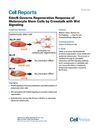
April 2016 in “Cell Reports” This study demonstrated that EdnrB signaling promotes melanocyte stem cell proliferation and differentiation, enhancing hair and epidermal melanocyte regeneration, especially under conditions of active Wnt signaling.
2 citations
,
November 2022 in “bioRxiv (Cold Spring Harbor Laboratory)” This study found that metabolic adaptations in skin epithelial stem cells, specifically redox ratio recovery and glycolytic flux modulation, define competitive outcomes between wild-type and mutant cells in different oncogenic environments.
 January 2023 in “Open Life Sciences”
 This study found that VEGFR-2 activation may play a role in hair follicle differentiation, proliferation, and apoptosis by co-expressing with several key proteins in normal human scalp skin.
5 citations
,
January 2016 in “International Journal of Trichology” This case report describes two patients who experienced loose anagen hairs and pili torti, resulting in nonscarring alopecia, potentially linked to erlotinib treatment for solid tumors.
This study found that GNAQQ209L expression in mouse melanocytes led to reduced survival in the interfollicular epidermis due to paracrine signaling, while GNAQQ209L boosted survival in a different microenvironment.
 9 citations
,
March 2012 in “Experimental dermatology”
9 citations
,
March 2012 in “Experimental dermatology” This meeting report discusses the first symposium on natural gene therapy for skin, preceding the 41st annual meeting of the European Society for Dermatological Research, and reports no new experimental findings.
21 citations
,
December 1994 in “Journal of Investigative Dermatology” 125 citations
,
August 2003 in “Development” In this study, mice engineered to express human EGFR showed tissue-specific growth defects and neurodegeneration rescue, but developed severe heart issues and accelerated bone cell differentiation.
 24 citations
,
November 2023 in “Nature”
24 citations
,
November 2023 in “Nature” In this study, researchers demonstrated that the expression of the oncogene SmoM2 leads to basal cell carcinoma in the ear epidermis of mice but not in the back skin, with differences in susceptibility linked to the composition of the extracellular matrix.
 17 citations
,
September 2019 in “Journal of Cell Biology”
17 citations
,
September 2019 in “Journal of Cell Biology” This study found that despite carrying an activating Hras mutation, hair follicle stem cells integrate into normal skin without causing tumors, unlike similar mutations in the epidermis, suggesting unique tumor-suppressing mechanisms in hair follicles.
39 citations
,
October 2012 in “Familial cancer” This review covers the molecular basis of Birt–Hogg–Dubé syndrome and its implications for potential therapeutic targets, but it does not report new experimental results.
December 2025 in “Drug Design Development and Therapy” This retrospective study reported that in HER-2-negative metastatic breast cancer patients, anlotinib combined with taxane/capecitabine showed superior disease control rate, progression-free survival, and overall survival compared to bevacizumab plus chemotherapy, with both treatments having tolerable safety profiles.
1 citations
,
November 2025 in “Neuro-Oncology” In this study, safusidenib erbumine was evaluated for its efficacy and safety in patients with untreated IDH1-mutated WHO grade 2 gliomas, achieving a 44.4% objective response rate and 87.9% 24-month event-free probability, but with some mild to moderate adverse effects.