33 citations
,
June 2009 in “Journal of Cutaneous Pathology” This article discusses the cutaneous side effects of erlotinib, an EGFR inhibitor, in a patient with non-small cell lung cancer, reporting nonscarring alopecia and indicative scalp biopsy findings.
 6 citations
,
November 2011 in “Journal of Dermatological Science”
6 citations
,
November 2011 in “Journal of Dermatological Science” A new gene mutation may allow some piebaldism patients to regain skin color in white patches.
February 2025 in “Borneo Journal of Pharmacy” This study reviewed evidence on eribulin's efficacy and safety for treating metastatic triple-negative breast cancer, highlighting variable survival outcomes and manageable safety profiles for both monotherapy and combination therapies.
September 2023 in “Journal of the American Academy of Dermatology” In this study of pediatric melanocytic lesions, researchers at Massachusetts General Hospital observed no concurrent BAP1 loss and BRAFV600E positivity, characteristics of adult BIMT, suggesting that these tumors may develop at a later age rather than in childhood.
30 citations
,
June 1993 in “The Journal of Cell Biology” This study found that transgenic mice expressing a mutant E1a oncoprotein in their skin had disturbed hair follicle maturation but did not show increased tumor development or proliferation.
 1 citations
,
September 2011 in “Journal of Dermatology”
1 citations
,
September 2011 in “Journal of Dermatology” This letter reports a woman with nevoid basal carcinoma syndrome and pronounced androgenic alopecia associated with a novel PTCH gene mutation p.Leu1159fsx32, suggesting a genetic link in this case study.
 5 citations
,
September 2010 in “Cancer Prevention Research”
5 citations
,
September 2010 in “Cancer Prevention Research” This perspective discusses Villani et al.'s findings on the role of the IGF regulatory protein Igfbp2 in basal cell carcinogenesis and highlights potential therapeutic and preventive targets, while raising questions about the cell of origin.
147 citations
,
October 2021 in “Cancer Communications” This study found that the novel anti-HER2 antibody RC48 demonstrated promising activity and manageable safety in patients with HER2-overexpressing, advanced gastric or gastroesophageal junction cancer after at least two prior chemotherapy lines.
173 citations
,
July 2012 in “British Journal of Dermatology” This study found that the administration of the mutant BRAF inhibitor dabrafenib in patients with metastatic melanoma was associated with various skin lesions, including keratinocytic proliferation that sometimes showed low-grade malignancy features.
 January 2026 in “BMC Veterinary Research”
 The researchers reported finding a recessive nonsense variant in the EGFR gene responsible for perinatal lethality in the "Blonde d'Aquitaine" cattle breed, prompting the development of a screening test to help eradicate this genetic flaw.
January 2015 in “OpenBU/Boston University Institutional Repository (Boston University)” This study reported that NRP2 expression in melanocytes and melanocyte stem cells is linked to migration inhibition and potentially melanoma progression, suggesting its role as a target for understanding melanoma and hair follicle biology.
 July 2018 in “Kidney international”
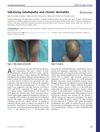
 This case study describes a 9-year-old girl with a homozygous EGFR gene mutation, presenting with tubulopathy and chronic dermatitis, whose ongoing symptoms and management offer insights into this rare genetic condition.
March 2026 in “Journal of Investigative Dermatology” 23 citations
,
June 1992 in “PubMed” This study found that RAR-gamma 1 mRNA is present in multiple skin layers and structures, suggesting a role in maintaining and differentiating normal epidermis and skin appendages.
January 1975 in “NJEA Review” This Phase II study found that BAY 43-9006, given at 400 mg orally twice daily, led to stable disease in 30% and tumor reduction in 40% of renal cell carcinoma patients.
 5 citations
,
July 2022 in “Orphanet journal of rare diseases”
5 citations
,
July 2022 in “Orphanet journal of rare diseases” This study found that RSPO1 mutations in patients with a 46XX disorder of sexual development contribute to impaired skin integrity and increased risk of squamous cell carcinoma in areas subject to friction.
September 2019 in “The journal of investigative dermatology/Journal of investigative dermatology” This study identifies two previously unreported pathogenic RIPK4 gene variants, suggesting a functional link with cell adhesion molecules in ectodermal dysplasias.
105 citations
,
October 2018 in “Nature” This study found that vismodegib promotes Basal cell carcinoma regression by inducing tumor differentiation but leaves a small population of quiescent cells that can drive relapse, which can be eliminated by adding a Wnt signaling inhibitor.
 15 citations
,
October 2014 in “Journal of Investigative Dermatology”
15 citations
,
October 2014 in “Journal of Investigative Dermatology” This review discusses the development of targeted therapies for basal cell carcinoma that interfere with Hedgehog signaling and reports no new research findings.
11 citations
,
May 2008 in “British journal of dermatology/British journal of dermatology, Supplement” This case report describes a 32-year-old man who developed SCC of the common bile duct a year after receiving treatment for a malignant proliferating trichilemmal tumour on the scalp.
This study found that the survival and proliferation of mouse melanocytes expressing the GNAQQ209L oncogene were impaired by interactions with the epidermal microenvironment, suggesting a possible mechanism for the rarity of these mutations in epidermal melanomas.
This study found that super-enhancers play a crucial role in driving malignant progression in squamous cell carcinoma stem cells through a regulatory network involving ETS2 transcription factors, highlighting the potential link between high ETS2 levels and poor patient outcomes in head and neck cancers.
178 citations
,
April 2011 in “Journal of Clinical Investigation” This study found that the phenotype of Hedgehog/Gli-driven skin tumors in mice depends on the cell of origin, tissue context, and level of oncogenic signaling.
1 citations
,
January 2015 in “The Journal of Dermatology” This letter to the editor presents a case of non-Herlitz junctional epidermolysis bullosa associated with a COL17A1 mutation and reports no new clinical findings.
14 citations
,
March 2015 in “Stem Cell Research & Therapy” This study indicates that ABCG2 expression identifies interfollicular keratinocyte progenitor cells in human epidermis and suggests it could help enrich these stem cells for research and treatment.
 September 2017 in “Journal of Investigative Dermatology”
 This study found that in AGA, the risk allele at locus 2q35 alters WNT10A expression through EBF1, suggesting a potential androgen-dependent regulatory mechanism.
 5 citations
,
September 2015 in “BMC Medical Genetics”
5 citations
,
September 2015 in “BMC Medical Genetics” In this study, individuals with a c.1072C > T mutation in the EDAR gene showed more hair shaft deformations compared to non-mutation carriers, highlighting EDAR's role in hair follicle development.
 3 citations
,
February 2011 in “Journal of Biomedical Research/Journal of biomedical research”
3 citations
,
February 2011 in “Journal of Biomedical Research/Journal of biomedical research” This study identified a novel mutation, R430Q in the KRT86 gene, in a Han family with monilethrix, which may contribute to the disease's pathogenic mechanism.
1 citations
,
December 2020 in “International journal of molecular sciences” This study suggests that biallelic loss of the Hedgehog signaling repressor Patched alone in Keratin 5+ epidermal cells is insufficient to drive basal cell carcinoma development unless exogenous stimuli trigger accumulation of BCC precursor cells.
5 citations
,
October 2021 in “American Journal of Medical Genetics Part A” This case report identifies a novel maternally inherited MBTPS2 variant associated with an expanded phenotypic spectrum of BRESHECK syndrome, including cytopenias, bone marrow fibrosis, and chronic diarrhea.