3 citations
,
January 2011 in “生物医学研究杂志:英文版” In this study, a novel heterozygous transition mutation in the KRT86 gene was identified, which may be pathogenic for monilethrix in a Chinese family.
5 citations
,
June 2008 in “British Journal of Dermatology” 7 citations
,
April 2004 in “International Journal of Dermatology” This report describes a case of epidermolytic hyperkeratosis in a newborn and her mother, both possessing a specific KRT1 gene mutation known to cause this skin disorder.
 November 2023 in “Advanced Science”
 A specific hair protein variant increases the spread of breast cancer and is linked to worse survival rates.
1 citations
,
September 2015 In this report, two cases of non-small cell lung cancer treated with gefitinib showed unexpected hair growth, suggesting a potential new application of EGFR-TKIs for alopecia.
91 citations
,
April 2006 in “PubMed” This review summarizes adverse events associated with EGFR-targeting cancer therapies, such as skin rashes and lung disease, and reports no new clinical results.
 93 citations
,
May 2010 in “European Journal of Cancer”
93 citations
,
May 2010 in “European Journal of Cancer” This phase II trial found that BI 2536 demonstrated limited antitumor activity across five solid tumor types, with no confirmed objective responses observed.
 April 2019 in “Journal of Investigative Dermatology”
 This study found that Merkel cell carcinoma recurrence risk peaks within the first two years after diagnosis and varies significantly by stage, with immune suppression, age, and male sex also influencing risk.
This study suggests that the ANE syndrome mutation in yeast Nop4, analogous to human RBM28, disrupts protein folding and protein-protein interactions, contributing to ribosomal dysfunction.
 6 citations
,
June 2021 in “Developmental biology”
6 citations
,
June 2021 in “Developmental biology” This study found that dermal EZH2 plays a crucial role in controlling fibroblast differentiation by regulating Wnt/β-catenin and retinoic acid signaling during skin development.
 1 citations
,
March 2015 in “Journal of the European Academy of Dermatology and Venereology”
1 citations
,
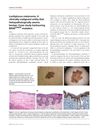
March 2015 in “Journal of the European Academy of Dermatology and Venereology” This letter to the editor shares a case study of lentiginous melanoma that appears clinically malignant but histopathologically benign, involving the BRAFV600R mutation.
 1 citations
,
January 2025 in “Frontiers in Oncology”
1 citations
,
January 2025 in “Frontiers in Oncology” This review highlights REV7's crucial roles in maintaining genome stability, its implication in several cancers, and its association with poor prognoses and treatment resistance, while also noting that REV7 suppression may improve chemotherapy sensitivity.
 February 2026 in “MedBA Medicine”
 This study identified potential new adverse drug reaction signals for erlotinib, used in lung and pancreatic cancer treatment, by analyzing a large dataset of case reports, indicating further clinical studies are necessary to confirm these findings.
2 citations
,
April 2010 in “Cancer Research” In this study, epidermal EGFR ablation in a mouse model led to significant local and systemic inflammatory responses, highlighting EGFR's role in maintaining skin immuno-homeostasis.
21 citations
,
September 2010 in “Cancer Prevention Research” This study suggests that IGFBP-2 may play a role in basal cell carcinoma development by mediating epidermal progenitor cell expansion in hair follicles with activated Shh signaling.
2 citations
,
August 2008 in “Oncotarget” In this study, intravital microscopy in live mice showed that apoptosis in hair follicle regression may be driven by apoptotic cells inducing neighboring cell death, with stem cells likely providing a pro-survival signal.
November 2011 in “Molecular Cancer Therapeutics” This study discusses the involvement of Hedgehog signaling in various human cancers, detailing different mechanisms of pathway activation and highlighting the potential for therapeutic targeting through pathway inhibition.
May 2022 in “The journal of investigative dermatology/Journal of investigative dermatology” This study found that TET2 plays a tumor-suppressive role in preventing squamous cell carcinomas by regulating 5-hydroxymethylcytosine levels, suggesting therapeutic potential for DNA methylation dynamics.
October 2014 in “Cancer research” This study found that targeting mTORC1 with rapamycin effectively inhibited skin tumor promotion in a mouse model, highlighting a potential target for cancer chemoprevention.
 12 citations
,
November 2006 in “Journal of thoracic oncology”
12 citations
,
November 2006 in “Journal of thoracic oncology” This case report describes a patient with non-small cell lung cancer who experienced trichomegaly (excessive eyelash growth) as a side effect of erlotinib treatment without developing typical skin rash.
467 citations
,
May 1999 in “Molecular Cell” In this study, activation of c-MycER in adult mouse epidermis rapidly induced proliferation and disrupted keratinocyte differentiation, causing changes similar to precancerous lesions, which regressed once c-MycER was deactivated.
November 2025 in “Journal of Investigative Dermatology” TEDAR is crucial for skin cell differentiation and barrier formation.
31 citations
,
October 2019 in “Genes & Diseases” This study identified significant gene expression differences in human basal cell carcinoma, including up-regulation of zinc finger encoding genes, which are not entirely reflected in current mouse models.
17 citations
,
July 2024 in “Frontiers in Oncology” This review discusses recent advances in understanding Merkel cell carcinoma biology, including the development of genetically-engineered mouse models and potential therapeutic targets, but reports no new clinical results.
January 2007 in “Queen Mary Research Online (Queen Mary University of London)” This study identified interactions between EGF signaling and the GLI proteins in basal cell carcinoma that may contribute to the limited metastasis seen in this skin cancer.
June 2026 in “Iraqi Journal of Pharmaceutical Sciences ( P-ISSN 1683 - 3597 E-ISSN 2521 - 3512)” This study observed that while the androgen receptor is expressed in 65.6% of breast cancer patients in Iraq, it is not significantly associated with conventional clinicopathological characteristics, suggesting limited prognostic value.
February 2009 in “Journal of Investigative Dermatology” EGFR is essential for organized skin nerve growth and branching.
15 citations
,
October 2014 in “The journal of investigative dermatology/Journal of investigative dermatology” This study suggests that erlotinib exacerbates inflammation in a mouse model of skin disease and that IL-1 inhibition could mitigate skin-related side effects of EGFR inhibitors.
May 2019 in “CINECA IRIS Institutial Research Information System (University of Genoa)” This study found that patients with the MITF p.E318K variant are more likely to develop multiple primary melanomas and dysplastic nevi with uncommon dermoscopic patterns compared to non-carriers.
June 2025 in “British Journal of Dermatology” This study details a case of a 20-year-old woman with APECED syndrome and alopecia areata who experienced complete scalp hair regrowth and improved quality of life after nine months of ruxolitinib treatment, highlighting the drug's effectiveness for severe AA linked to AIRE gene mutation.