 10 citations
,
November 2018 in “Genetics in medicine”
10 citations
,
November 2018 in “Genetics in medicine” This study identified a genetic variant in the CTS6 gene associated with a hypotrichosis syndrome, emphasizing the significant role of cystatin M/E in hair and skin health.
 8 citations
,
February 2025 in “Frontiers in Medicine”
8 citations
,
February 2025 in “Frontiers in Medicine” This study suggests that using growth factors and ADSC-conditioned medium can enhance keratinocyte viability and migration in epidermal transplantation, potentially improving chronic wound healing rates with a patient-dependent effect.
 8 citations
,
June 2022 in “Frontiers in bioengineering and biotechnology”
8 citations
,
June 2022 in “Frontiers in bioengineering and biotechnology” This study found that a collagen patch made with fibroblast-derived extracellular matrix (fdECM) extracted from human lung fibroblasts enhanced wound healing by promoting wound contraction, angiogenesis, and skin remodeling in full-thickness skin wound models, including those with diabetic ulcers.
 8 citations
,
November 2020 in “Nature Communications”
8 citations
,
November 2020 in “Nature Communications” This study demonstrates that Tp63-expressing epithelial stem cells from non-skin tissues can respond to skin morphogenetic signals and contribute to the formation of hair follicles, sebaceous glands, and epidermis.
 4 citations
,
January 2026 in “Cell Discovery”
4 citations
,
January 2026 in “Cell Discovery” This study introduced the concept of spatiotemporal clocks to understand how different phases of mammalian wound healing are coordinated, with a focus on the spatial domains and oscillatory molecular signals involved, while highlighting the potential for regenerative therapeutic strategies.
 4 citations
,
January 2015 in “Hair therapy & transplantation”
4 citations
,
January 2015 in “Hair therapy & transplantation” This review discusses melanocyte stem cells in hair follicles and their potential role in cell-based therapy for vitiligo, reporting no new experimental results.
 4 citations
,
May 2014 in “Biochemical Society Transactions”
4 citations
,
May 2014 in “Biochemical Society Transactions” This review discusses environmental reprogramming and the plasticity of epithelial cells, emphasizing their potential for new cell therapy approaches; it reports no new experimental results.
 3 citations
,
August 2011 in “InTech eBooks”
3 citations
,
August 2011 in “InTech eBooks” This article discusses the applications and contraindications of skin grafts in wound treatment and reports no new research findings.
 2 citations
,
December 2022 in “Journal of toxicologic pathology”
2 citations
,
December 2022 in “Journal of toxicologic pathology” This review outlines the histological structures of the skin, highlighting species and regional differences in dermal absorption and obstacles encountered in toxicological assessments due to epidermal thickness variability, contact dermatitis reactions, and stem cell vulnerabilities.
 2 citations
,
March 2022 in “Portuguese Journal of Nephrology & Hypertension”
2 citations
,
March 2022 in “Portuguese Journal of Nephrology & Hypertension” This manuscript describes two case reports of preterm newborns with a rare homozygous mutation in the epidermal growth factor receptor, leading to severe health issues and early mortality despite supportive care.
 2 citations
,
April 2010 in “The Open Dermatology Journal”
2 citations
,
April 2010 in “The Open Dermatology Journal” This review discusses the development and role of corneodesmosin in skin and hair follicle integrity, highlighting findings from mouse models and its connection to genetic diseases, with no new experimental results included.
2 citations
,
September 2004 in “Experimental Dermatology” This study found that desmosomal adhesion plays a crucial role in epithelial morphogenesis and cell positioning, equivalent in importance to that of adherens junctions.
 1 citations
,
April 2025 in “Pediatria i Medycyna Rodzinna”
1 citations
,
April 2025 in “Pediatria i Medycyna Rodzinna” This research re-analyzed single-cell gene expression data from a mouse model, confirming that certain genes involved in the EDA-EDAR and WNT pathways are crucial for skin appendage development, suggesting that their restoration may mitigate the effects of hypohidrotic ectodermal dysplasia in children.
 1 citations
,
December 2022 in “Parasitologists United Journal”
1 citations
,
December 2022 in “Parasitologists United Journal” This study observed that M. domestica larva-derived chitosan and gut extracts enhanced wound healing and collagen deposition in both immunocompetent and immunosuppressed mice, indicating potential benefits for combined therapy.
 1 citations
,
January 2022 in “Pharmaceutical Sciences Asia”
1 citations
,
January 2022 in “Pharmaceutical Sciences Asia” This review highlights the potential of microneedles as a low-cost, well-tolerated method for transdermal drug delivery in dermatology, though further research is needed to establish their clinical efficacy.
 1 citations
,
January 2015 in “Journal of nutrition & health”
1 citations
,
January 2015 in “Journal of nutrition & health” This study suggests that fish oil, specifically its components EPA and DHA, play a beneficial role in promoting skin health by supporting epidermal growth and reducing proinflammatory cytokines.
 1 citations
,
October 2012 in “Elsevier eBooks”
1 citations
,
October 2012 in “Elsevier eBooks” This article reviews advancements in understanding skin regeneration and suggests that bioengineering skin surrogates may soon enhance treatments for skin trauma, but it presents no new clinical findings.
 1 citations
,
October 1996 in “Journal of Cutaneous Medicine and Surgery”
1 citations
,
October 1996 in “Journal of Cutaneous Medicine and Surgery” This review discusses the advancements needed for gene therapy to become commonly used in dermatology and reports no new clinical results.
 August 2024 in “Receptors”
 This review highlights the crucial role of vitamin D signaling in epidermal stem cells during skin wound healing, emphasizing its distinct functions from calcium metabolism and its importance in genomic regulation mediated by the vitamin D receptor.
 August 2021 in “Annals of pathology and laboratory medicine”
 This study observed that benign skin tumors were more common than malignant ones, with squamous cell carcinoma being the most frequent type among malignant tumors.
 January 2020 in “International Journal of PharmTech Research”
 This case report describes a patient with untreated lepromatous leprosy developing Lucio's phenomenon, highlighting difficulties in distinguishing it from erythema nodosum leprosum with vasculonecrotic lesions.
This chapter reviews the presence and roles of stem cells in various body systems, focusing on their lifelong function in animals and humans, and reports no new experimental findings.
 January 2015 in “Journal of Nutrition and Health”
 This study found that fish oil supplementation in male Wistar albino rats helped maintain hair shaft structure and improved amino acid composition, while reducing harmful protein compounds associated with diabetes and hypercholesterolemia.
 January 2012 in “Durham e-Theses (Durham University)”
 This study found that knock-down of keratin 15 in various cell lines affected cell spreading, morphology, migration, differentiation, and proliferation, suggesting its role in maintaining the stem cell nature of keratinocytes.
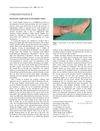 May 2002 in “British Journal of Dermatology”
 A pregnant woman's skin condition improved after giving birth, possibly due to high estrogen levels during pregnancy.
 March 1997 in “The American Journal of Cosmetic Surgery”
 A new hair transplant method showed promising results and a study found how deep a CO₂ laser can penetrate skin.
 January 1997 in “Elsevier eBooks”
 This review discusses the development and types of hair and nails as skin appendages and reports no new research findings.
 July 2020 in “Bioinformatics and Bioengineering”
 This study found that multiple genes and pathways, particularly several keratin-associated proteins, may be involved in the molecular pathogenesis of male androgenetic alopecia.

This dissertation reported that the loss of Ovol2 impairs hair follicle regeneration and wound repair in mice, highlighting its role in regulating directional migration of epithelial cells.
 156 citations
,
October 2012 in “Seminars in Cell & Developmental Biology”
156 citations
,
October 2012 in “Seminars in Cell & Developmental Biology” This study found that hair follicle stem cells initially contribute to wound re-epithelialization, but long-lasting epidermal cells are primarily derived from a stem cell population in the isthmus portion of hair follicles.