17 citations
,
November 2001 in “Journal of Investigative Dermatology Symposium Proceedings” This study found that Stat3 removal in keratinocytes of mice impairs healing and disrupts the normal hair cycle, leading to skin ulcers and hair loss as they age.
15 citations
,
January 2020 in “ILAR Journal” This review discusses the occurrence and impact of background histopathologic changes in nonhuman primate research, emphasizing the importance of understanding these factors to enhance study validity and interpretation.
7 citations
,
May 2025 in “Cells” This review describes adipose tissue-derived therapies as promising for osteoarthritis, with potential to repair cartilage, reduce inflammation, and enhance joint function, highlighting advancements and their potential future applications.
6 citations
,
August 2024 in “BMC Ophthalmology” This study identified multiple genetic variants in Pakistani families with oculocutaneous albinism, including two novel variants, enhancing understanding of its genetic basis and aiding better management and counseling.
5 citations
,
October 2021 in “American Journal of Medical Genetics Part A” This case report identifies a novel maternally inherited MBTPS2 variant associated with an expanded phenotypic spectrum of BRESHECK syndrome, including cytopenias, bone marrow fibrosis, and chronic diarrhea.
 4 citations
,
January 2020 in “International Journal of Trichology”
4 citations
,
January 2020 in “International Journal of Trichology” This study found that serum levels of epidermal growth factor (EGF) were significantly higher in patients with alopecia areata compared to healthy controls, suggesting a potential link to the disease's pathogenesis and severity.
3 citations
,
June 2025 in “Frontiers in Nutrition” This study reviewed literature on pediatric acrodermatitis enteropathica and found that zinc deficiency occurred in 75.9% of cases, with zinc supplementation showing therapeutic efficacy in 91.4% of patients; however, it was often ineffective in those with underlying metabolic disorders.
3 citations
,
April 2021 in “Oncology Times” This study reports that sacituzumab govitecan achieved a 33.3% overall response rate in patients with metastatic triple-negative breast cancer who had prior treatments, with a median response duration of 7.7 months.
 February 2026 in “Cosmetics”
 This study found that bovine milk-derived exosomes (MEV-miRNAs) significantly increased hair follicle dermal papilla cell viability and up-regulated key WNT signaling components in human hair follicles, suggesting potential therapeutic benefits for androgenetic alopecia and telogen effluvium through modulation of hair growth pathways.
December 2025 in “Current Issues in Molecular Biology” In this systematic review, animal studies showed that cytarabine causes multi-organ toxicities, notably neurotoxicity, linked to oxidative stress and other mechanisms, though study quality raises concerns about reliability and translation to human outcomes.
November 2025 in “Probiotics and Antimicrobial Proteins” September 2025 in “International Journal of Molecular Sciences” This review examined the potential effects of Kampo medicine Hangeshashinto on oral mucositis, highlighting that several natural products in its composition may inhibit intracellular AGEs, reduce inflammation from extracellular AGEs, and suppress cytotoxicity in stomatitis.
 January 2025 in “Cosmetics”
 This review highlights the multifunctional role of exosomes in dermatology, noting their potential as therapeutic agents for conditions like skin cancers and hair disorders, while also indicating pathogens exploit them for immune evasion.
 December 2024 in “Animals”
 In this study, researchers found that RORA directly regulates the expression of the Bnip3 gene, which is crucial for hair follicle stem cell health, using rat HFSCs as a model. They propose that targeting RORA could modulate HFSC status.
June 2026 in “Journal of Investigative Dermatology” This study found that certain proteins linked to immune suppression and melanogenesis are associated with repigmentation in vitiligo patients undergoing standard treatment, suggesting these proteins and their pathways play roles distinct from merely reversing skin lesions.
 March 1983 in “Annals of Internal Medicine”
 This letter to the editor mentions reports of hair loss potentially related to 5-aminosalicylic acid enemas, but suggests it may be due to telogen effluvium from severe inflammatory bowel disease rather than a direct effect.
January 2024 in “International Wound Journal” Combination antibiotic therapy is more effective but causes more side effects.
 January 2024 in “Genetics in Medicine Open”
 This case study of a patient with a variant in the extracellular region of IL6ST suggests a potential expansion of the phenotypic spectrum for autosomal dominant hyper-IgE syndrome, warranting further investigation.
25 citations
,
April 2008 in “Clinical and experimental dermatology” This case series describes Erythromelanosis follicularis faciei et colli in five Indian patients, suggesting it may be more common than currently reported.
 September 2022 in “JAMC. Journal of Ayub Medical College, Abbotabad, Pakistan/Journal of Ayub Medical College”
 This case study reports that zinc supplementation significantly improved the symptoms of Acrodermatitis Enteropathica in a 12-year-old boy, emphasizing the importance of early diagnosis and treatment compliance.
 2 citations
,
January 2018
2 citations
,
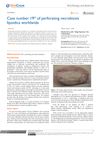
January 2018 This article reports the first case of perforating necrobiosis lipoidica in Colombia and the 19th case worldwide in diabetic patients.
1 citations
,
July 2025 in “Journal of Investigative Dermatology” 1 citations
,
September 2022 in “European Journal of Dermatology” This study identified a novel splice-site variant of the LAMB3 gene that may cause junctional epidermolysis bullosa, suggesting gene sequencing is essential for accurate diagnosis.
1 citations
,
January 2008 1 citations
,
January 2024 in “BMJ Case Reports” In this case report, a woman in her 50s was diagnosed with meningitis linked to mixed connective tissue disease after presenting symptoms similar to infectious meningitis, but with no infection detected and serological evidence pointing to the autoimmune condition.
2 citations
,
January 2014 in “Case Reports in Clinical Medicine” This case study presents an 81-year-old woman diagnosed with Cronkhite-Canada syndrome and discusses the importance of recognizing its clinical and histopathological features for timely and accurate diagnosis.
March 2022 in “Journal of Pakistan Association of Dermatologists” This case report describes a 64-year-old man with pulmonary nocardiosis, where erythema annulare centrifugum lesions possibly associated with co-trimoxazole resolved after discontinuation of the medication.
 1 citations
,
February 1977 in “Archives of Dermatology”
1 citations
,
February 1977 in “Archives of Dermatology” This case report describes a 2-month-old infant with a severe seborrhea-like skin eruption and respiratory distress, similar to symptoms that led to a sibling's death from Gram-negative septicemia.
17 citations
,
January 2015 in “JOURNAL OF CLINICAL AND DIAGNOSTIC RESEARCH” This report presents a case of Cronkhite-Canada syndrome in an elderly Indian male, adding to the approximately 450 cases documented worldwide, but introduces no new results about the condition.
October 2025 in “The American Journal of Gastroenterology” In this case report, the researchers diagnosed a large trichobezoar in a 7-year-old girl with gastrointestinal symptoms and weight loss through endoscopy after inconclusive imaging, highlighting endoscopy's importance for accurate diagnosis and the need for surgical and behavioral intervention to prevent recurrence.