 February 2010 in “Journal of the American Academy of Dermatology”
 This case report describes a 4-month-old boy with anhidrotic ectodermal dysplasia and immunodeficiency who showed minimal improvement with initial treatments but significant improvement after an umbilical cord blood transplantation.
January 2007 in “Bristol Research (University of Bristol)” This study diagnosed epidermolysis bullosa in eight calves across four UK farms, characterized by skin lesions and excluding mutations in keratin genes as the cause.
 August 1995 in “Journal of The European Academy of Dermatology and Venereology”
 New therapy helps treat hair loss.
3 citations
,
July 2022 in “Indian Journal of Dermatology” This report describes a case of acute localised exanthematous pustulosis in a 19-year-old boy after using amoxicillin-clavulanic acid, with new dermoscopic features identified.
2 citations
,
July 2016 in “Veterinary dermatology” This study reports that hyperaesthetic leucotrichia primarily affects Arabian and American paint horses, occurring mainly in summer, with histological differences from erythema multiforme despite some shared features.
 1 citations
,
October 2025 in “Nano Research”
1 citations
,
October 2025 in “Nano Research” In this study, researchers developed a dissolvable microneedle patch combining HA-TEMPO and Portulaca oleracea L.-derived nanoparticles, which effectively reduced oxidative stress and inflammation in an atopic dermatitis model while restoring immune balance, suggesting a promising treatment strategy.
 84 citations
,
April 2013 in “Applied Microbiology and Biotechnology”
84 citations
,
April 2013 in “Applied Microbiology and Biotechnology” This review discusses the current research and development of mannosylerythritol lipids, particularly focusing on their potential commercial applications in cosmetics; it reports no new results.
 19 citations
,
January 2009 in “Journal of Young Pharmacists”
19 citations
,
January 2009 in “Journal of Young Pharmacists” This study found that the alcoholic extract of Eclipta alba exhibited dose-dependent antianaphylactic effects in animal models, possibly due to membrane stabilization and reduced histamine release.
 30 citations
,
June 2014 in “Seminars in Immunology”
30 citations
,
June 2014 in “Seminars in Immunology” This review discusses recent advances in understanding the Eda pathway's role in developmental biology, and highlights ongoing trials and areas for further research, including Eda's potential involvement in cell processes and disease.
 July 2026 in “International Journal of Drug Delivery Technology”
 This study evaluated a Piper betle leaf emulgel for topical use and found it to have good stability, non-irritant properties, and significant hair growth activity in albino mice, suggesting its potential for dermatological and hair growth applications.
1 citations
,
September 2022 in “European Journal of Dermatology” This study identified a novel splice-site variant of the LAMB3 gene that may cause junctional epidermolysis bullosa, suggesting gene sequencing is essential for accurate diagnosis.
15 citations
,
November 2009 in “Journal of Comparative Pathology” Epidermolysis bullosa in calves was not caused by mutations in the keratin genes bKRT5 and bKRT14.
 July 2016 in “Dermatologie pro praxi”
 This article discusses the use of Espumil foam base in pharmacies for preparing dermatological medications and reports no new clinical results.
 21 citations
,
January 2012 in “Annals of Dermatology”
21 citations
,
January 2012 in “Annals of Dermatology” This study reported that Ell-Cranell® alpha 0.025% solution significantly increased hair counts and diameter in Korean women with female pattern hair loss over an 8-month period, showing both efficacy and safety.
16 citations
,
March 2023 in “Gels” This study found that paeonol-loaded liposomal gels demonstrated antioxidant effects and relieved inflammation in AD-like mice, suggesting potential benefits for treating atopic dermatitis.
9 citations
,
May 2022 in “Actas Dermo-Sifiliográficas” This study found that basal cell carcinoma exhibits altered expression patterns of CD10, p63, BCL-2, and EMA proteins compared to normal skin, with notable differences in staining and reactivity.
 June 2001 in “Proceedings of SPIE”
 The authors concluded that low energy laser therapy may serve as a useful complementary treatment for skin diseases such as lichen planus, infectious finger pulpits, scalp alopecia, and crural ulcers.
 3 citations
,
September 2023 in “Frontiers in immunology”
3 citations
,
September 2023 in “Frontiers in immunology” This study discusses the epithelial-immune microenvironment in chronic skin diseases, such as psoriasis and atopic dermatitis, and highlights current and future treatment strategies targeting inflammatory loops within these diseases.
 32 citations
,
January 2012 in “International Journal of Dermatology”
32 citations
,
January 2012 in “International Journal of Dermatology” This study reported that the most common skin side effect of epidermal growth factor receptor inhibitors was a papulopustular rash, treatable with symptom-targeted therapies, while drug suspension was rarely needed.
 1 citations
,
December 2023 in “Annals of Phytomedicine An International Journal”
1 citations
,
December 2023 in “Annals of Phytomedicine An International Journal” In this review, the researchers discuss how nanoemulgel overcomes the limitations of lipophilic phytomolecules by improving their bioavailability, penetration, and therapeutic efficacy, making it a promising nanocarrier for the treatment of various health conditions.
November 2025 in “Journal of Investigative Dermatology” KLHL24-mutant stem cells help understand skin and heart disease.
 9 citations
,
March 2012 in “Experimental dermatology”
9 citations
,
March 2012 in “Experimental dermatology” This meeting report discusses the first symposium on natural gene therapy for skin, preceding the 41st annual meeting of the European Society for Dermatological Research, and reports no new experimental findings.
 1 citations
,
January 2019 in “International Journal of Medical Reviews and Case Reports”
1 citations
,
January 2019 in “International Journal of Medical Reviews and Case Reports” This case report describes a 10-year-old girl with lamellar ichthyosis who showed marked improvement in scaling and skin stiffness after six weeks of treatment with emollient and supportive therapy.
 November 2023 in “Journal of cosmetic dermatology”
 This report describes three cases of erythromelanosis follicularis faciei et colli showing significant improvement in facial telangiectasia following treatment with a 595-nm pulsed dye laser, with minimal recurrence observed during follow-up.
August 2026 in “Pakistan Journal of Pharmaceutical Sciences” In rats with cyclophosphamide-induced hair loss, this study found that applying cetirizine HCl-loaded emulgel with microneedling stimulated hair growth, suggesting a potentially safer alternative to minoxidil for treating chemotherapy-induced alopecia.
 2 citations
,
February 2022 in “BMJ”
2 citations
,
February 2022 in “BMJ” This summary reports that emollient use should be recorded in medical records for burn patients, with advice given on reducing fire risk associated with emollient residue on clothing.
 8 citations
,
November 1990 in “Archives of Dermatology”
8 citations
,
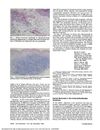
November 1990 in “Archives of Dermatology” This case report details a woman with eosinophilia-myalgia syndrome associated with L-tryptophan ingestion, highlighting skin lesions with abundant dermal mucin.
9 citations
,
October 2015 in “Journal of Cutaneous Pathology” This study found that histopathologic features of erythematous papulopustular eruption due to EGFR inhibitors vary with eruption severity and differ between cetuximab and erlotinib treatments.
3 citations
,
November 2023 in “The Journal of Dermatology”  13 citations
,
February 2007 in “British Journal of Dermatology”
13 citations
,
February 2007 in “British Journal of Dermatology” EF and PXE not closely related.