February 2023 in “Journal of Cutaneous Pathology” This case report describes an adult female with concurrent mycosis fungoides and papillary dermal elastolysis, highlighting the importance of considering rare presentations in differential diagnoses.
1 citations
,
July 2023 in “International Journal of Pharmaceutical Sciences and Drug Research” This study developed an effective and reliable HPTLC method for the simultaneous measurement of linoleic acid and oleanolic acid in Eclipta alba.
 5 citations
,
February 1977 in “Archives of Dermatology”
5 citations
,
February 1977 in “Archives of Dermatology” This study reports that 14 of 19 patients with erythema nodosum leprosum had C3 deposits in vessel walls when examined using direct immunofluorescence.
 February 2020 in “Journal of emerging technologies and innovative research”
 This study developed a multipurpose herbal hair emulgel incorporating aloe vera, tea extract, coconut oil, and castor oil, aimed at promoting hair growth and controlling dandruff, hair fall, and greying. Evaluation found the product to be stable.
 2 citations
,
January 2004 in “Elsevier eBooks”
2 citations
,
January 2004 in “Elsevier eBooks” This article reviews historical uses of the term "lupus" for various skin disorders but provides no new clinical findings.
 14 citations
,
July 2012 in “Journal of the American Academy of Dermatology”
14 citations
,
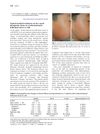
July 2012 in “Journal of the American Academy of Dermatology” This study found that topical tacalcitol improved roughness and scaling in erythromelanosis follicularis faciei et colli, although it was less effective for facial erythema.
5 citations
,
January 2018 in “Indian Journal of Dermatology/Indian journal of dermatology” This case report describes a 40-year-old woman who developed erythema annulare centrifugum, a type of skin rash, likely triggered by taking the drug aceclofenac.
 4 citations
,
July 1994 in “Clinics in Dermatology”
4 citations
,
July 1994 in “Clinics in Dermatology” This review discusses the emergence and impact of eosinophilia-myalgia syndrome related to L-tryptophan and offers insights into environmental factors affecting sclerodermatous conditions, with no new research findings presented.
 January 2025 in “PLoS ONE”
 This study identified the transcription factor Elf5 as a novel regulator of keratinocyte proliferation and differentiation in skin, with expression elevated in stem/progenitor cell populations, suggesting its potential role in determining cell fate during skin and hair development.
November 2025 in “The Journal of Dermatology” In this case report, a Japanese woman with both atopic dermatitis and alopecia areata showed improvement in both conditions following treatment with nemolizumab.
53 citations
,
July 2009 in “Cancer Research” In this mouse study, the researchers found that the monoclonal antibody ME1 causes hair follicle inflammation by up-regulating TNFα, which can be reduced by TNFα and interleukin-1 inhibitors.
 10 citations
,
January 2012 in “Lupus”
10 citations
,
January 2012 in “Lupus” This case report is the first to associate NEMO syndrome with systemic lupus erythematosus, suggesting a potential role for NF-kB essential modulator in the pathogenesis of SLE.
January 2018 in “대한피부과학회지” This case report details a 54-year-old woman with metastatic non-small-cell lung cancer who experienced severe hair loss and exanthematous drug eruption, potentially linked to erlotinib hypersensitivity.
3 citations
,
August 2017 in “Clinical case reports” A rare skin condition causes red and dark patches on the face and limbs.
April 1987 in “Pediatric Research” July 2024 in “Journal of Investigative Dermatology” ATR12-351 ointment safely delivers LEKTI protein to the skin, reducing enzyme activity in Netherton syndrome.
This article highlights the importance of early diagnosis and management of certain cutaneous adverse drug reactions and autoimmune disorders in dermatological emergencies, but it reports no new clinical results.
 April 2023 in “Journal of Investigative Dermatology”
 In this study, a new emulsion containing CBD and ginger root extract significantly reduced symptoms of dry and eczema-prone skin, such as erythema and itching, in a clinical trial.

This study introduced a new laser-only method called EKA for acne treatment, which is reported to be safe, painless, and heat-free, showing promising results for both acne and scar repair in initial sessions without combining with LED light.
15 citations
,
October 2014 in “The journal of investigative dermatology/Journal of investigative dermatology” This study suggests that erlotinib exacerbates inflammation in a mouse model of skin disease and that IL-1 inhibition could mitigate skin-related side effects of EGFR inhibitors.
November 2024 in “NeoReviews” This case report details an extremely low-birth-weight preterm neonate presenting with unique dermatologic symptoms, leading to a diagnosis of neonatal inflammatory skin and bowel disease due to a novel homozygous EGFR gene mutation, highlighting the importance of genetic testing in ambiguous cases.
 April 2023 in “The journal of investigative dermatology/Journal of investigative dermatology”
 This study suggests that Elf5 plays a crucial role in regulating stem cell processes involved in skin and hair follicle development and regeneration, impacting cell proliferation and differentiation.
March 2020 in “Upravlìnnâ, ekonomìka ta zabezpečennâ âkostì v farmacìï” This study developed quality control methods for the "Flavosterol" emulgel, which met the required quality standards and is intended for the prevention and treatment of androgenetic alopecia.
 32 citations
,
April 2013 in “Anais Brasileiros de Dermatologia”
32 citations
,
April 2013 in “Anais Brasileiros de Dermatologia” This article reviews the diagnosis and management of inherited epidermolysis bullosa and reports no new clinical findings; it emphasizes the importance of clinical and histopathological evaluation.
 1 citations
,
April 2025 in “Clinical Cosmetic and Investigational Dermatology”
1 citations
,
April 2025 in “Clinical Cosmetic and Investigational Dermatology” This study reports two cases of erlotinib-induced erosive pustular dermatosis of the scalp in patients with non-small cell lung cancer, emphasizing the need for dermatological monitoring during EGFR inhibitor therapy.
 202 citations
,
June 2005 in “Aaps Pharmscitech”
202 citations
,
June 2005 in “Aaps Pharmscitech” This review discusses the potential of lecithin organogels for improving topical drug delivery and presents no new experimental results; the authors highlight their stability and low skin irritancy as advantages.
 27 citations
,
February 2009 in “Autoimmunity Reviews”
27 citations
,
February 2009 in “Autoimmunity Reviews” This study describes the development of the EUSCLE Core Set Questionnaire for cutaneous lupus erythematosus, designed to standardize data collection, facilitate epidemiological analysis, and guide diagnostic and therapeutic strategies across European centers.
 October 2021 in “Revista Medicina Cutánea Ibero-Latino-Americana”
 This case report describes a patient who developed PRIDE syndrome-associated skin issues, including a pruritic papulopustular rash and alopecia, after starting treatment with the EGFR inhibitor erlotinib.
 February 2025 in “Journal of the European Academy of Dermatology and Venereology”
 This study found that epidermal growth factor receptor inhibitors can induce erosive pustular dermatosis of the scalp, typically appearing sooner and affecting the scalp more extensively compared to other triggers.
181 citations
,
December 2017 in “Trends in immunology” This review discusses the roles and interactions of intestinal intraepithelial lymphocytes in maintaining mucosal barrier integrity and highlights how their dysregulated responses may contribute to intestinal pathologies.