September 2025 in “OPAL (Open@LaTrobe) (La Trobe University)” This study developed a biobased copolymer called SELP::KP, showing improved hair strength, elasticity, and conditioning properties while being a safer alternative to conventional chemical treatments, based on application to human hair in a laboratory setting.
 October 1997 in “Dermatologic Surgery”
 The Epilight Hair Removal System is effective for temporary hair removal with few side effects, but more research is needed to confirm its safety and long-term results.
 November 2023 in “The journal of investigative dermatology/Journal of investigative dermatology”
 In this study, topical application of adipose stem cell exosomes was found to reduce facial redness in atopic dermatitis patients treated with dupilumab, while improving skin hydration and decreasing inflammation markers over 12 weeks.
May 2004 in “International Journal of Cosmetic Science” This study suggests that selecting and controlling emollient systems can regulate the skin penetration of active ingredients in cosmetic formulations, impacting their efficacy.
 April 2017 in “Journal of Investigative Dermatology”
 In laboratory tests and mouse models, this study found that the novel IPC analog SIG-1451 may offer potent anti-inflammatory effects for treating allergic skin inflammation, potentially outperforming some current therapies in specific inflammatory phases.
11 citations
,
May 1957 in “Journal of the American Medical Association” This review clarifies what constitutes an emollient and explains that both cosmetic and pharmaceutical emollients share the same functions, reporting no new research findings.
 October 2025 in “Frontiers in Immunology”
 This study explores the potential of platelet-rich plasma (PRP) as a novel adjuvant therapy for eczema, positing that it may alleviate inflammation, enhance skin barrier function, and reduce recurrence.
114 citations
,
September 1985 in “Journal of Investigative Dermatology” 11 citations
,
January 1956 in “Journal of Investigative Dermatology”  August 2026 in “Zenodo (CERN European Organization for Nuclear Research)”
 This review concludes that herbal nanoemulgel-based hair dyes, incorporating natural ingredients, enhance dye penetration and retention while providing additional hair and scalp health benefits compared to conventional dyes, though further studies are needed to confirm long-term safety and efficacy.
August 2024 in “Postgraduate Medical Journal” A rare skin reaction from cancer treatment was successfully managed with topical treatments and antihistamines.
12 citations
,
May 2016 in “British Journal of Dermatology” This report describes a rare case of epidermolysis bullosa acquisita in a child developing during therapy with squaric acid dibutyl ester for alopecia areata, suggesting a possible link between the medication and disease onset.
 5 citations
,
July 1991 in “Journal of The American Academy of Dermatology”
5 citations
,
July 1991 in “Journal of The American Academy of Dermatology” This case report describes a patient with eosinophilia-myalgia syndrome who experienced severe, persistent telogen effluvium.
 6 citations
,
July 2019 in “Experimental Dermatology”
6 citations
,
July 2019 in “Experimental Dermatology” This review discusses cutaneous extramedullary haematopoiesis and its potential mechanisms but reports no new clinical findings.
July 2024 in “Journal of Investigative Dermatology” ATR04-484 ointment shows promise for treating skin issues from cancer therapies.
 February 2026 in “MedBA Medicine”
 This study identified potential new adverse drug reaction signals for erlotinib, used in lung and pancreatic cancer treatment, by analyzing a large dataset of case reports, indicating further clinical studies are necessary to confirm these findings.
 1 citations
,
December 2023 in “npj biofilms and microbiomes”
1 citations
,
December 2023 in “npj biofilms and microbiomes” This review highlights the potential of genetically or metabolically engineered live biotherapeutic products (eLBPs) for skin repair and disease treatment but emphasizes that translating these innovations into practical clinical applications remains challenging, requiring further research and development.
 January 2026 in “Zenodo (CERN European Organization for Nuclear Research)”
 This study reports that ethosomal formulations, such as ethosomal acyclovir and minoxidil, improved therapeutic effectiveness by enhancing skin permeation, leading to faster healing of herpes labialis lesions and increased skin absorption compared to standard formulations.
 August 2026 in “Zenodo (CERN European Organization for Nuclear Research)”
 This review highlights that herbal nanoemulgel-based hair dyes, enriched with natural ingredients, improve dye penetration and retention and offer additional hair and scalp benefits compared to conventional dyes, although further research is necessary to verify their safety and efficacy for long-term use.
5 citations
,
May 2017 in “Journal of dermatological science” This study reviewed the genetic and phenotypic aspects of Olmsted syndrome, highlighting pathogenic mutations in TRPV3 and MBTPS2 genes and their association with specific skin manifestations like symmetrical keratoderma and hyperkeratotic plaques.
26 citations
,
January 2012 in “JEADV. Journal of the European Academy of Dermatology and Venereology/Journal of the European Academy of Dermatology and Venereology” This article reviews light-based hair removal devices for home use, highlighting safety issues and the need for consistent international regulations and guidelines for their manufacture and marketing.
 July 2018 in “Kidney international”
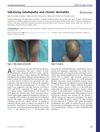
 This case study describes a 9-year-old girl with a homozygous EGFR gene mutation, presenting with tubulopathy and chronic dermatitis, whose ongoing symptoms and management offer insights into this rare genetic condition.
1 citations
,
January 2012 in “Ancient Science of Life” This study found that the ethanol extract of Eclipta alba significantly reduced gastric lesions and enhanced gastroprotective activity in ulcer-induced rats, suggesting potent antisecretory effects potentially linked to antioxidant properties.
January 2025 in “NATIONS UNIVERSITY INTERNATIONAL JOURNAL OF MULTI-DISCIPLINARY STUDIES” This study focused on the formulation of topical gels containing Equisetum arvense extract, evaluating their consistency and preparation using gelling agents for potential application in enhancing drug delivery to wound sites.
53 citations
,
June 1983 in “Journal of Investigative Dermatology” This study reports that human epidermal transglutaminase activity increases with treatment using organic solvents and chemicals without significant molecular weight changes, which may allow modulation of the enzyme in skin diseases.
 September 2019 in “Journal of Investigative Dermatology”
 This study found that using human induced pluripotent stem cells (iPSC) carrying the causal mutation of Epidermolysis Bullosa simplex provides a robust model for understanding its molecular mechanisms and testing potential therapeutic targets.
44 citations
,
January 2017 in “Journal of Investigative Dermatology” This study identified KLHL24 as a new gene linked to a subtype of epidermolysis bullosa simplex, highlighting its role in unresolved cases by involving a degradation-resistant truncated protein impacting keratin turnover.
 January 2026 in “Zenodo (CERN European Organization for Nuclear Research)”
 This paper discusses ethosomal drug delivery systems, highlighting their improved ability to enhance skin penetration and increase therapeutic effectiveness in treatments like acyclovir for herpes labialis and minoxidil for androgenic alopecia compared to standard formulations.
November 2022 in “Indian Journal of Dermatology” This case report describes a 52-year-old woman with erythema annulare centrifugum after using topical luliconazole and oral itraconazole, suggesting a drug-induced reaction confirmed by a positive rechallenge test.
 6 citations
,
August 2022 in “International Journal of Molecular Sciences”
6 citations
,
August 2022 in “International Journal of Molecular Sciences” This review summarizes the role of Ectodysplasin A signaling in skin appendage development and various diseases, noting potential clinical applications but reporting no new research findings.