August 2021 in “Journal of advances in medicine and medical research” In this study, both excimer light and low level light therapy were found to be safe and effective for treating alopecia areata, with excimer light showing better and more sustained improvement.
 76 citations
,
May 2020 in “Ultraschall in der Medizin - European Journal of Ultrasound”
76 citations
,
May 2020 in “Ultraschall in der Medizin - European Journal of Ultrasound” This consensus document provides foundational position statements for dermatologic ultrasound but reports no clinical results; it aims to guide future evidence-based recommendations and guidelines.
1 citations
,
May 2023 in “Elsevier eBooks”  3 citations
,
May 2022 in “Clinical and experimental dermatology”
3 citations
,
May 2022 in “Clinical and experimental dermatology” This review discusses potential EMT-targeting drugs for treating lichen planopilaris and emphasizes the need for clinical trials, as current evidence is limited to individual cases or case series.
December 2013 in “Cumhuriyet Tıp Dergisi/Cumhuriyet Üniversitesi Tıp Fakültesi dergisi” This case study highlights the importance of early diagnosis and treatment of acneiform eruptions associated with erlotinib in a 67-year-old male patient with non-small cell lung cancer to ensure patient compliance.
 4 citations
,
January 2017 in “Ciência Rural”
4 citations
,
January 2017 in “Ciência Rural” This case report highlights that equine multisystemic eosinophilic epitheliotropic disease should be considered in horses presenting with skin lesions and gastrointestinal symptoms, as illustrated by the progression in a 5-year-old horse despite treatment.
 23 citations
,
January 2018 in “Elsevier eBooks”
23 citations
,
January 2018 in “Elsevier eBooks” This chapter reviews formulation principles for creating cosmetic nanoemulsions and applications targeting skin and hair care, but does not present new experimental results.
1 citations
,
August 2021 in “Journal of Investigative Dermatology” ASLAN004 was safe and well-tolerated, supporting further development for treating certain diseases.
 May 2025 in “Journal of Diverse Medical Research Medicosphere”
 This article reports a rare case of angioedema in a pregnant woman with systemic lupus erythematosus, highlighting a need for further research in this area.
July 2025 in “Journal of Investigative Dermatology” Nelfb is essential for dermal fat development and survival.
 15 citations
,
March 2012 in “International journal of nanomedicine”
15 citations
,
March 2012 in “International journal of nanomedicine” In this study, local injection of nanosized recombinant human erythropoietin at the injury site improved skin regeneration and re-epithelialization in a mouse model of deep second-degree burns through coexpression of specific receptors.
 April 2018 in “Journal of Investigative Dermatology”
 In this study, researchers reported that IL-17C plays a key pro-inflammatory role in human skin diseases and may be a promising therapeutic target for inflammatory skin conditions.
124 citations
,
January 1995 in “The journal of allergy and clinical immunology/Journal of allergy and clinical immunology/The journal of allergy and clinical immunology” This article reports a case of Netherton's syndrome that responded to 12% ammonium lactate lotion, suggesting potential treatment benefits for skin and allergic symptoms in this rare condition.
January 2019 in “FarFar - Pharmacy Repository” This article reviews strategies like microemulsions to improve adapalene delivery in acne treatment but reports no new clinical results.
 July 2020 in “Benha Journal of Applied Sciences”
 This study found that patients with alopecia areata had higher serum levels of EGF compared to healthy controls, suggesting EGF's involvement in the condition's pathogenesis.
July 2025 in “Journal of Investigative Dermatology” Tissue-engineered skin substitutes can model junctional epidermolysis bullosa and may help develop gene therapy.
15 citations
,
July 2010 in “Journal of Allergy and Clinical Immunology” This study found that in mouse models, the novel NF-κB inhibitor DHMEQ improved symptoms of atopic dermatitis as effectively as tacrolimus or betamethasone.
 6 citations
,
June 2008 in “Journal of the European Academy of Dermatology and Venereology”
6 citations
,
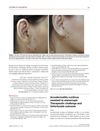
June 2008 in “Journal of the European Academy of Dermatology and Venereology” This paper discusses a case of acrodermatitis continua that was resistant to treatment with etanercept, highlighting the therapeutic challenges faced, but reports no new research results.
97 citations
,
May 2019 in “Frontiers in Cell and Developmental Biology” This review examines the interaction between the extracellular matrix and immune cells in skin diseases and evaluates advanced therapies that target involved molecular mechanisms, reporting no new clinical findings.
November 2023 in “Journal of Investigative Dermatology” EGFR-targeted cancer therapy can cause skin issues starting at hair follicles, leading to inflammation.
 February 2016 in “The journal of allergy and clinical immunology/Journal of allergy and clinical immunology/The journal of allergy and clinical immunology”
 This study reports a novel mutation in the TP63 gene associated with T and B cell lymphopenia in an EEC patient, suggesting that EEC diagnosis should include TREC assay and evaluation for immunodeficiency.
 20 citations
,
January 2008 in “Journal of Korean Medical Science”
20 citations
,
January 2008 in “Journal of Korean Medical Science” This study found that NGAL expression increased in calcium-induced keratinocyte differentiation in vitro and was highly elevated in psoriasis-like skin conditions and skin cancers, suggesting a role in skin hyperplasia and homeostasis.
19 citations
,
April 2023 in “Antibiotics” This study found that azelaic acid entrapped in transethosomes exhibited enhanced antidermatophyte activity and improved treatment outcomes in guinea pig models of dermatophytosis compared to free azelaic acid.
 3 citations
,
September 2005 in “Experimental dermatology”
3 citations
,
September 2005 in “Experimental dermatology” This review discusses the formation and structure of the cornified cell envelope in the epidermis, highlighting biochemical pathways and genetic factors, but presents no new experimental results.
July 2025 in “Indian Dermatology Online Journal” In this case report, researchers documented a rare instance of trans-epidermal elimination of insulin formulation in a 45-year-old woman with diabetes, suggesting that insulin or its excipients may have caused a granulomatous reaction leading to skin lesions at injection sites and impaired diabetes control.
 June 2017 in “Asian journal of pharmaceutical and clinical research”
 This study found that a green tea extract gel was stable across various temperatures, did not cause eye irritation, and significantly increased eyelash growth compared to a placebo after two months of use in human volunteers.
This study suggests that ethyl acetate extract of Equisetum debile may be effective for functional food and nutraceutical use due to its strong 5α-reductase, IL-6 inhibition, and lipid peroxidation activities without cytotoxic effects.
 149 citations
,
July 2002 in “Dermatologic clinics”
149 citations
,
July 2002 in “Dermatologic clinics” This review discusses the pathogenesis, clinical presentation, diagnosis, and treatment of cutaneous lupus erythematosus, reporting no new clinical findings.
 39 citations
,
January 2016 in “PubMed”
39 citations
,
January 2016 in “PubMed” This review discusses the role of epidermal differentiation complex genes and epigenetic mechanisms in skin development and certain diseases, emphasizing their potential for improving drug development and delivery systems but provides no new experimental results.