 April 2023 in “Journal of Investigative Dermatology”
 This study found that the oral IRAK4-inhibitors BAY 1834845 and BAY 1830839 reduced skin inflammation and systemic inflammatory responses in healthy volunteers, showing similar pharmacodynamic effects to prednisolone when challenged with topical imiquimod and intravenous LPS.
 2 citations
,
March 2022 in “Portuguese Journal of Nephrology & Hypertension”
2 citations
,
March 2022 in “Portuguese Journal of Nephrology & Hypertension” This manuscript describes two case reports of preterm newborns with a rare homozygous mutation in the epidermal growth factor receptor, leading to severe health issues and early mortality despite supportive care.
 October 2024 in “Annals of Allergy Asthma & Immunology”
 This case study reports on a 4-year-old girl who developed telogen effluvium, a type of hair loss, after experiencing anaphylactic reactions to cow's milk. The authors highlight this as the first documentation of anaphylaxis potentially triggering telogen effluvium due to physiologic stress.
 2 citations
,
June 2017 in “Pediatric Dermatology”
2 citations
,
June 2017 in “Pediatric Dermatology” This case report describes a 2-year-old boy in critical condition who developed anagen effluvium, possibly due to hypotension and hypoxia triggering hair follicle apoptosis.
 15 citations
,
February 2015 in “Han-gug chugsan sigpum hag-hoeji/Korean journal for food science of animal resources”
15 citations
,
February 2015 in “Han-gug chugsan sigpum hag-hoeji/Korean journal for food science of animal resources” This study concludes that egg shell membrane hydrolysates, particularly Fraction I, may effectively mitigate UV-B radiation-induced wrinkles and promote skin collagen and hyaluronic acid production, suggesting potential use in functional cosmetics.
91 citations
,
April 2006 in “PubMed” This review summarizes adverse events associated with EGFR-targeting cancer therapies, such as skin rashes and lung disease, and reports no new clinical results.
52 citations
,
December 2014 in “Journal of Dermatological Science” Apremilast may help treat hair loss in alopecia areata.
 June 2019 in “Pediatric Dermatology”
 This review discusses the pathogenesis and clinical presentations of alopecia in epidermolysis bullosa patients, noting diverse hair abnormalities and emphasizing the lack of a consensus on its natural history.
 88 citations
,
January 2011 in “Annals of Dermatology”
88 citations
,
January 2011 in “Annals of Dermatology” This review discusses the reclassification of pregnancy-related skin diseases and provides a management algorithm but reports no new clinical findings.
 4 citations
,
March 2012 in “Annals of oncology”
4 citations
,
March 2012 in “Annals of oncology” In this study, a combined therapy of nicotinamide and green tea polyphenols was reported to improve EGFR inhibitor-related skin toxicity and patient quality of life, suggesting it merits further investigation.
22 citations
,
December 2013 in “Stem cells and development” This study found that treating skin wounds with a combination of epidermis-derived epithelial-like stem/progenitor cells and platelet-rich plasma improved tissue repair and increased vascularization and elastin content compared to platelet-rich plasma alone.
2 citations
,
November 2024 in “International Journal of Pharmaceutics X” In this study, desmopressin-loaded elastic liposomes (ODEL1) showed improved permeation and drug deposition across rat skin by altering the skin's cohesive energies and causing reversible changes on its surface.
 14 citations
,
November 2009 in “Clinical and experimental dermatology”
14 citations
,
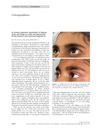
November 2009 in “Clinical and experimental dermatology” This article presents a case report of a child with coexisting alopecia areata and vitiligo showing improvement with topical prostaglandin E2 treatment, without reporting new clinical results.
 April 2023 in “Journal of Investigative Dermatology”
 This study found that NIMP-R14-conjugated nanoparticles, loaded with roflumilast, effectively targeted neutrophils to reduce inflammation and improve symptoms in a mouse model of psoriasiform dermatitis, suggesting potential for targeted therapy in autoimmune skin diseases.
September 2023 in “Journal of the American Academy of Dermatology” This study found that in participants with notalgia paresthetica, 8 weeks of treatment with difelikefalin significantly improved itch intensity and increased the rate of strict complete response compared to placebo, starting as early as week 3.
 August 2025 in “JEADV Clinical Practice”
 This case report describes the management of PRIDE complex, a skin and hair condition associated with EGFR inhibitor treatment like cetuximab, emphasizing that it does not require stopping the medication.
9 citations
,
August 2024 in “International Journal of Molecular Sciences” This review explores epidermolysis bullosa simplex subtypes caused by mutations in KRT5 or KRT14 and summarizes gene expression patterns and molecular mechanisms, without presenting new experimental results.
 October 2025 in “Advanced Healthcare Materials”
 In a study on wound healing, researchers described injectable POEGMA‐DA hydrogels as a promising non-toxic alternative to traditional wound closure methods, showing effective tissue adhesion and enhanced regeneration of skin structures in a mouse model without significant inflammation.
July 2014 in “Journal of the Dermatology Nurses' Association” This article summarizes lessons and tips from the Dermatology Nurses’ Association’s annual conference, sharing insights on various dermatology topics but does not present new research results.
22 citations
,
March 2017 in “Journal of the Formosan Medical Association” This report presents the Taiwanese Dermatological Association's 2016 consensus on defining and managing skin toxicities from EGFR-TKI treatments, providing comprehensive guidelines for clinicians in Taiwan.
 20 citations
,
January 2005 in “Australasian Journal of Dermatology”
20 citations
,
January 2005 in “Australasian Journal of Dermatology” This article describes a case of late-onset focal dermal elastosis in a 73-year-old woman, characterized by flat pale yellow lesions and increased normal elastic fibers, distinct from pseudoxanthoma elasticum.
 1 citations
,
February 2017 in “Journal of pharmacology & clinical research”
1 citations
,
February 2017 in “Journal of pharmacology & clinical research” This study found that topical gel formulations containing extracts of Eclipta alba and Lippia nodiflora significantly increased hair growth in black mice over 30 days, with a combination of both extracts showing greater effectiveness than either alone.
9 citations
,
February 2021 in “Evidence-based Complementary and Alternative Medicine” This study reported that Longdan Xiegan decoction is more effective than conventional western medicine alone in treating eczema, but the evidence quality was generally low, highlighting the need for further studies.
May 2015 in “European Journal of Paediatric Neurology” This study describes three additional cases of encephalocraniocutaneous lipomatosis, emphasizing the importance of examining patients with ocular and ipsilateral skin lesions for this rare neurocutaneous disorder.
August 2024 in “British Journal of Dermatology” The trial is ongoing, but researchers are evaluating the efficacy and safety of REZPEG, a potential new therapy for severe alopecia areata, which selectively expands regulatory T cells.
 30 citations
,
August 2010 in “American Journal of Clinical Dermatology”
30 citations
,
August 2010 in “American Journal of Clinical Dermatology” This article reviews eyelash elongation as a side effect of EGFR inhibitors in cancer treatment, finding that the condition is typically not severe and may be managed by trimming.
 13 citations
,
January 2016 in “Journal of Ophthalmology”
13 citations
,
January 2016 in “Journal of Ophthalmology” This study found that using the novel eyelid shampoo ESL improved eyelid hygiene, reduced dry eye symptoms in meibomian gland dysfunction patients, and increased eyelash length over 8 weeks.
research Skin
2 citations
,
January 2011 in “Elsevier eBooks” This review discusses approaches to diagnosing and managing cutaneous manifestations of lupus erythematosus and reports no new clinical results.
15 citations
,
April 2016 in “Medicine” This study reports that systemic lupus erythematosus patients with Evans syndrome often exhibited photosensitivity, hypocomplementemia, and elevated serum IgG, while lupus nephritis was less common, suggesting distinct clinical features.
7 citations
,
April 2004 in “International Journal of Dermatology” This report describes a case of epidermolytic hyperkeratosis in a newborn and her mother, both possessing a specific KRT1 gene mutation known to cause this skin disorder.