 October 2025 in “Advanced Materials”
 In this study, researchers developed ionizable coenzyme Q10-engineered lipid/fiber microplexes that restored mitochondrial-ribosomal function and enhanced mRNA translation in senescent cells, leading to increased hair follicle density and bone formation in mouse models compared to conventional lipid nanoparticles.
 28 citations
,
February 2021 in “Dermatologic Surgery”
28 citations
,
February 2021 in “Dermatologic Surgery” This review found radiofrequency microneedling effective and safe for various dermatologic conditions, including skin rejuvenation and acne scars, especially in individuals with darker skin types, with progressive improvements for up to six months after treatment.
 6 citations
,
February 2025 in “Scientific Reports”
6 citations
,
February 2025 in “Scientific Reports” This study found that MEGA PROTAC improved the prediction of ternary structures with higher maximum DockQ scores compared to the BOTCP method in 16 out of 22 test cases.
4 citations
,
October 2021 in “International Journal of Cosmetic Science” This study found that C. japonicum flower extract significantly increased melanin content and cellular activity in human melanocytes and may improve follicular depigmentation and vitiligo through cAMP signaling.
July 2025 in “Journal of Investigative Dermatology” M1 homeopathic complex may help slow melanoma cell growth.
 8 citations
,
August 2009 in “Pediatric transplantation”
8 citations
,
August 2009 in “Pediatric transplantation” This report presents a case where a patient with Omenn syndrome, complicated by cytomegalovirus infection, was successfully treated using reduced intensity conditioning allogeneic HSCT from a sibling donor.
56 citations
,
July 2004 in “Mechanisms of Development” Pax9 is crucial for proper tongue surface development and preventing skin-like changes.
4 citations
,
February 2024 in “Poultry Science” This study found that the miR-140-y-TCF4 axis regulates the proliferation of goose embryonic dermal fibroblast cells by affecting the Wnt signaling pathway, highlighting its role as a dynamic regulator during skin and feather follicle development.
 33 citations
,
December 2012 in “NMR in Biomedicine”
33 citations
,
December 2012 in “NMR in Biomedicine” This study reports that microencapsulation of therapeutic cells with contrast agents enables visualization across multiple imaging modalities, potentially improving cellular immunoprotection and tracking after transplantation.
 2 citations
,
May 2018 in “International Society of Hair Restoration Surgery”
2 citations
,
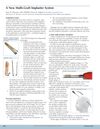
May 2018 in “International Society of Hair Restoration Surgery” The new system makes hair transplants faster and more precise.
 5 citations
,
January 2021 in “iScience”
5 citations
,
January 2021 in “iScience” Using a combination of specific cell cycle regulators is better for safely keeping hair root cells alive indefinitely compared to cancer-related methods.
3 citations
,
May 2025 in “Carbohydrate Polymers” In this study, researchers developed a dissolvable microneedle patch containing baricitinib for alopecia areata treatment, reporting significantly higher hair growth in mouse models compared to controls, suggesting its potential as an effective, pain-free topical therapy.
 January 2026 in “Forum Dermatologicum”
 This review concluded that LED-based photobiomodulation is generally safe and effective for certain dermatologic conditions, though consumer devices often show less efficacy compared to professional systems.
19 citations
,
September 2021 in “British journal of dermatology/British journal of dermatology, Supplement” This study suggests that pretreatment with a PPAR-γ modulator may prevent damage to hair follicle stem cells caused by a chemotherapy metabolite, potentially offering a strategy to mitigate permanent chemotherapy-induced alopecia.
 12 citations
,
September 2021 in “Stem Cell Reviews and Reports”
12 citations
,
September 2021 in “Stem Cell Reviews and Reports” This study suggests that StemMACS MSC Expansion Media is more suitable than PowerStem MSC1 media for expanding therapeutic adipose-derived mesenchymal stem cells, with less expression of negative markers and better chromosomal stability.
 June 2023 in “International Journal for Research in Applied Science and Engineering Technology”
 This research highlights the potential of emulgel as an advanced topical drug delivery system, offering improved efficacy for hydrophobic medications in treating dermatological conditions and a range of ailments with its dual release control mechanism of gel and emulsion.
March 2023 in “Asian Journal of Beauty and Cosmetology” This study found that the herbal extract HX109 promoted hair growth in mice by increasing cell viability and enhancing hair regrowth, with the effects increasing as doses rose.
 41 citations
,
September 2017 in “Advanced Healthcare Materials”
41 citations
,
September 2017 in “Advanced Healthcare Materials” This study found that the DexIEME hydrogel promotes complete skin regeneration and scar attenuation in murine and porcine models, suggesting potential for treating deep dermal injuries.
1 citations
,
September 2025 in “Viruses” This study of HCPS survivors in Chile found that 61.9% reported incomplete recovery at 3-6 months post-symptom onset, with ECMO users experiencing more motor dysfunction and palpitations, highlighting the need for multidisciplinary care to address persistent symptoms.
 April 2026 in “Open MIND”
 This review article discusses the aesthetic impacts of GLP-1 medications like Ozempic (semaglutide), including "Ozempic Face," skin sagging, and loss of lean mass, and explores potential recovery methods such as biostimulators, HIFU, endolaser, and PRP.
4 citations
,
February 2015 in “PubMed” This study found that a minoxidil foamable emu oil emulsion significantly promoted hair growth in animals compared to a marketed 5% minoxidil solution, showing increased hair follicles in the anagenic phase.
September 2023 in “Journal of the American Academy of Dermatology” In this study, a cosmetic product with nano encapsulated cysteamine plus sunscreen significantly improved melasma symptoms and quality of life in adult women over 84 days, compared to sunscreen alone, without any medically relevant intolerance.
1 citations
,
September 2022 in “European Journal of Dermatology” This study identified a novel splice-site variant of the LAMB3 gene that may cause junctional epidermolysis bullosa, suggesting gene sequencing is essential for accurate diagnosis.
16 citations
,
April 2000 in “Journal of Investigative Dermatology” The study reports that the AVET system showed higher efficiency in transfecting cultured human keratinocytes compared to SuperFect and PrimeFector, with AVET reaching levels of enzyme activity similar to normal cells in keratinocytes from lamellar ichthyosis patients.
22 citations
,
September 2022 in “Medicina” This study found that the dual-wavelength non-ablative fractional laser provides enhanced skin rejuvenation by increasing thermal lesion coverage and collagen remodeling compared to using the CO2 laser alone in an ex vivo setting.
In this study, human hair dermal papilla cells were incubated with varying concentrations of umbilical cord-derived mesenchymal stem cell exosomes or minoxidil, and cell proliferation was assessed, showing significant results compared to the control.
January 2022 in “International Journal of Clinical Oncology and Cancer Research” This case report discusses a 60-year-old woman diagnosed with Castleman’s disease and associated POEMS syndrome, emphasizing early diagnosis and treatment, including the beneficial role of histology, lymph node excision, and steroid therapy.
 21 citations
,
January 2023 in “Biomaterials Science”
21 citations
,
January 2023 in “Biomaterials Science” This study investigated the use of dissolving microneedle patches to improve the skin-lightening effects of alpha-arbutin and resveratrol, finding that the patches enhanced intradermal delivery and slightly decreased the melanin index without affecting skin hydration or causing irritation over 24 hours.
 1 citations
,
December 2022 in “Animals”
1 citations
,
December 2022 in “Animals” This study found that miR-27a may influence sheep hair follicle stem cell proliferation and apoptosis by targeting PIK3R3, affecting the AKT/MTOR pathway.
 October 1997 in “Dermatologic Surgery”
 The Epilight Hair Removal System is effective for temporary hair removal with few side effects, but more research is needed to confirm its safety and long-term results.