
This case study describes a 31-year-old man with myotonia and a history of hypertrophic cardiomyopathy and androgenic alopecia, who presented with arm and leg weakness.
5 citations
,
February 2005 in “Journal of the American Academy of Dermatology” Focal palmoplantar callosities may help diagnose non-Herlitz junctional epidermolysis bullosa.
2 citations
,
January 2016 in “Dermatology online journal” This case report describes a 46-year-old man diagnosed with frontal fibrosing alopecia, a condition primarily affecting postmenopausal women, highlighting its rare occurrence in men.
7 citations
,
June 2018 in “Archives of Rheumatology” This case report describes a 37-year-old female with systemic lupus erythematosus who developed multiple eruptive dermatofibromas; lesions spontaneously resolved and highlight the rare coexistence of these conditions.
1 citations
,
October 2025 in “Journal of Investigative Dermatology” In this study of women with frontal fibrosing alopecia, delgocitinib cream improved the molecular signature of lesions and demonstrated potential as a treatment, showing significant transcriptomic changes and some clinical improvements over 12 weeks compared to a cream vehicle.
 225 citations
,
April 2018 in “Journal of Investigative Dermatology”
225 citations
,
April 2018 in “Journal of Investigative Dermatology” Two main types of fibroblasts with unique functions and additional subtypes were identified in human skin.
 14 citations
,
July 2012 in “Journal of the American Academy of Dermatology”
14 citations
,
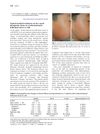
July 2012 in “Journal of the American Academy of Dermatology” This study found that topical tacalcitol improved roughness and scaling in erythromelanosis follicularis faciei et colli, although it was less effective for facial erythema.
9 citations
,
November 2004 in “SKINmed Dermatology for the Clinician” This case report describes a 54-year-old man diagnosed with fibrosing alopecia in a pattern distribution, presenting with follicular inflammatory lesions and scleroatrophy on the scalp.
18 citations
,
February 2001 in “Der Hautarzt” This case study of a 50-year-old woman with myotonic dystrophy and multiple basal cell carcinomas suggests there could be a genetic predisposition for certain cutaneous tumors in such patients.
 December 2025 in “Cureus”
 This case report highlights that scarring alopecia with features of dystrophic epidermolysis bullosa and lichen planopilaris can occur in patients with a COL7A1 mutation, emphasizing the need to recognize concurrent inflammatory causes.
4 citations
,
February 2018 in “Annales de Dermatologie et de Vénéréologie” Onychomatricome is a benign nail tumor with specific dermoscopic features that help distinguish it from cancer.
June 2025 in “British Journal of Dermatology” In this report, two cases of melanocytic matricoma, a rare benign hair follicle lesion that mimics melanoma and basal cell carcinoma, were described and successfully treated with complete surgical excision. Histological analysis was crucial for differentiation from similar malignant lesions.
 April 2023 in “Journal of Investigative Dermatology”
 This study found that alopecia areata patients have higher odds of certain comorbidities like ulcerative colitis and vitiligo, while showing lower odds for conditions like hypertension and type 2 diabetes compared to healthy controls.
1 citations
,
March 2012 in “Actas dermo-sifiliográficas/Actas dermo-sifiliográficas” Dermoscopy helps diagnose frontal fibrosing alopecia by identifying specific scalp features.
 2 citations
,
October 2019 in “Current sports medicine reports”
2 citations
,
October 2019 in “Current sports medicine reports” This case report describes a high school wrestler whose forearm rash was initially misdiagnosed as eczema, later identified as Majocchi's granuloma, and successfully treated with oral antifungal therapy after a biopsy.
60 citations
,
August 2009 in “Journal of the American Academy of Dermatology” This study describes five patients with porokeratotic adnexal ostial nevus, a rare skin disorder, highlighting its clinical features and proposing a new encompassing term for related conditions.
15 citations
,
March 2021 in “EMBO Reports” PRSS35 enzyme may help start skin tumors and could be a target for cancer treatment.
 19 citations
,
February 2008 in “Archives of Dermatological Research”
19 citations
,
February 2008 in “Archives of Dermatological Research” This study observed that mast cells and increased collagen and elastic fibers in the scalp may contribute to male pattern hair loss, but additional research is needed for further understanding.
This study found that culturing fibroblasts on stiffer substrates mimicking fibrotic wounds led to an aligned EDA fibronectin matrix with thinner fibers and decreased YAP activity, suggesting disrupted signaling that might be restored to promote regenerative wound repair.
October 1967 in “Archives of Dermatology” This report discusses a case of an intradermal nevus in a 42-year-old woman and provides no clinical findings beyond a biopsy showing hyperkeratosis and cellular pigmentary changes.
25 citations
,
May 1995 in “Journal of the American Academy of Dermatology” This article reports two new cases of erythromelanosis follicularis faciei in women and includes a literature review on this rarely diagnosed condition.
5 citations
,
April 2017 in “The journal of investigative dermatology/Journal of investigative dermatology” This study reports on an ongoing Phase I/IIa clinical trial of ex vivo gene therapy for treating severe Recessive Dystrophic Epidermolysis Bullosa, involving six adult participants with COL7A1 mutations resulting in deficient type VII collagen production.
45 citations
,
May 2002 in “International Journal of Dermatology” This case report describes a patient with systemic lupus erythematosus who developed multiple dermatofibromas while on long-term prednisone therapy.
 November 2009 in “International Journal of Dermatology”
 No abstract is available for this article, and it presents no new clinical results.
2 citations
,
January 2007 in “Actas Dermo-Sifiliográficas” This case report describes a unilateral contact dermatitis caused by shoe dye containing 4-aminoazobenzene, which was confirmed with patch testing, highlighting its atypical presentation.
 1 citations
,
September 2005 in “Oncology times”
1 citations
,
September 2005 in “Oncology times” In this study, wearing a frozen glove during docetaxel chemotherapy reduced nail problems in patients' gloved hands compared to unprotected hands, with onycholysis absent among protected hands.
 16 citations
,
December 2004 in “Aesthetic surgery journal”
16 citations
,
December 2004 in “Aesthetic surgery journal” This review discusses a multistage hand rejuvenation protocol involving topical therapies, intense pulsed light, autologous fat injections, and surgical excision, but reports no new clinical results.
September 2021 in “Morphologia” This research discusses the diverse populations and specialized roles of dermal fibroblasts in human skin, highlighting their distinct interactions and contributions to skin structure, without presenting new clinical findings.
7 citations
,
March 2020 in “Journal of the American Academy of Dermatology” This study observed that trichoscopic changes associated with EGFRI treatment include pili torti and asymmetric hyperpigmented fusiform widening, along with dermoscopic skin manifestations such as scale and branching vessels.
14 citations
,
January 2015 in “Skin Appendage Disorders” This study examined severe skin reactions, including erythema and eczema-like lesions, associated with Brazilian keratin treatment, suggesting a drug reaction phenomenon rather than solely irritant or allergic origin.