 November 2023 in “bioRxiv (Cold Spring Harbor Laboratory)”
 This study used a novel fluorescent tagging method in mice to observe collagen IV dynamics during hair follicle development, revealing that alterations in basement membrane turnover can influence epithelial progenitor cell behavior and organ morphology by affecting cell proliferation and movement.
This article discusses the role of epimorphin as a key morphoregulator for various epithelial cells in tubulogenesis and reports no experimental results on its signaling pathways.
 April 2023 in “The journal of investigative dermatology/Journal of investigative dermatology”
 This study reported that in mouse models, deletion of EGFR resulted in stem cell hyper-proliferation followed by apoptosis, leading to scarring alopecia, and implicated EGFR's role in maintaining hair follicle quiescence and immune privilege during inflammation.
This study in mice found that a monoclonal antibody targeting EGFR resulted in skin inflammation mediated by TNFα, suggesting potential pathways for addressing EGFR antibody-induced skin rash in cancer patients.
 April 2018 in “Journal of Investigative Dermatology”
 This study found that the protein p63 requires morphogenetic signals to regulate gene expression effectively during skin cell differentiation, highlighting its complex role in therapeutic reprogramming for conditions like epidermolysis bullosa.
60 citations
,
March 2006 in “Journal of Medical Genetics” This study identified a homozygous missense mutation in the KRTHB5 gene linked to pure hair–nail ectodermal dysplasias in a large consanguineous Pakistani family, providing new insights into the condition's molecular pathogenesis.
2 citations
,
November 2009 in “DSpace (Federal University of Santa Catarina)” Brunfelsia uniflora has good antioxidant properties and moderate antibacterial activity.
 1 citations
,
May 2023 in “Frontiers in endocrinology”
1 citations
,
May 2023 in “Frontiers in endocrinology” The researchers reported that the novel MBTPS2 variant p.Glu172Asp found in a male proband is likely pathogenic, consistent with osteogenesis imperfecta symptoms and molecular signatures, including disrupted fatty acid metabolism and collagen production.
 34 citations
,
August 2016 in “Scientific Reports”
34 citations
,
August 2016 in “Scientific Reports” This study validated a protocol for inducing surface ectoderm differentiation from human induced pluripotent stem cells and highlighted the role of TGFβ signaling pathways in this process.
 9 citations
,
November 2021 in “Frontiers in Cell and Developmental Biology”
9 citations
,
November 2021 in “Frontiers in Cell and Developmental Biology” This study found that PBX1 overexpression reduces hair follicle-derived mesenchymal stem cell senescence and apoptosis by alleviating ROS-mediated DNA damage, rather than enhancing DNA repair.
 September 2025 in “Journal of Cosmetic Dermatology”
 In this study, the use of rb‐bFGF in hair transplantation significantly increased follicle survival, reduced hair loss, improved patient satisfaction, and decreased complications compared to controls, in patients with androgenetic alopecia over a 12-month period.
 October 2024 in “Frontiers in Veterinary Science”
 This study identified key proteins, FKBP10 and FBN2, that promote the growth cycle of secondary hair follicles in cashmere goats, with higher expression in the anagen phase, offering insights into mechanisms potentially enhancing cashmere yield and quality.
5 citations
,
December 2020 in “Gene” This study found that ANXA1 may influence hair growth in mice by regulating hair follicle stem cell proliferation through the EGF signaling pathway.
November 2022 in “Journal of Investigative Dermatology” This study implicates EGFR as a critical regulator of immune privilege and stem cell quiescence in hair follicles, suggesting a link between EGFR inhibition and inflammation-driven hair loss during cancer therapy.
15 citations
,
April 2011 in “Biological Chemistry” This study found that Cathepsin E plays a crucial role in keratinocyte terminal differentiation, affecting epidermis formation and homeostasis in mice.
35 citations
,
April 1998 in “PubMed” This study found that activating the erbB-2 oncogene in transgenic mice led to severe skin abnormalities and fatal defects, indicating erbB-2's significant role in skin and hair follicle development.
 16 citations
,
May 2000 in “Endocrinology”
16 citations
,
May 2000 in “Endocrinology” This study identified a new gene, mrp4, in mice, which suggests it may have a unique role in the growth and development of hair follicles in the ears and tails.
 59 citations
,
April 2016 in “Cell Reports”
59 citations
,
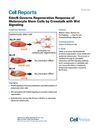
April 2016 in “Cell Reports” This study demonstrated that EdnrB signaling promotes melanocyte stem cell proliferation and differentiation, enhancing hair and epidermal melanocyte regeneration, especially under conditions of active Wnt signaling.
9 citations
,
August 2024 in “International Journal of Molecular Sciences” This review explores epidermolysis bullosa simplex subtypes caused by mutations in KRT5 or KRT14 and summarizes gene expression patterns and molecular mechanisms, without presenting new experimental results.
 1 citations
,
August 2018 in “bioRxiv (Cold Spring Harbor Laboratory)”
1 citations
,
August 2018 in “bioRxiv (Cold Spring Harbor Laboratory)” This study reports that a novel gain-of-function mutation in TMEM173, combined with polymorphisms in TMEM173 and IFIH1, results in a distinct clinical phenotype with features of SAVI, including alopecia and photosensitivity.
166 citations
,
September 2011 in “The Journal of Cell Biology” This study found that the p63 transcription factor plays a role in epidermal morphogenesis by regulating Satb1 expression, impacting chromatin architecture and gene expression in epidermal progenitor cells.
 1 citations
,
January 2020
1 citations
,
January 2020 This study found that Ift20 is essential for hair follicle stem cell identity and hair regrowth, and it regulates keratinocyte migration during wound healing through focal adhesion integrin recycling, independently of ciliogenesis.
December 2021 in “Figshare” This study found that BBS7 is important for Sonic hedgehog signaling activity, which may be crucial for maintaining periodontal ligament homeostasis in occlusal hypofunction.

This study in a nine-year-old boy from Lebanon identified a gene mutation (c.1066dup p.(Arg356Profs*16)) associated with a rare inborn error of immunity, characterized by craniosynostosis, jaundice, and several other symptoms, expanding the known genotypic and phenotypic spectrum of this condition.
22 citations
,
June 2017 in “Stem cell reports” This study found that PTEN regulates the number and genomic stability of hair follicle stem cells in the skin, with its deficiency leading to increased stem cell accumulation and senescence through interactions with BMAL1 and BMI-1.
April 2012 in “The FASEB Journal” In this study, researchers observed that knocking down the LPA 4 receptor in zebrafish embryos led to vascular and lymph vessel development abnormalities, including edema and decreased heartbeats.
1 citations
,
January 2025 in “Reproductive Biology and Endocrinology” This study suggests that supplementing with a cell-free fat extract might enhance embryo development and improve clinical outcomes in older women experiencing in vitro fertilization failure.
 1 citations
,
November 2001 in “Acc Current Journal Review”
1 citations
,
November 2001 in “Acc Current Journal Review” This review found that 5α‐reductase inhibitors were associated with slightly increased rates of decreased libido, erectile and ejaculatory dysfunction, gynecomastia, and mood disorders compared to placebo, though their long-term effects remain unclear.

In this study, researchers identified specific gene polymorphisms in Subo Merino sheep that significantly affect wool traits, suggesting these genetic markers could aid in breeding high-quality fine-wool sheep.
10 citations
,
August 2023 in “The EMBO Journal” This study explored the epigenetic mechanisms of dermal fibroblast progenitor differentiation and found that the repressive chromatin profile from H3K27me3 prevents these progenitors from reforming skin in allograft assays, despite their multipotent potential.