 1 citations
,
January 2014 in “International Journal of Trichology”
1 citations
,
January 2014 in “International Journal of Trichology” This case report describes a 35-year-old woman with diffuse partial woolly hair occurring alongside epidermolysis bullosa with mottled pigmentation.
 34 citations
,
October 2012 in “Journal of Dermatology”
34 citations
,
October 2012 in “Journal of Dermatology” This pilot study suggests that using growth factors followed by microneedle therapy may benefit women with female pattern hair loss.
 6 citations
,
December 2011 in “Clinical and Experimental Dermatology”
6 citations
,
December 2011 in “Clinical and Experimental Dermatology” A woman developed rare, unexplained curly hair on her scalp and eyelashes.
 10 citations
,
November 1997 in “British Journal of Dermatology”
10 citations
,
November 1997 in “British Journal of Dermatology” This case report documents acquired progressive kinking of the hair in a prepubertal boy but does not provide new clinical results.
 1 citations
,
October 2012 in “The Journal of Dermatology”
1 citations
,
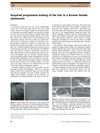
October 2012 in “The Journal of Dermatology” This letter to the editor describes a case of acquired progressive kinking of the hair in a Korean female adolescent, but no new research findings are reported.
 21 citations
,
August 2014 in “Journal of Cell Communication and Signaling”
21 citations
,
August 2014 in “Journal of Cell Communication and Signaling” This study found that Tsukushi facilitates wound healing in mice by regulating macrophage function and myofibroblast differentiation.
 March 2005 in “Journal of The American Academy of Dermatology”
 Diphencyprone treatment protocols could be simplified as no harm occurred despite not fully following them.
 8 citations
,
September 2004 in “Contact dermatitis”
8 citations
,
September 2004 in “Contact dermatitis” Avoiding dyed wigs and clothing improved severe allergic reactions in a woman treated with diphencyprone.
14 citations
,
May 2019 in “Chemosphere” This study found that while DP concentrations in dust were higher in male dormitories, DP in hair was higher in females, suggesting differing metabolism between genders and that hair DP mainly originates internally.
 December 2025 in “Molecules”
 This study found that the 15-PGDH inhibitor DPP improved endothelial function in hair-related cells exposed to DHT by reducing oxidative stress and enhancing angiogenic capacity.
 April 2018 in “Journal of Investigative Dermatology”
 This study found that dermal white adipose tissue surrounding human hair follicles enhances proliferation, pigmentation, and hair shaft elongation in an ex vivo setting.
July 2024 in “International Journal of Molecular Sciences” This study explored the effects of DPP, a 15-PGDH inhibitor, on human follicle dermal papilla cells damaged by dihydrotestosterone and observed that DPP enhanced wound healing, reduced reactive oxygen species, and increased hair growth in ex vivo human hair follicle cultures.
 27 citations
,
December 2015 in “Clinical and Experimental Dermatology”
27 citations
,
December 2015 in “Clinical and Experimental Dermatology” This study found that hair regrowth occurred in 72.2% of alopecia areata patients treated with diphencyprone, with disease extent at baseline and duration affecting outcomes.
 October 2021 in “Journal of Investigative Dermatology”
 This study found that inhibiting DPP4 during a critical period post-wounding increases hair follicle regeneration and Wnt signaling in large skin wounds.
37 citations
,
September 2009 in “JEADV. Journal of the European Academy of Dermatology and Venereology/Journal of the European Academy of Dermatology and Venereology” This study found that diphencyprone is an effective and safe treatment for extensive alopecia areata, especially with long-term therapy and maintenance to reduce relapse risk.
10 citations
,
January 2012 in “Case reports in medicine” This report describes two cases where patients developed vitiligo as a side effect of diphencyprone treatment for alopecia areata, highlighting the need to inform patients about this potential adverse effect.
 80 citations
,
April 2017 in “Frontiers in Pharmacology”
80 citations
,
April 2017 in “Frontiers in Pharmacology” This review examines experimental and clinical evidence on PDRN, a drug derived from salmon DNA that acts via the adenosine A2A receptor and shows promise for tissue repair and treatment of diabetic foot ulcers in regenerative medicine.
4 citations
,
April 2022 in “Evidence-based Complementary and Alternative Medicine” This study found that dracorhodin perchlorate improved wound healing in diabetic rats by regulating the TLR4 pathway and related inflammatory factors.
 March 1998 in “Journal of dermatological science”
 Diphencyprone initially increases mouse hair growth, then slows it, possibly due to changes in specific protein levels.
 1 citations
,
March 2023 in “Frontiers in Cardiovascular Medicine”
1 citations
,
March 2023 in “Frontiers in Cardiovascular Medicine” A specific gene variant is linked to heart disease, increased heart muscle, curly hair, and thick skin on palms and soles.
3 citations
,
November 2021 in “Skin Appendage Disorders” This study found that home-use diphenylcyclopropenone (H-DPCP) is a cost-effective alternative to office-use for severe alopecia areata, showing similar effectiveness with reduced costs.
 12 citations
,
November 2003 in “Journal of the American Academy of Dermatology”
12 citations
,
November 2003 in “Journal of the American Academy of Dermatology” This study found hair regrowth in the majority of AA-affected mice and rats treated with diphencyprone, suggesting its potential utility for understanding human alopecia areata and the drug's therapeutic action.
April 2021 in “Journal of Investigative Dermatology” Blocking DPP4 can help prevent fat loss and skin fibrosis.
 April 2016 in “Journal of Investigative Dermatology”
 This study found that the peptide derivative beta-Ala-Pro-Dab-NHbenzyl may reduce wrinkles and sebum production in human skin by inhibiting dipeptidyl peptidase 4, suggesting potential for acne and skin inflammation treatment.
1 citations
,
February 2025 in “Toxicology in Vitro” In this study, DPHC from the brown alga Ishige okamurae demonstrated potential to prevent androgenic alopecia by inhibiting hair loss and promoting hair growth through multiple cellular mechanisms.
3 citations
,
April 2024 in “JAAD Case Reports” This article reviews DPCP's use as a topical immunotherapy for alopecia areata and discusses its suggested mechanism, but reports no clinical results.
16 citations
,
April 2000 in “Contact dermatitis” In this report, a 19-year-old Japanese man experienced severe and prolonged urticarial reactions following treatment with diphenylcyclopropenone for alopecia universalis, emphasizing the need for caution with potent sensitizers.
 27 citations
,
May 2007 in “Archives of dermatological research”
27 citations
,
May 2007 in “Archives of dermatological research” In this study, alopecia areata patients treated with diphencyprone showed a significant increase in CD8 lymphocytes around hair bulbs, which may be associated with hair regrowth.
9 citations
,
July 2022 in “Journal of Biological Chemistry” This study in mice found that WWP2 facilitates odontoblast differentiation and dentin formation by targeting PTEN for degradation, thereby enhancing KLF5 activity, which may suggest its crucial role in dental development.
3 citations
,
September 2024 in “The FASEB Journal” This review discusses the roles of dermal white adipose tissue in skin functions and pathology, underscoring its antibacterial activity and potential anti-fibrotic role, but reports no new experimental results.