14 citations
,
May 1979 in “International Journal of Dermatology” In this study, trichostasis spinulosa was observed in 51 patients with lesions on the nose, where some follicles contained up to 86 hairs each, possibly influenced by endocrine factors and actinic rays.
4 citations
,
November 1999 in “PubMed” This article presents five family cases of monilethrix and reports that neither vitamins nor desquamative ointments are effective treatments, although symptoms may spontaneously regress over time.
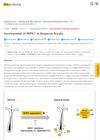
In this mouse model study, researchers observed that RIPK1 inhibitors delayed the onset of alopecia areata by modulating immune cells, specifically dendritic and CD8+ T cells, and increased hair length in organ culture mimicking the condition.
January 2026 in “Forum Dermatologicum” This case report discusses a doughnut wart recurrence after cryotherapy in a patient with alopecia areata, suggesting autoimmune-related immune imbalance may influence unusual wart behavior.
In a study on female Wistar rats, researchers found that a hair tonic containing a 7.5%:2% combination of talok and pare leaf extracts increased hair growth comparable to minoxidil, showing similar efficacy in promoting hair growth without significant statistical difference.
 March 2024 in “JAAD International”
 This review discusses the potential strategy of continuing topical minoxidil when starting low dose oral minoxidil to mitigate initial hair shedding in alopecia, but reports no new clinical results.
 14 citations
,
January 2012 in “International Journal of Trichology”
14 citations
,
January 2012 in “International Journal of Trichology” This case report highlights the importance of suspecting underlying malignancy, such as Hodgkin's lymphoma, in patients with diffuse hair loss and other cutaneous symptoms.
 10 citations
,
August 2018 in “Experimental Dermatology”
10 citations
,
August 2018 in “Experimental Dermatology” This study found that DECORIN promotes the proliferation and migration of outer root sheath keratinocytes in vitro and maintains the hair anagen phase in mice.
 23 citations
,
June 2003 in “Journal of Investigative Dermatology Symposium Proceedings”
23 citations
,
June 2003 in “Journal of Investigative Dermatology Symposium Proceedings” This review discusses rodent models of alopecia areata and suggests they are crucial for understanding the autoimmune mechanisms and potential treatments but reports no new clinical results.
November 2025 in “Journal of Investigative Dermatology” Dithranol reduces inflammation in alopecia areata by lowering certain immune responses.
 September 2024 in “Journal of the American Academy of Dermatology”
 In this prospective, placebo-controlled study, the researchers observed a significant reduction in hair shedding in women after applying the combined topical treatment DA-OTC-002, containing synephrine and TAAR agonists, compared to placebo, showing a 62.5% average reduction with no reported adverse events.
12 citations
,
December 2011 50 citations
,
March 2018 in “BMC Genomics” This study expands knowledge of non-coding RNAs in goats and other mammals, enhancing understanding of their roles in hair follicle growth and regression.
January 2026 in “Updates in clinical dermatology” 21 citations
,
January 2006 in “Hormone Research in Paediatrics” In this case study, a girl with hereditary vitamin D resistant rickets had a novel mutation in the VDR gene that affected hair cycling without causing total alopecia, suggesting ligand-independent VDR function in hair cycling.
 August 2026 in “Molecular and Cellular Biochemistry”
 This study found that administering tolerogenic dendritic cell-conditioned medium to dihydrotestosterone-treated mice promoted hair regrowth by modulating the follicular microenvironment, reducing pro-inflammatory cytokines, and activating key signaling pathways, highlighting its potential as a treatment for androgenetic alopecia.
87 citations
,
July 2009 in “Journal of Cell Science” The researchers found that corneodesmosin is crucial for maintaining skin barrier integrity and hair follicle architecture in mice, with its deletion leading to severe skin and hair abnormalities.
 December 2021 in “Journal of clinical images and medical case reports”
 This descriptive study observed that a "moth-eaten" pattern of hair loss can occur in several skin diseases, with lichen planopilaris and discoid lupus erythematosus being among the most common conditions identified in patients from Baghdad, emphasizing its potential as a diagnostic tool for clinicians.
 2 citations
,
December 2014 in “Research & Reviews: Journal of Pharmacy and Pharmaceutical Sciences”
2 citations
,
December 2014 in “Research & Reviews: Journal of Pharmacy and Pharmaceutical Sciences” This study found that a pet ether extract of Daucus carota promoted hair growth by inducing and prolonging the anagen phase in albino rats, surpassing the effects of 1% minoxidil.
January 2024 in “Veterinary Science and Medicine Journal” In this case report, a 1.5-year-old Pomeranian named Beb with respiratory and skin issues was diagnosed with pneumonia and demodecosis; following a two-week treatment including antibiotics, ivermectin, and supportive care, Beb's symptoms resolved, and hair regrowth was observed.
13 citations
,
January 2001 in “Pediatric dermatology” This study reports pseudopili annulati in a dark-haired Chinese girl, identifying the unique appearance and structural characteristics of her hair without finding abnormalities in the cuticle and cortex.
87 citations
,
October 1987 in “Journal of Investigative Dermatology” December 2025 in “International Journal of Dermatology” This systematic review reported that while combining low-dose oral minoxidil with Janus kinase inhibitors may enhance treatment outcomes in alopecia areata, the evidence remains weak due to limited sample sizes and potential publication bias, and more rigorous trials are necessary to assess efficacy and safety.
 November 2025 in “Nature Communications”
 This study used a 3D live imaging system to map cell dynamics in human hair follicles, revealing patterns of cell movement and division that help explain hair fiber extrusion during hair growth.
January 2006 in “DOAJ (DOAJ: Directory of Open Access Journals)” This review discusses the characteristics and diagnosis of loose anagen hair syndrome in children and reports no new clinical results.
21 citations
,
December 1994 in “British Journal of Dermatology” In this study, cultured skin equivalents with ovine hair follicle dermal papillae grafted onto nude mice developed follicle-like structures, suggesting a potential model for studying hair follicle development.
1 citations
,
January 2013 in “International journal of trichology” The researchers reported a case of a young girl with alopecia areata who responded well to a combination therapy of 88% phenol and dexamethasone, with no recurrence observed during six months of follow-up.
 December 2023 in “Veterinary dermatology”
 This study found that microneedling with longer needles (3 mm) showed better hair regrowth in dogs with hair cycle arrest, although most experienced recurrent hair loss during follow-up. Some dogs also developed minor, temporary itching.
March 2024 in “Veterinary sciences” This study is the first to detail major geriatric diseases in aged Julia Creek dunnarts, particularly highlighting hormonal issues like cystic glandular hyperplasia in females and testicular degeneration in males, suggesting these conditions are linked to aging and potentially hormonal dysregulation.
9 citations
,
May 2021 in “JEADV. Journal of the European Academy of Dermatology and Venereology/Journal of the European Academy of Dermatology and Venereology” This study suggests that topical minoxidil may be a promising treatment for isolated autosomal recessive woolly hair due to LIPH mutations, although effective treatments are not yet established.