2 citations
,
September 2024 in “Expert Opinion on Drug Metabolism & Toxicology” This review highlights Ritlecitinib as a promising new oral treatment for Alopecia Areata, emphasizing its targeted action and potential efficacy, especially in adults and adolescents, though it notes the need for further real-world effectiveness and long-term safety studies.
3 citations
,
September 2021 in “Bulletin of the Korean Chemical Society” In this study, dimeric peptide derivatives were shown to enhance the proliferation of human follicle dermal papilla cells in vitro, particularly promoting the ERK1/2 pathway, suggesting potential for developing peptide-based treatments for hair regeneration.
 18 citations
,
February 2018 in “International Journal of Molecular Sciences”
18 citations
,
February 2018 in “International Journal of Molecular Sciences” This study found that prostaglandin D2 promotes androgen receptor and AKT signaling in human dermal papilla cells through the DP2 receptor, potentially contributing to androgenetic alopecia.
130 citations
,
April 2003 in “Journal of Investigative Dermatology” This study reports the cloning and expression details of two new human type II keratins, K6irs3 and K6irs4, in the hair follicle's inner root sheath, suggesting a distinct functional role related to hair structure.
December 2015 in “OPAL (Open@LaTrobe) (La Trobe University)” In human hair follicle keratinocytes, this study found that treatment with the pharmacological inhibitor QLT0267 led to a strong inhibition of proliferation and migration and induced nearly 100% apoptosis.
16 citations
,
June 2015 in “The journal of investigative dermatology/Journal of investigative dermatology” This study found that DHHC13 is crucial for hair anchoring and skin barrier function, with its deficiency in Zdhhc13(skc4) mice leading to cyclic alopecia and skin abnormalities due to cornifelin deficiencies.
This study explored using 3D models derived from reflectance confocal microscopy to better understand and differentiate melanoma on sun-damaged skin, suggesting enhanced diagnostic possibilities.
46 citations
,
September 2007 in “Journal of Investigative Dermatology” June 1996 in “Journal of Dermatological Science” April 2020 in “The FASEB journal” In in-vitro experiments, this study found that poncirin showed higher inhibitory activity against JAK3 than tofacitinib, suggesting potential for alopecia areata treatment.
 April 2023 in “Journal of Investigative Dermatology”
 In this study, topical inhibition of casein kinase 1 in mice was found to enhance melanocyte precursor migration and eumelanin production, suggesting potential applications for treating vitiligo and graying hair through KitL/c-Kit signaling pathway activation.
January 2006 in “프로그램북(구 초록집)”  12 citations
,
November 2003 in “Journal of the American Academy of Dermatology”
12 citations
,
November 2003 in “Journal of the American Academy of Dermatology” This study found hair regrowth in the majority of AA-affected mice and rats treated with diphencyprone, suggesting its potential utility for understanding human alopecia areata and the drug's therapeutic action.
26 citations
,
June 2003 in “PubMed” In this study, severe hair loss occurred in PKC epsilon transgenic mice treated with DFMO during skin tumor prevention, highlighting a link between polyamine biosynthesis, hair follicle maintenance, and metastasis suppression.
January 1982 in “Clinical Cosmetic and Investigational Dermatology” This case report describes a 54-year-old woman with familial dyskeratotic comedones who experienced slight improvement in her skin lesions after three months of treatment with topical retinoids and urea cream.
16 citations
,
April 2000 in “Contact dermatitis” In this report, a 19-year-old Japanese man experienced severe and prolonged urticarial reactions following treatment with diphenylcyclopropenone for alopecia universalis, emphasizing the need for caution with potent sensitizers.
35 citations
,
October 2002 in “Biochemical and Biophysical Research Communications” This study reports that K7 expression patterns observed in mice are similar to those in humans, revealing previously unreported expression in the gastrointestinal tract, tongue, and various "hard" epithelial tissues.
50 citations
,
July 2008 in “British Journal of Dermatology” 38 citations
,
December 2006 in “Journal of Investigative Dermatology” Keratin patterns in hair follicles help understand hair growth and potential hair and nail disorders.
 128 citations
,
August 2015 in “Cell Stem Cell”
128 citations
,
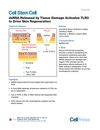
August 2015 in “Cell Stem Cell” The researchers reported that dsRNA from damaged skin activates TLR3, promoting hair follicle regeneration, while TLR3-deficient animals fail to initiate this process, suggesting potential therapeutic approaches for hair neogenesis.
December 2024 in “Journal of Health and Beauty” In laboratory conditions, this study found that the Dongeui Hot Spring Water Complex, containing sea slug extract, demonstrated enhanced antioxidant activity and promoted hair papilla cell proliferation compared to a control, suggesting potential benefits for scalp health and hair loss prevention.
 February 2026 in “International Journal of Molecular Sciences”
 This study found that knocking down the gene SFRP1 in human hair follicles ex vivo prolonged the hair growth phase and increased keratinocyte proliferation, suggesting potential as a therapeutic target for maintaining hair growth in male pattern baldness, while DKK1 knockdown showed no effect.
9 citations
,
September 2013 in “Journal of Applied Animal Research” This study identified eight alleles of the caprine KAP13-3 gene in cashmere goats, which could influence gene expression and cashmere fiber characteristics.
 June 2024 in “British Journal of Dermatology”
 This article presents a family case study of dermatopathia pigmentosa reticularis linked to a specific KRT14 gene variant, detailing symptoms and stressing the importance of molecular diagnosis for management.
 6 citations
,
October 2014 in “Experimental Dermatology”
6 citations
,
October 2014 in “Experimental Dermatology” This study suggests that AKR1C3 expression may influence PGD2-related pathways in skin squamous cell carcinoma and potentially be involved in androgenetic alopecia, although further investigation is needed to clarify its role.
July 2025 in “Journal of Investigative Dermatology” Secreted inhibitors of Wnt and IGF signaling control hair and tooth development, creating species-specific patterns.
December 2025 in “ILDS-DEV” 45 citations
,
March 2001 in “Journal of Investigative Dermatology” This study identified a new cytokeratin, mK6irs, specifically expressed in the inner root sheath of mouse hair follicles, distinguishing it as a member of the type II cytokeratin family.
February 2025 in “Journal of Receptors and Signal Transduction” In this study, computational analysis identified EGCG as the most effective GSK3β inhibitor among tested compounds, suggesting its potential for promoting hair regrowth by interacting with signaling pathways related to hair follicle cycling, although further experimental testing is needed.
 1 citations
,
January 2023 in “Burns and trauma”
1 citations
,
January 2023 in “Burns and trauma” This study found that tdDPC-EVs significantly improved wound healing by enhancing angiogenesis through the KLF4/VEGFA axis, offering advantages over traditional DPC-EVs.