 August 2025 in “Current Issues in Molecular Biology”
 This study demonstrated that Periplaneta americana extract significantly promoted hair regeneration in depilated mice by enhancing superoxide dismutase activity, upregulating vascular endothelial growth factor, modulating the FOXO/PI3K/AKT pathway, and restoring skin microbiome balance, suggesting its potential as a novel therapeutic candidate for alopecia.
 May 2025 in “Antioxidants”
 This review highlights how natural products with antioxidant properties can modulate the Wnt signaling pathway, potentially influencing various pathological conditions such as cancer, stroke, and regenerative medicine. It also addresses controversies in the compounds' mechanisms across different models and suggests research directions for future studies.
 January 2025 in “Frontiers in Cell and Developmental Biology”
 This study explored the molecular mechanisms determining the identity of keratinocytes and corneal epithelial cells, finding that miRNAs from the Gtl2-Dio3 region, which regulate key signaling pathways, play a significant role in cell identity through the Hox/Gtl2-Dio3 miRNA axis.
 December 2024 in “Veterinary Sciences”
 In this study of Zhexi Angora rabbits, researchers found that the fine-wool group exhibited lower fiber diameters and a higher hair follicle density than the coarse-wool group, and they identified key candidate genes potentially regulating wool quality through RNA-seq and genome resequencing techniques.
 October 2024 in “Biology”
 This review discusses the role of dermal papilla cells in hair follicle formation and their potential use in cell therapy for hair loss, but reports no new research findings.
In this study, researchers used the CRISPR/Cas9 system to edit the FGF5 gene in Dorper sheep, observing increased density and finer wool, along with changes in cortisol levels and antioxidant enzyme activity linked to hair follicle development.
 May 2024 in “Indian Journal of Dermatology”
 In this review, an association was reported between early-onset androgenetic alopecia and several health conditions like obesity and cardiovascular disease, with genetic and therapeutic research ongoing to improve treatment.
 June 2023 in “Frontiers in Medicine”
 This study identified core genes and pathways involved in androgenetic alopecia, finding that genes related to hair follicle development are down-regulated, while those linked to immune responses are up-regulated, highlighting potential therapeutic targets.
In this study, researchers found that FGF9 plays a significant role in sheep wool growth by accelerating the proliferation and cell cycle of dermal papilla cells, potentially through regulation of the Wnt/β-catenin signaling pathway.
January 2012 in “Journal of Investigative Dermatology” The document presented various studies on hair and cutaneous development, revealing insights into hair biology and potential therapeutic targets for hair-related conditions. Key findings included the role of stem cells and their niches in hair regeneration, the impact of TACE/ADAM17 depletion on alopecia, and the expression of somatostatin in hair follicles. Research on genetic factors, such as CYLD mutants and P-cadherin, highlighted their importance in hair growth and pigmentation. Studies on hair aging identified genes involved in hair loss in women over 40. Additionally, the potential of keratinocyte precursors from iPS cells for hair follicle regeneration and the effectiveness of a parathyroid hormone analog in reversing chemotherapy-induced alopecia were explored. The document also discussed the role of cholesterol biosynthesis in cicatricial alopecia, the necessity of Wnt signaling for hair follicle initiation, and the effects of ATP-sensitive potassium channel blockers on hair growth. These findings collectively advanced the understanding of hair growth, alopecia treatment, and skin regeneration.
 May 2023 in “Journal of Ethnopharmacology”
 In this study, Allium macrostemon Bunge extract was found to promote hair regrowth in a testosterone-induced androgenetic alopecia mouse model by activating Wnt/β-catenin signaling and boosting hair dermal papilla cell proliferation and growth factor expression.
April 2023 in “Medizinische Genetik” This review discusses the current status of genetic research on male-pattern hair loss and reports no new findings, outlining significant achievements and future challenges in understanding its biology and treatment.
 20 citations
,
May 2007 in “Asian-Australasian Journal of Animal Sciences”
20 citations
,
May 2007 in “Asian-Australasian Journal of Animal Sciences” This study found that polymorphisms in the KAP8.2 gene in Chinese Inner Mongolia cashmere goats are associated with variations in cashmere fibre diameter, suggesting its potential as a molecular marker for this trait.
 18 citations
,
February 2015 in “Acta Crystallographica Section D: Structural Biology”
18 citations
,
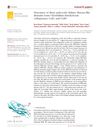
February 2015 in “Acta Crystallographica Section D: Structural Biology” This study reports that Ca 2+ binding alters the dynamics and surface properties of PKD-like domains in Clostridium histolyticum collagenases, enhancing their stability and potentially aiding in collagen-targeting vehicle development.
 6 citations
,
September 2023 in “Experimental physiology”
6 citations
,
September 2023 in “Experimental physiology” In this study, researchers identified the PLD-mGluR protein in primary mechanosensory terminals as the homomeric GluK2 kainate receptor, functioning purely metabotropically, which is suggested to be common to various sensory endings.
 12 citations
,
October 2021 in “Cells”
12 citations
,
October 2021 in “Cells” This review discusses the potential of miRNA-mediated hair growth treatments for androgenetic alopecia by targeting DKK1 to modulate the Wnt/β-catenin signaling pathway and reports no new clinical findings.
3 citations
,
April 2017 in “Journal of Investigative Dermatology” This study found that dermoscopy is valuable for diagnosing facial actinic keratosis in Chinese patients, with specific patterns like red pseudonetwork and follicular plugs suggesting its utility in differential diagnosis.
8 citations
,
September 2020 in “Genes & Genomics” 53 citations
,
May 1988 in “Journal of Molecular Evolution” 130 citations
,
April 2003 in “Journal of Investigative Dermatology” This study reports the cloning and expression details of two new human type II keratins, K6irs3 and K6irs4, in the hair follicle's inner root sheath, suggesting a distinct functional role related to hair structure.
December 2000 in “日本組織細胞化学会総会プログラムおよび抄録集” November 2025 in “The Journal of Immunology” This study observed that in human scalp hair follicles, BTNL2 expression is lower in stressed conditions, which correlates with increased cytotoxic activity by gamma/delta and CD8+ T cells, suggesting a possible role for BTNL2 in controlling immune responses relevant to alopecia areata.
 April 2023 in “The journal of investigative dermatology/Journal of investigative dermatology”
 This study found that JAK1 and JAK2 inhibitors increase β-catenin activity in human hair follicle cells, suggesting an additional therapeutic mechanism for treating severe alopecia areata.
 June 2024 in “British Journal of Dermatology”
 This article presents a family case study of dermatopathia pigmentosa reticularis linked to a specific KRT14 gene variant, detailing symptoms and stressing the importance of molecular diagnosis for management.
 April 2018 in “Journal of Investigative Dermatology”
 This study found that the RNA helicase DDX6 is essential for maintaining self-renewal in epidermal progenitor cells by promoting the translation of proliferation regulators and degrading differentiation-inducing mRNAs.
 January 2013 in “Journal of The Korean Medical Association”
 This article reviews factors influencing hair growth, with emphasis on androgenetic alopecia, and reports no clinical findings; the authors emphasize the role of androgens and mention treatments like finasteride, dutasteride, and minoxidil.
1 citations
,
April 2010 in “Digital WPI” This study found that CLK1 is necessary for epidermal differentiation but does not affect sebocyte differentiation in a telogen skin stem cell line.
1 citations
,
July 2024 in “Journal of Investigative Dermatology” TAK-279 effectively reduces psoriasis symptoms and is safe.
29 citations
,
June 2010 in “The Journal of Dermatology” This report documents a novel alanine to valine substitution in the GJB2 gene in a Japanese girl with severe keratitis–ichthyosis–deafness syndrome, suggesting a potential link to her severe recurrent infections and immunodeficiency.
17 citations
,
November 2000 in “Journal of Investigative Dermatology” ZPK helps skin cells mature and may affect skin health.