3 citations
,
July 2024 in “Archives of Dermatological Research” This study found that oral dexamethasone and DPCP were more effective for treating severe alopecia areata compared to oral ritlecitinib and baricitinib, but oral ritlecitinib had better safety outcomes.
 November 2024 in “Nanomaterials”
 This study formulated and characterized a dutasteride-loaded nanocrystalline suspension for long-acting parenteral delivery, finding that it provided sustained drug release in rats with a significant reduction in local inflammation over 28 days following intramuscular injection.
January 2023 in “JOURNAL OF CLINICAL AND DIAGNOSTIC RESEARCH” In this study, intralesional triamcinolone acetonide 10 mg/mL combined with topical betamethasone dipropionate 0.05% lotion was found to be more effective for treating alopecia areata than either treatment alone.
2 citations
,
March 2005 in “Journal of the American Academy of Dermatology” Equol may help with antiaging and skin health by boosting collagen and blocking certain hormones.
15 citations
,
July 2010 in “Journal of Allergy and Clinical Immunology” This study found that in mouse models, the novel NF-κB inhibitor DHMEQ improved symptoms of atopic dermatitis as effectively as tacrolimus or betamethasone.
 January 2022 in “Figshare”
 This study suggests that stress-associated hair loss may occur due to increased androgen receptor expression and activity induced by dexamethasone in human and mouse dermal papilla cells.
97 citations
,
January 2006 in “Dermatology” This study found that intramuscular triamcinolone acetonide or pulse therapy effectively treats alopecia areata with manageable side effects, but further strategies are needed to reduce relapse rates.
 April 2023 in “International journal of pharmaceutical sciences review and research”
 This study concluded that an Emulgel formulation containing Tridax procumbens extract showed promising wound healing and antimicrobial activity, with improved physical properties in the F2 formulation.
 10 citations
,
December 2005 in “Aktuelle Dermatologie”
10 citations
,
December 2005 in “Aktuelle Dermatologie” This study reported that after 7.5 months of treatment, topical Alfatradiol significantly increased anagen hair rates in women and men with androgenetic alopecia, with minimal side effects.
15 citations
,
February 2011 in “Experimental Dermatology” This study found that in a mouse model, betamethasone dipropionate reduced epidermal thickness while fish oil unexpectedly increased it, validating optical coherence tomography as an effective measurement tool.
 20 citations
,
June 1995 in “Tetrahedron Letters”
20 citations
,
June 1995 in “Tetrahedron Letters” This study reported that newly synthesized phenanthridin-3-one derivatives effectively inhibit human steroid 5-α-reductase.
 23 citations
,
January 2001 in “Chemical & Pharmaceutical Bulletin”
23 citations
,
January 2001 in “Chemical & Pharmaceutical Bulletin” This study found that several synthesized pregnane derivatives exhibited significant inhibitory effects on testosterone conversion to dihydrotestosterone and reduced related androgenic parameters in multiple pharmacological models.
 4 citations
,
January 2022 in “Dermatologic Therapy”
4 citations
,
January 2022 in “Dermatologic Therapy” This review discusses the use of spironolactone for common skin diseases like acne and its potential role in daily clinical practice but presents no new clinical results.
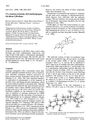 December 1998 in “Acta Crystallographica Section C-crystal Structure Communications”
 This study describes the molecular conformation and intermolecular interactions in the crystalline structure of the compound C24H31BrO4.
 February 2023 in “Journal of Pre-Clinical and Clinical Research”
 Dhathri Hair Care Plus herbal oil helps reduce hair loss, treat scalp conditions, and slow down hair greying.
 1 citations
,
June 2008 in “The Journal of Urology”
1 citations
,
June 2008 in “The Journal of Urology” This letter to the editor references a study on using dihydrotestosterone gel before hypospadias surgery but itself contains no new findings.

This study developed a topical dutasteride-loaded Insitu-emulgel for treating androgenetic alopecia, finding it effectively controls drug release, enhances skin penetration, and may improve patient compliance compared to traditional topical treatments, though further clinical research is underway.
 42 citations
,
December 2015 in “International Journal of Clinical Pharmacology and Therapeutics”
42 citations
,
December 2015 in “International Journal of Clinical Pharmacology and Therapeutics” This study found that applying a novel 0.25% finasteride solution to the scalp can effectively reduce scalp DHT levels in men with androgenetic alopecia, potentially reducing systemic side-effects.
 October 2023 in “Jurnal Ilmu Kesehatan Hewan”
 This report describes the successful treatment of dermatophytosis due to Trychophyton spp. in a 2-month-old kitten using ketoconazole cream, fish oil, multivitamin syrup, and sulfur soap, resulting in significant improvement in the skin condition after four weeks.
4 citations
,
January 2025 in “Pharmaceutics” This study found that spanlastic gel loaded with thymoquinone and ascorbic acid improved skin deposition and tyrosinase inhibition, suggesting potential as a treatment for hyperpigmentation.
 9 citations
,
January 2017 in “Organic Process Research & Development”
9 citations
,
January 2017 in “Organic Process Research & Development” This article describes the efficient synthesis of (S)-N-(2-bromo-6-methoxypyridin-4-yl)-2-hydroxy-2,4-dimethylpentanamide, a novel topical antiandrogen, with high purity and enantiomeric excess but reports no pharmacological results.
 10 citations
,
April 2020 in “Dermatology and therapy”
10 citations
,
April 2020 in “Dermatology and therapy” In this study of 35 patients with scalp alopecia areata, calcipotriol ointment led to faster and greater hair regrowth than clobetasol, though differences were not statistically significant.
2 citations
,
April 1993 in “Current Therapeutic Research” This study found no significant difference in effectiveness between 0.05% desonide cream and 1.0% hydrocortisone cream for treating seborrheic dermatitis over 8 weeks, with neither causing skin atrophy.
515 citations
,
April 2003 in “Endocrine Reviews” This review discusses hormone replacement therapy for menopausal women, emphasizing DHEA's unique ability to convert into sex steroids only in targeted tissues, and reports no new clinical results.
 9 citations
,
September 2017 in “Journal of Investigative Dermatology Symposium Proceedings”
9 citations
,
September 2017 in “Journal of Investigative Dermatology Symposium Proceedings” In this study, PGD2 was shown to increase testosterone production in human keratinocytes through reactive oxygen species, suggesting potential benefits of antioxidants like N-acetyl-cysteine for AGA patients.
 1 citations
,
October 2019 in “مجله كليه طب الكندي”
1 citations
,
October 2019 in “مجله كليه طب الكندي” In this study, researchers highlight the role of androgens like dihydrotestosterone in the pathophysiology of acne, pointing to the enzyme 5a-reductase type 1 as potentially more active in individuals with acne, which may contribute to hormonal influences in the condition's development.
 9 citations
,
December 2020 in “Dermatologic Therapy”
9 citations
,
December 2020 in “Dermatologic Therapy” This review found that oral and topical phosphodiesterase inhibitors and topical prostaglandin analogues are safe and effective treatments for various skin diseases, including psoriasis, atopic dermatitis, vitiligo, and alopecia.
2 citations
,
June 2023 in “Clinical Cosmetic and Investigational Dermatology” In this study, post-treatment with DCO was found to speed up epidermal wound healing after micro-needling of 3D skin models while maintaining the treatment's immunostimulatory benefits, potentially optimizing aftercare and reducing patient recovery time.
 1 citations
,
March 2019 in “Journal of AOAC INTERNATIONAL”
1 citations
,
March 2019 in “Journal of AOAC INTERNATIONAL” New method quickly and accurately measures dexpanthenol in hair products.