 4 citations
,
July 2025 in “International Journal of Nanomedicine”
4 citations
,
July 2025 in “International Journal of Nanomedicine” This review explores nano-quercetin formulations to enhance the solubility, stability, and targeted delivery of quercetin, highlighting its potential efficacy in treating cancer, inflammation, metabolic diseases, and tissue regeneration, though challenges in biocompatibility, toxicity, and production remain, per this source.
 4 citations
,
March 2020 in “Scientific Reports”
4 citations
,
March 2020 in “Scientific Reports” This study reported that polymeric nanofibers containing minoxidil sulphate showed effective encapsulation and stability, with minimal concentration loss over six months, making them potentially ideal for delivering this unstable drug in a more visually appealing and easier-to-apply form.
 4 citations
,
May 2019 in “Asian Journal of Pharmaceutical Sciences”
4 citations
,
May 2019 in “Asian Journal of Pharmaceutical Sciences” This study found that a dutasteride tablet formulation using cyclodextrin complex, solubilizing polymer, and surfactant achieved similar bioavailability in beagle dogs to that of a commercial capsule.
 4 citations
,
November 2018 in “Journal of Pharmaceutical and Biomedical Analysis”
4 citations
,
November 2018 in “Journal of Pharmaceutical and Biomedical Analysis” This study found that a hydro-alcoholic extract of Roselle petals may reduce free radical production during UV-induced photodecomposition of antibiotics, potentially offering protective benefits for patients using similar topical antibiotics.
 4 citations
,
November 2017 in “Journal of Cosmetic Dermatology”
4 citations
,
November 2017 in “Journal of Cosmetic Dermatology” This study found that polyquaternium-68 at pH 9 achieved the greatest hair deposition, while polyquaternium-44 demonstrated the best wash resistance at pH 6.
 1 citations
,
January 2026 in “Frontiers in Cell and Developmental Biology”
1 citations
,
January 2026 in “Frontiers in Cell and Developmental Biology” This study reviews the transformative role of artificial intelligence in biomaterial design, highlighting its ability to reduce costs through virtual screening, enhance material performance, and predict biological interactions to advance personalized and precision medicine.
 1 citations
,
May 2025 in “Discover Chemistry.”
1 citations
,
May 2025 in “Discover Chemistry.” This review highlights that although mangiferin, a polyphenol from the mango tree, faces challenges like low solubility and bioavailability, delivery vehicles such as nanoparticles and complexes have the potential to enhance its therapeutic effectiveness in treating various diseases.
 1 citations
,
January 2025 in “BIO Integration”
1 citations
,
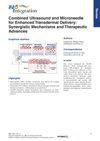
January 2025 in “BIO Integration” This review highlights that the combination of ultrasound and microneedles can enhance transdermal drug delivery by using physical and energy-driven mechanisms to improve drug penetration into deeper skin layers, with implications for precision medicine and chronic disease treatments.
 1 citations
,
July 2018 in “Elsevier eBooks”
1 citations
,
July 2018 in “Elsevier eBooks” This article reviews the role of trichoscopy in diagnosing hair weathering conditions like trichorrhexis nodosa and trichoptilosis and suggests treatment by avoiding harmful chemical and physical factors, but it provides no new research findings.
 July 2026 in “International Journal of Aquatic Research and Environmental Studies”
 In this experimental study, researchers developed and optimized metformin-loaded mucoadhesive microspheres for sustained anti-hyperglycemic and anticancer activity, demonstrating high entrapment efficiency, enhanced α-amylase and α-glucosidase inhibition, improved cytotoxicity against breast cancer cells, and promising stability.
 June 2026 in “Frontiers in Immunology”
 This review discusses the role of epithelial–mesenchymal transition in cutaneous fibrotic disorders and highlights potential molecular targets for therapy, but reports no new clinical results.
 June 2026 in “Frontiers in Materials”
 This review examines advancements in "smart" hydrogel dressings for complex wound healing, highlighting innovations in materials that provide multifunctionality, such as responsive drug delivery and regenerative capabilities. The study also addresses potential challenges in clinical application, like manufacturing and regulatory hurdles.
 May 2026 in “Iranian journal of pharmaceutical research”
 This study found that HAMA hydrogels promote faster healing of skin wounds in mice by enhancing the accumulation of anti-inflammatory macrophages and increasing type III collagen in the local wound environment.
This study reported that pentoxifylline-loaded liposomes, optimized using a statistical design method, achieved a maximum encapsulation efficiency of 84.23% and a controlled 72-hour drug release, potentially improving therapeutic delivery of the drug with limited bioavailability.
 February 2026 in “International Journal of Advanced Research in Science Communication and Technology”
 In this review, researchers explored the potential of herbal shampoos as effective and safe alternatives to conventional anti-dandruff treatments, highlighting that polyherbal formulations may offer comparable or superior benefits with fewer side effects.
 January 2026 in “Nano-Micro Letters”
 This review discusses the principles, materials, and applications of melt electrowriting-based 4D printing for creating biomimetic scaffolds, but reports no new clinical results; it highlights recent advancements and remaining challenges in the field.
 January 2026 in “Biomaterials Science”
 This research outlines the characteristics and potential applications of a GMP-compliant sodium polyphosphate formulation (Na-polyP-GMP) in cellular energy storage and ATP-dependent processes like skin regeneration and wound healing.
 January 2026 in “RSC Advances”
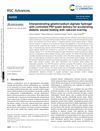
 This study found that the natural polymer-based hydrogel Gel/SA@PL released growth factors in a controlled way, which enhanced tissue regeneration and minimized scarring in the healing of diabetic wounds.
 October 2025 in “Interdiciplinary Journal and Hummanity (INJURITY)”
 This study characterized bioactive compounds in extracts from six Kalimantan herbal plants, confirming traditional medicinal uses with findings such as triterpenoids and several potent compounds with antimicrobial and cardiovascular benefits, laying groundwork for potential therapeutic applications and conservation efforts.
 May 2025 in “Insights-Journal of Health and Rehabilitation”
 This study found that Aloe vera and Citrus lemon extracts demonstrated notable antibacterial effects against Propionibacterium acnes in both lab and human skin models, with combined use resulting in a 67% reduction in acne, suggesting potential for future therapeutic applications.
 April 2025 in “Indian Journal of Pharmaceutical Education and Research”
 This study highlights the potential of nanofibers in cosmeceuticals, reporting that nanofiber facial masks outperform regular masks in cleansing, and notes their exploratory use in anti-acne patches for enhanced acne management.
This study introduced a rapid rehydration approach for creating customizable, multifunctional hydrogel sensors, enabling precise detection of surface deformations and easy integration of layers, highlighting its potential for standardized and adaptable manufacturing of wearable devices.
 January 2025 in “Journal of Pharmaceutical Research Science & Technology”
 This review explores the potential, challenges, and recent advancements of dissolving microneedles in drug delivery, summarizing their varied applications and current limitations without providing new clinical results.
 January 2025 in “RSC Pharmaceutics”
 Smart microneedles using advanced tech could improve psoriasis treatment.
 January 2025 in “The Pharma Innovation”
 This review discusses how nanospanlastics, a type of ultra deformable vesicular nanocarrier, could enhance glaucoma management by improving the delivery and effectiveness of intraocular pressure-lowering agents, tackling adherence challenges, and advancing targeted therapies, according to the authors.
 October 2024 in “International Journal of Pharma Professional’s Research (IJPPR)”
 This study developed and characterized Quercetin-loaded nanogels, finding that they showed promising potential for enhanced drug delivery and stability in treating Alopecia, with an optimized batch achieving a drug release of 95.32% over 12 hours.
 October 2024 in “South Eastern European Journal of Public Health”
 This study on women aged 18–40 with polycystic ovary syndrome reported that a three-month treatment involving dietary changes, oral contraceptives, fertility drugs, and supplements significantly improved ovulation, menstrual regularity, BMI, and reduced hirsutism, acne, and certain immune factors compared to pre-treatment and control groups.
 September 2024 in “International Journal of Pharmaceutical Quality Assurance”
 This review outlines the potential of nanoemulsion-based hydrogels (nanoemulgels) for enhanced topical and transdermal drug delivery in treating skin disorders, highlighting their ability to improve therapeutic efficacy, control drug release, and boost patient compliance.
 April 2024 in “Pharmacognosy research”
 In this study, researchers developed a herbal hair dye using henna and other natural ingredients that achieved a color similar to natural black on blonde hair, though further testing on various hair shades is needed to explore its full benefits.
 March 2024 in “International Journal of Drug Delivery Technology”
 This study reviews the potential of electrospun nanofiber mats as innovative drug delivery systems for wound healing, emphasizing their ability to enhance drug release, improve cell adhesion, and promote tissue regeneration by incorporating antibiotics, growth hormones, or stem cells.