April 2005 in “World Journal of Pharmaceutical and life sciences” This article discusses the formulation and evaluation of hair gels that may improve the treatment and prevention of dandruff by providing longer-lasting effects compared to traditional shampoos and lotions, but it reports no new clinical findings.
 41 citations
,
June 2018 in “Journal of The American Academy of Dermatology”
41 citations
,
June 2018 in “Journal of The American Academy of Dermatology” This study examined the therapeutic response to folliculitis decalvans treatments among 60 patients and found that earlier disease onset was linked to more severe cases, while a combination of rifampicin, clindamycin, tetracyclines, and intralesional steroids was most effective in controlling symptoms.
 32 citations
,
March 2014 in “PLOS ONE”
32 citations
,
March 2014 in “PLOS ONE” This study demonstrates that FMOD deficiency in mice alters TGF-β ligand and receptor expression during wound healing stages, leading to delayed wound closure and increased scar size.
 July 2023 in “Developmental medicine and child neurology/Developmental medicine & child neurology”
 This study found that patients with Bachmann-Bupp syndrome treated with DFMO showed improvements in hair growth, muscle tone, and development.
1 citations
,
October 2025 in “Journal of Investigative Dermatology” In this study of women with frontal fibrosing alopecia, delgocitinib cream improved the molecular signature of lesions and demonstrated potential as a treatment, showing significant transcriptomic changes and some clinical improvements over 12 weeks compared to a cream vehicle.
 8 citations
,
July 1990 in “Archives of Dermatology”
8 citations
,
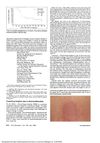
July 1990 in “Archives of Dermatology” This case report details a fixed-drug eruption in a woman linked to the use of dextromethorphan, marking it as a previously unreported skin reaction to this medication.
9 citations
,
April 2006 in “International Journal of Dermatology” This article reviews the potential for α-difluoromethylornithine to help control hair growth and prevent cancer, but it does not present new clinical results.
 1 citations
,
January 2021 in “Journal of biological chemistry/The Journal of biological chemistry”
1 citations
,
January 2021 in “Journal of biological chemistry/The Journal of biological chemistry” This study found that loss of the folliculin protein delays transferrin receptor recycling, leading to iron deficiency and suggesting a role in the mechanisms of Birt-Hogg-Dubé syndrome.
 27 citations
,
May 2007 in “Archives of dermatological research”
27 citations
,
May 2007 in “Archives of dermatological research” In this study, alopecia areata patients treated with diphencyprone showed a significant increase in CD8 lymphocytes around hair bulbs, which may be associated with hair regrowth.
 83 citations
,
March 2015 in “International Journal of Dermatology”
83 citations
,
March 2015 in “International Journal of Dermatology” This retrospective study found that adipose-derived stem cell-conditioned media increased hair density and thickness in women with female pattern hair loss over 12 weeks, with no severe adverse effects reported.
 7 citations
,
January 2009 in “Biological & pharmaceutical bulletin”
7 citations
,
January 2009 in “Biological & pharmaceutical bulletin” This study found that applying ferrous ferric chloride skin lotions to newborn mice stimulated skin cell proliferation and differentiation, increased hair growth, and inhibited alopecia-related hair loss.
 September 2023 in “International Journal of Dermatology”
 In this study, FAPD was characterized in a Chinese population by perifollicular mast cell infiltration, suggesting young individuals may be at higher risk than previously thought.
9 citations
,
January 2023 in “Journal of Clinical Medicine” This study presents a validated questionnaire, the FFA-QLI, which effectively assesses and differentiates the quality of life impact among patients with frontal fibrosing alopecia, showing greater sensitivity in identifying severe cases than the DLQI.
 1 citations
,
October 2023 in “Journal of the Pakistan Medical Association”
1 citations
,
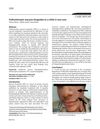
October 2023 in “Journal of the Pakistan Medical Association” This source describes a case of a 12-year-old male diagnosed with folliculotropic mycosis fungoides, presenting with an asymptomatic, erythematous plaque. Histology and immunohistochemistry confirmed FMF, which is typically rare in children and marked by follicular infiltration by CD4+ lymphocytes.
 33 citations
,
January 2010 in “Case reports in dermatology”
33 citations
,
January 2010 in “Case reports in dermatology” This article presents a case study of a 50-year-old woman with frontal fibrosing alopecia and discusses the role of dermoscopy in differentiating it from other types of alopecia, reporting no new clinical results.
January 2024 in “Wiadomości Lekarskie” This pilot clinical study introduces DEC cells as a novel therapy for Duchenne muscular dystrophy, confirming safety and efficacy in seven patients up to 24 months post-treatment.
16 citations
,
April 2000 in “Contact dermatitis” In this report, a 19-year-old Japanese man experienced severe and prolonged urticarial reactions following treatment with diphenylcyclopropenone for alopecia universalis, emphasizing the need for caution with potent sensitizers.
 4 citations
,
September 2020 in “Annals of Translational Medicine”
4 citations
,
September 2020 in “Annals of Translational Medicine” This study found that concentrated nanofat, used alone or with decellularized nanofat, may enhance hair growth in mice by activating dermal papilla cells and the anagen phase.
29 citations
,
December 2004 in “Developmental biology” In this study, forced expression of the transcription factor cDermo-1 in chicken dermis led to the formation of ectopic feather buds and enhanced feather growth, demonstrating its role in initiating skin appendage development.
May 2023 in “Spectrochimica Acta Part A: Molecular and Biomolecular Spectroscopy” This study developed a synchronized fluorescence spectroscopic approach to quantify finasteride and tadalafil in various forms, achieving high accuracy with %recoveries of about 99.62% and 100.19% respectively, and demonstrated superior environmental friendliness compared to previous methods.
 20 citations
,
October 2003 in “The Journal of Dermatology”
20 citations
,
October 2003 in “The Journal of Dermatology” This study observed that while dexamethasone-cyclophosphamide pulse therapy is relatively free from hypertension and diabetes compared to conventional steroids in pemphigus patients, it frequently causes generalized weakness and flushing.
This study found that fibroblast growth factor 20 (Fgf20) orchestrates the movement and behavior of dermal fibroblasts, directing their formation into dermal condensates during hair follicle development in mice.
 April 2023 in “Journal of Investigative Dermatology”
 This study found that dimethyl fumarate improved delayed wound healing in Il36rn-/- mice by reducing neutrophil extracellular trap formation and oxidative stress.
 20 citations
,
April 2011 in “British Journal of Dermatology”
20 citations
,
April 2011 in “British Journal of Dermatology” Reflectance confocal microscopy can tell apart white dots on the scalp as either sweat gland ducts or hair follicle openings.
 May 2023 in “Siriraj Medical Journal”
 This study demonstrated that the Thai version of the FDLQI is a valid and reliable tool for assessing the quality of life of family members of patients with dermatological diseases.
10 citations
,
November 2022 in “International Journal of Cosmetic Science” In this laboratory study, Camellia japonica fruit shell extract showed potential to mitigate hair loss by promoting hair cell growth and reducing harmful effects of DHT and oxidative stress.
 March 2005 in “Journal of The American Academy of Dermatology”
 Diphencyprone treatment protocols could be simplified as no harm occurred despite not fully following them.
 January 2024 in “Asian Journal of Medical Sciences”
 In this study, researchers in South India observed that dermoscopic features like hair diameter diversity and miniaturized hair were common in female pattern hair loss, with yellow dots and honeycombing indicating more advanced stages, highlighting dermoscopy's utility in diagnosing and differentiating FPHL early.
 February 2022 in “Mediators of Inflammation”
 This study found that reduced plasma DIAPH1 levels were associated with polycystic ovary syndrome, suggesting DIAPH1 as a potential predictive factor for the condition.
 August 2023 in “Cell Proliferation”
 This study observed that incorporating human follicle dermal papilla cells into fibrin microgels increased cell viability and the formation of hair follicle structures in in vitro skin cultures compared to traditional dermal papilla spheroids, suggesting a promising approach for hair follicle regeneration therapies.