 42 citations
,
April 2012 in “Seminars in Oncology”
42 citations
,
April 2012 in “Seminars in Oncology” This review discusses the skin side effects associated with targeted cancer therapies and reports no new clinical results; it emphasizes the need for empirical management based on expert opinion.
 39 citations
,
June 2017 in “Journal of Applied Research on Medicinal and Aromatic Plants”
39 citations
,
June 2017 in “Journal of Applied Research on Medicinal and Aromatic Plants” This review examines around 68 plant sources from six major plant families, assessing their scientific rationale and use by the cosmeceutical industry for applications like anti-ageing and sun protection.
 38 citations
,
July 2021 in “ACS Nano”
38 citations
,
July 2021 in “ACS Nano” This study found that a ceria nanozyme-integrated microneedles patch accelerated hair regeneration in an androgenetic alopecia mouse model more effectively than minoxidil, with reduced application frequency and minimal skin damage.
 25 citations
,
July 2017 in “Journal of Stomatology, Oral and Maxillofacial Surgery”
25 citations
,
July 2017 in “Journal of Stomatology, Oral and Maxillofacial Surgery” This review suggests that PRP injections may be effective in promoting hair regrowth, reducing hair loss, and increasing hair thickness in patients with androgenic alopecia.
 21 citations
,
November 2022 in “Frontiers in immunology”
21 citations
,
November 2022 in “Frontiers in immunology” This article reviews sebaceous immunobiology and highlights the complex role of sebaceous glands and sebocytes in skin barrier function and inflammation, particularly in acne pathogenesis, but reports no new results.
 20 citations
,
September 2019 in “South African Journal of Botany”
20 citations
,
September 2019 in “South African Journal of Botany” This study found that Teucrium polium L. subsp. geyrii Maire extract demonstrated a large safety margin in acute and subacute toxicity tests on mice and significantly enhanced wound healing in rats, especially with callus extract, by improving cell proliferation and wound contraction.
 17 citations
,
May 2016 in “Archives of Dermatological Research”
17 citations
,
May 2016 in “Archives of Dermatological Research” This study identified specific reflectance confocal microscopy features that help differentiate scarring from non-scarring alopecia, providing a non-invasive diagnostic tool.
 14 citations
,
November 2020 in “International Journal of Molecular Sciences”
14 citations
,
November 2020 in “International Journal of Molecular Sciences” This review article summarizes the potential role of advanced medical therapies—using genes, cells, and/or tissue engineering—in treating various types of alopecia, by examining clinical research, basic studies, and ongoing trials.
 13 citations
,
January 2022 in “Stem cell reviews and reports”
13 citations
,
January 2022 in “Stem cell reviews and reports” This study found that using cultured mesenchymal stem cells from mouse whisker hair follicle outer root sheath in wound healing reduced inflammation, accelerated closure, and resulted in less hypertrophic scarring in mice.
 10 citations
,
December 2021 in “Frontiers in cell and developmental biology”
10 citations
,
December 2021 in “Frontiers in cell and developmental biology” This study found that GPC1 is a crucial regulator of angiogenesis in human dermal microvascular endothelial cells, indicating its potential as a target for treating alopecia.
 9 citations
,
October 2021 in “Biological and Pharmaceutical Bulletin”
9 citations
,
October 2021 in “Biological and Pharmaceutical Bulletin” This study found that mupirocin nanoparticle-loaded hydrogel was safe and more effective for healing burn wounds in rats compared to mupirocin ointment, showing promise for future clinical trials.
 8 citations
,
May 2021 in “Bioengineering & translational medicine”
8 citations
,
May 2021 in “Bioengineering & translational medicine” This review examines the challenges of hair follicle regeneration and outlines strategies for bioengineering human hair follicle models, without presenting new experimental results.
 5 citations
,
September 2020 in “Molecules”
5 citations
,
September 2020 in “Molecules” In this study, extracts from three Polynesian plants—Bidens pilosa, Calophyllum inophyllum, and Fagraea berteroana—were found to increase dermal papilla cell proliferation and modulate hair growth-related gene expression, suggesting potential for stimulating hair growth.
 4 citations
,
May 2014 in “Biochemical Society Transactions”
4 citations
,
May 2014 in “Biochemical Society Transactions” This review discusses environmental reprogramming and the plasticity of epithelial cells, emphasizing their potential for new cell therapy approaches; it reports no new experimental results.
 2 citations
,
January 2018 in “International Journal of Biochemistry & Physiology”
2 citations
,
January 2018 in “International Journal of Biochemistry & Physiology” This study identified two new Wnt genes, EsWnt1 and EsWnt4, in red starfish, with their expression patterns suggesting a role in wound healing and regeneration.
 1 citations
,
October 2013 in “Actas Dermo-Sifiliográficas”
1 citations
,
October 2013 in “Actas Dermo-Sifiliográficas” This review discusses the current role and challenges of compounding in dermatology without presenting new research results; the authors suggest its resurgence in practice despite pharmaceutical alternatives.
 June 2026 in “International Science Journal”
 This study reviewed recent advances in regenerative technologies for aesthetic and reconstructive medicine and found that adipose-derived stem cells and platelet-rich plasma are well-established for tissue repair due to their safety and effectiveness, while emerging technologies like exosome-based therapies hold future potential.
 June 2026 in “Dermatology and Therapy”
 This review provides an analysis of topical treatments with clinically proven efficacy for managing hyperpigmentation and concludes that the most effective approach is using combined therapies that target multiple aspects of skin pigmentation physiology.

In this study, researchers in Baghdad, Iraq found that men with hair loss had higher body fat mass and haematocrit values, and lower blood pressure compared to men without hair loss, suggesting potential links between metabolic and hematologic changes and baldness.
This review suggests that combining Platelet-Rich Plasma and microneedling may enhance hair restoration outcomes in patients with androgenetic alopecia compared to using either therapy alone.
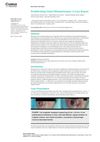
In this case report, researchers detailed a giant proliferating pilomatrixoma in a 36-year-old woman, emphasizing the importance of complete excision to prevent recurrence or potential malignant transformation, distinguishing it from malignancies like angiosarcoma or melanoma.
 February 2025 in “Jurnal Ners”
 This research abstract discusses the growing interest in essential oils for hair growth, emphasizing that while some studies suggest their bioactive ingredients may stimulate hair growth, more investigation is needed to understand their mechanisms and effects fully.
 September 2024 in “Electronic Journal of General Medicine”
 In this case series study, two Peruvian women with virilizing ovarian tumors called Sertoli-Leydig cell tumors showed clinical improvement and normalization of androgens after surgical treatment, highlighting the diagnostic challenge of these rare presentations at different ages.
 April 2024 in “bioRxiv (Cold Spring Harbor Laboratory)”
 In a keratinocyte-specific knockout mouse model, this study found that deleting GRK2 disrupted hair follicle homeostasis, causing cyst-like structures, abnormal growth patterns, and eventual hair loss, suggesting potential links to immune-mediated alopecias.
 February 2024 in “Cureus”
 This study presented an elderly male with a nodular lesion diagnosed as pilomatricoma and discussed the value of diagnostic tools like dermoscopy and high-frequency ultrasonography, encouraging clinicians to consider pilomatricoma in differential diagnoses of nodular lesions across all ages.
 September 2023 in “HAL (Le Centre pour la Communication Scientifique Directe)”
 In this study, peptide-based nanoparticles were successfully used to deliver the CRISPR-Cas9 system into cancer cells, effectively targeting and editing KRAS mutations, suggesting promising therapeutic potential for cancer treatment.
 May 2023 in “Brazilian Journal of Animal and Environmental Research”
 In this study, photobiomodulation therapy using EccoVet® equipment was applied to a canine patient with alopecia, leading to noticeable hair regrowth after just one session and complete improvement after five, highlighting its potential as a fast, non-invasive treatment for canine alopecia.
 January 2018 in “Stem cells in clinical applications”
 This review discusses the potential of exosomes and the secretome in stem cell-based regenerative therapies but reports no new experimental findings.
 June 2017 in “International Journal of Periodontics & Restorative Dentistry”
 This study found that using retroauricular full-thickness skin grafts in vestibuloplasty contributed to successful cosmetic and functional outcomes in dental implant rehabilitation for patients with mandibular gunshot injuries.
This study found that Avicennia marina extract and its active compound avicequinone C inhibit enzymes and receptors related to androgenic alopecia, potentially supporting hair growth in cultured dermal papilla cells.