 16 citations
,
September 2018 in “Journal of Molecular Liquids”
16 citations
,
September 2018 in “Journal of Molecular Liquids” This study investigated a nanostructured system using PS-b-PAA diblock copolymer for incorporating the hydrophobic photosensitizer ClAlPc, finding it effective in causing cellular damage in Caco-2 cells under light while demonstrating no cytotoxicity without light, suggesting its potential use in photodynamic therapy.
1 citations
,
January 1989 in “Carcinogenesis” This study found that dexamethasone treatment inhibited the inflammatory response and the induction of ornithine decarboxylase activity in mouse skin after TPA application, although the effect on ODC was weaker during the hyperplastic stage.
3 citations
,
July 2023 in “International Journal of Trichology” This study found that treatment with diphenylcyclopropenone led to more than 75% hair regrowth in 33.3% of patients with alopecia totalis or alopecia universalis, despite notable side effects.
 August 1946 in “Journal of the American Medical Association”
 This document discusses website navigation and access options for JAMA without presenting any new research findings.
 59 citations
,
October 2012 in “Pharmaceutical Research”
59 citations
,
October 2012 in “Pharmaceutical Research” This study found that nanostructured lipid carriers with more soybean phosphatidylcholine provided better skin retention and follicular targeting for diphencyprone compared to other formulations and controls.
September 2024 in “Journal of the American Academy of Dermatology” Organizations help patients access discounts for expensive dermatology medications.
94 citations
,
July 1991 in “Clinical endocrinology” In this study, cyproterone acetate at 2 mg daily was found to be as effective as higher doses in reducing hair growth for hirsute women over 12 months.
 44 citations
,
February 2015 in “Journal of the American Academy of Dermatology”
44 citations
,
February 2015 in “Journal of the American Academy of Dermatology” This study found that combination therapy with diphenylcyclopropenone and anthralin was more effective for complete hair regrowth in chronic extensive alopecia areata than diphenylcyclopropenone alone, despite more common side effects.
 April 2018 in “The journal of investigative dermatology/Journal of investigative dermatology”
 This phase 2a trial evaluated Samcyprone for common wart treatment and found that while a sensitization reaction is necessary for therapeutic response, its level does not predict wart clearance.
November 2024 in “Journal of Investigative Dermatology” ATP-sensitive potassium channels are important for hair growth.
 2 citations
,
January 2012 in “Journal of The Chilean Chemical Society”
2 citations
,
January 2012 in “Journal of The Chilean Chemical Society” This study developed and validated a precise RP-HPLC-PDA method for estimating finasteride in bulk and tablet forms, suitable for quality control use.
48 citations
,
June 2000 in “Japanese Journal of Cancer Research” This study found that dimethylarsinic acid significantly accelerates skin tumor development in hair follicle-targeted K6/ODC transgenic mice.
1 citations
,
February 2025 in “Toxicology in Vitro” In this study, DPHC from the brown alga Ishige okamurae demonstrated potential to prevent androgenic alopecia by inhibiting hair loss and promoting hair growth through multiple cellular mechanisms.
 1 citations
,
March 2019 in “Journal of AOAC INTERNATIONAL”
1 citations
,
March 2019 in “Journal of AOAC INTERNATIONAL” New method quickly and accurately measures dexpanthenol in hair products.
41 citations
,
November 2015 in “The journal of investigative dermatology. Symposium proceedings/The Journal of investigative dermatology symposium proceedings” This study found that diphenylcyclopropenone therapy resulted in over 50% hair regrowth in 71% of alopecia totalis patients, with a significant relapse association with thyroid disease, suggesting treatment could be viable but should continue for at least two years.
October 1993 in “The Journal of Clinical Pharmacology”  2 citations
,
January 2016 in “Scientifica”
2 citations
,
January 2016 in “Scientifica” Researchers created a reliable method to measure dexpanthenol and resorcinol in hair products.
 34 citations
,
February 2016 in “Fertility and Sterility”
34 citations
,
February 2016 in “Fertility and Sterility” This study suggests that higher PDCD4 expression may play a significant role in polycystic ovary syndrome pathogenesis through its association with obesity, insulin resistance, lipid metabolism disorders, and increased granulosa cell apoptosis.
18 citations
,
January 2010 in “Dermatology Research and Practice” This case report describes a 30-year-old Brazilian male who developed vitiligo lesions following diphencyprone therapy for alopecia areata.
 9 citations
,
April 2016 in “Australasian journal of dermatology”
9 citations
,
April 2016 in “Australasian journal of dermatology” This study suggests that adding imiquimod to diphenylcyclopropenone treatment significantly improves outcomes for alopecia areata patients who initially do not respond to diphenylcyclopropenone alone.
 8 citations
,
January 2018 in “Journal of the American Academy of Dermatology”
8 citations
,
January 2018 in “Journal of the American Academy of Dermatology” This study found that maintenance treatment with diphenylcyclopropenone was associated with a lower relapse rate in alopecia areata patients, highlighting the importance of adjusting treatment intervals post-improvement.
5 citations
,
June 2021 in “Journal of neurology, neurosurgery and psychiatry” This study found that females exposed to high cumulative doses of cyproterone acetate had a 6–20 fold increased risk of developing meningiomas compared to those on lower doses.
13 citations
,
January 2014 in “Zhongguo zhongyao zazhi” This study found that Dendrobium candidum polysaccharides might promote hair growth in mice, potentially by increasing VEGF mRNA expression.
 244 citations
,
September 2008 in “Annual Review of Genomics and Human Genetics”
244 citations
,
September 2008 in “Annual Review of Genomics and Human Genetics” This review examines the direct-to-consumer genetic testing market, highlighting the available tests, regulatory issues, and calls for increased oversight, and reports no new results.
30 citations
,
July 2009 in “Experimental and clinical endocrinology & diabetes” This article reviews the use of cyproterone acetate for conditions like prostate cancer and sexual disorders, highlighting its effects on libido but reporting no new specific trial results.
January 2024 in “Wiadomości Lekarskie” This pilot clinical study introduces DEC cells as a novel therapy for Duchenne muscular dystrophy, confirming safety and efficacy in seven patients up to 24 months post-treatment.
 1 citations
,
April 2019 in “Journal of Investigative Dermatology”
1 citations
,
April 2019 in “Journal of Investigative Dermatology” This study examined the safety and efficacy of dupilumab in adolescents with moderate-to-severe atopic dermatitis, finding that it was well tolerated and significantly improved symptoms over 52 weeks, with its safety profile similar to that in adults.
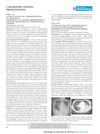 May 2025 in “The Journal of Rheumatology”
 This case report highlights a rare instance of diffuse alveolar hemorrhage in a patient with catastrophic antiphospholipid syndrome, emphasizing the importance of early recognition and multidisciplinary management.
 108 citations
,
November 2006 in “The Milbank Quarterly”
108 citations
,
November 2006 in “The Milbank Quarterly” This article reviews the history and impacts of direct-to-consumer advertising of prescription drugs in the U.S. and reports no new research findings; it discusses implications for health policy debates.
15 citations
,
June 2015 in “F1000Research” This study examined immune responses to Diphencyprone and found that its induced skin reactions have higher levels of negative immune regulators compared to psoriasis, suggesting differences in immune regulation may contribute to psoriasis chronicity.